A bar refrigerator, bottle cooler, wine cabinet or ice machine earns its footprint only when it matches your busiest hour, menu and replenishment routine. Use service-volume calculations, fit checks, temperature targets and installation requirements to choose equipment that reduces retrieval time without creating avoidable cleaning, drainage or maintenance problems.
Key takeaways
- Size equipment for your busiest 60 minutes, not average daily sales.
- Measure doorways, clearances and service access before ordering a chiller.
- Keep wine storage at its required serving temperature and separate from spirit storage.
- Calculate peak-hour ice demand and use a dedicated clean storage process.
Start with the Service Pattern, Not the Equipment Catalogue
Match equipment to the busiest 60 minutes, not the day’s average sales. A quiet weekday can hide a Saturday rush that empties the cooler, overwhelms one bartender and creates a queue.
- Peak volume: count drinks sold during the busiest hour and identify how many require chilled ingredients, ice or bottle access.
- Menu mix: a cocktail-heavy menu needs rapid access to ice and garnishes; a packaged-drink program prioritises cold holding and fast retrieval.
- Footprint: measure the equipment bay, door swing, aisle width and the manufacturer’s ventilation clearances before choosing capacity.
- Staffing: one bartender needs equipment within a short reach and simple replenishment; a larger team can support separate stations and higher-capacity units.
Size storage and dispensing capacity for peak-hour depletion, then check recovery speed after repeated door openings. A large cabinet in the wrong position still fails if staff must cross the service path or reach around customers.
Treat staff movement as a design limit. Place the most frequently used equipment at the point of service, reserve deeper storage for backup stock, and avoid placing a heat-producing machine beside refrigeration. For a hot Delhi bar, verify the cabinet’s rated ambient temperature; a unit tested at 32°C can run continuously in an unconditioned room.
Check NSF/ANSI 7 or NSF/ANSI 12 certification when refrigeration or ice equipment applies, then confirm electrical and drainage requirements.
Choose the Right Chilled Storage Format and Verify the Fit
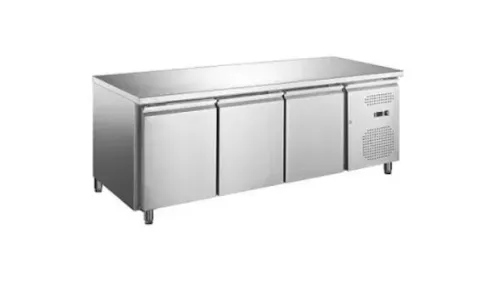
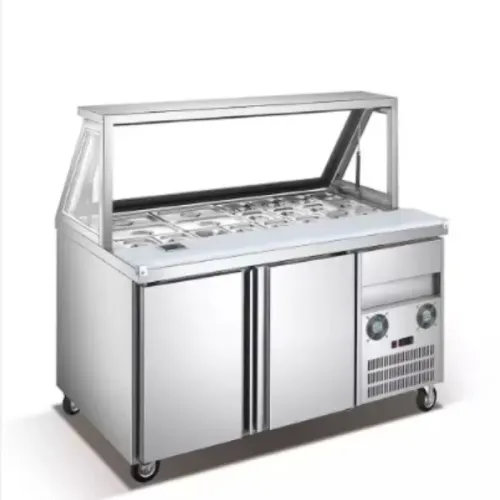
Choose a 2-Door Back Bar Chiller when service is frequent, the bar needs separate shelf zones, and staff must reach beer, mixers and ingredients without leaving the counter. Its advantage is fast access and organised reserve stock, not simply a larger gross litre figure.
| Option | Best fit | Main limitation |
|---|---|---|
| Under-counter refrigerator | Tight bars where staff need immediate access below the worktop | Lower usable capacity and restricted shelf height |
| Upright reach-in refrigerator | High-volume backup stock or a kitchen-adjacent beverage store | Longer walking route and more door-opening traffic at the bar |
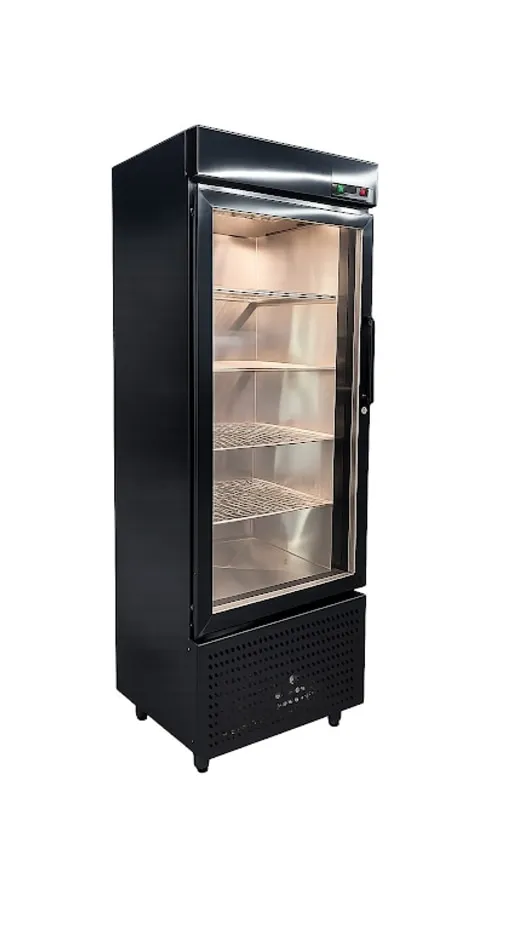
| Bottle cooler | Rapid access to bottled beer and drinks during peak service | Poorer flexibility for trays, cartons, garnishes and mixed bottle sizes |
| Open display chiller | Self-service, merchandising or customer-facing presentation | Higher cold-air loss, energy use and exposure to handling |
| 2-Door Back Bar Chiller | Dense bar service needing organised, reachable stock behind the counter | Requires careful airflow, clearance and internal-layout checks |
Specify usable bottle capacity, internal width and depth, shelf pitch, door swing and recovery time. Oversized bottles, speed rails and fixed shelf positions can remove much of the advertised capacity.
- Measure the opening, counter height and service route; confirm manufacturer-specified side, rear and top clearances.
- Check rated ambient temperature. A cabinet tested at 32°C can run continuously in a hot Delhi bar; a tropical or approximately 43°C-rated model is safer without reliable air-conditioning.
- Confirm electrical load, condenser-filter access, gasket and hinge replacement, shelf clips, drainage and service response time.
Set storage around the product: beer and mixers near 2–5°C, juices and dairy ingredients at 1–5°C, and wine around 7–12°C according to style and label guidance. An SS Bottle Chiller prioritises rapid access; an SS Gold Wine Chiller prioritises stable temperature, bottle support and presentation.
Match Bottle and Wine Storage to Presentation and Temperature
An SS Bottle Chiller earns its space through rapid access and frequent opening; an SS Gold Wine Chiller earns it through stable temperature and presentation. Do not treat a wine cabinet as a rapid-cooling unit.
Check the drain: meltwater, ice and condensate need a trapped drain or accessible collection point, or busy service will create standing water, odour, corrosion and slip risks. Gold colour is only a finish; confirm the underlying stainless grade, weld quality, coating durability and resistance to acidic products and chloride cleaners.
| Equipment | Evaluate | Failure to avoid |
|---|---|---|
| SS Bottle Chiller | Measure usable bottle capacity, internal depth, shelf pitch, door-opening speed and clearance around speed rails. Confirm it accepts your largest bottles, not only standard beer bottles. | A gross litre figure looks adequate until oversized bottles, ice and fixed shelf positions consume the working space. |
| SS Gold Wine Chiller | Check shelf support, bottle presentation, vibration control and temperature stability under a full service load. Confirm whether one or two zones match the list. | A single zone forces a compromise across wine styles; two zones help only when both maintain target temperatures in real service. |
Set wine temperatures against the program, not one generic setting:
- Sparkling wines: about 6–8°C.
- Lighter whites: about 8–12°C.
- Full-bodied reds: about 14–18°C.
Test recovery after repeated door openings, then verify that shelves hold the bottle shapes you sell. A cabinet that looks attractive but slows retrieval or cannot maintain temperature during service is the wrong presentation investment.
Size Ice Production for the Peak Hour and Protect Ice Hygiene
Choose an Elanpro Ice Flaker when your bar needs soft, fast-melting ice for high-volume cocktails, blended drinks, seafood displays or rapid chilling. It is a poor fit when guests expect slow-melting clear cubes, and its headline daily output is not a service guarantee: heat and warm inlet water reduce production.
Calculate the requirement from the busiest hour, not average sales:
- Peak-hour ice: drinks served at peak × ice used per drink, plus prep, spillage and a reserve.
- Required machine output: peak-hour ice demand ÷ hours available for production; compare this figure with output at your site’s actual room and inlet-water temperatures.
- Bin capacity: ice needed during the longest interval between production, collection or replenishment, plus the reserve; production capacity and bin capacity are separate specifications.
- Water system: confirm potable-water flow, inlet pressure, sediment filtration and hardness or scale control with the supplier.
Hard water creates scale inside the water circuit, reducing output and shortening cleaning intervals. Specify a filter cartridge, replacement schedule and manufacturer-approved cleaning and descaling routine before installation.
Provide a dedicated water inlet and a trapped drain sized for continuous discharge, with an accessible cleanout. Standing meltwater causes odour, corrosion and slip hazards. Verify NSF/ANSI 12 certification where required, keep the bin covered, use a dedicated scoop, and never handle ice by hand.
Design the Installation Around Movement, Cleaning and Service Support
Place the ice bin, speed rail, sink, glasswasher and chilled storage in the order your staff uses them: reach, pour, rinse, discard. Mark door swings, aisle width, countertop height and service clearances on the floor plan; a refrigerator that blocks the wash area will slow every order.
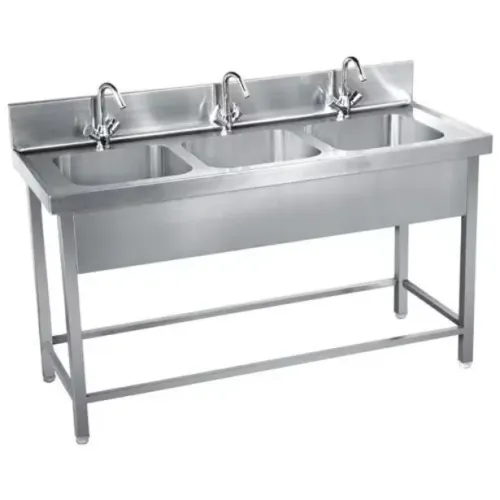
1. Map the workflow and cleaning route. Keep raw garnishes away from dirty glass return, provide a handwash sink, and confirm that shelves, drip trays and drain points can be removed without dismantling the counter.
2. Check construction and sanitation. Inspect welds, corners, door gaskets and shelf clips for smooth, accessible surfaces. Specify neutral cleaners and prompt rinsing because salt, bleach residue, hard water and acidic spills can pit stainless steel.
Ask for sanitation certification suited to the equipment: NSF/ANSI 7 for commercial refrigerators and freezers, and NSF/ANSI 12 for automatic ice makers.
3. Confirm utilities in writing. Record voltage, phase, plug type, circuit rating, water pressure, inlet filtration, drain size and drain fall. Provide condenser airflow and room ventilation; a cabinet tested at 32°C can run continuously in a hot Delhi bar, so request a tropical or approximately 43°C rating where air-conditioning is unreliable.
4. Secure service support before paying. Ask for condenser-filter access, gasket replacement procedure, stocked hinges and shelf clips, descaling intervals, and a named response time. Vinaayak Enterprises can help validate these installation details when its back-bar equipment is being specified, rather than leaving fit and maintenance to the installer.
Related products
 | Bar & Beverage Equipment A well-designed bar setup requires high-quality and durable equipment to ensure smooth operations, efficient beverage preparation, and an excellent... View product → |
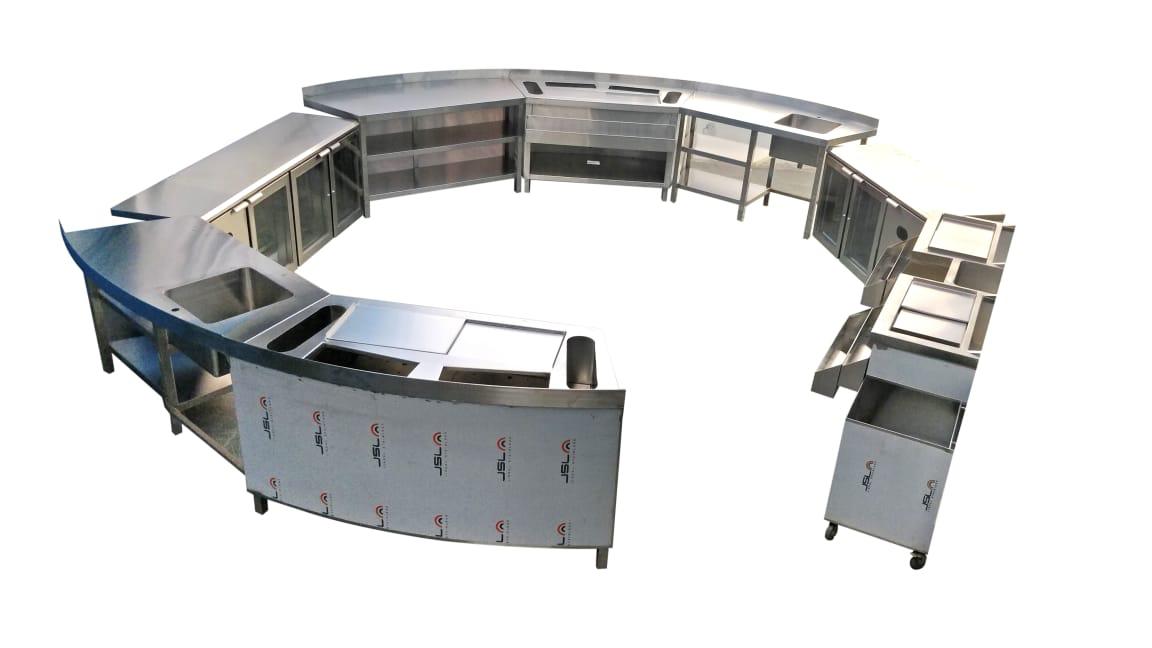 | Bar & Beverage Equipment Vinaayak Enterprises offers premium-quality Round Bar Counter designed to provide a stylish, modern, and functional beverage serving solution for... View product → |
Frequently asked questions
How should you size commercial bar equipment?
Use sales and workload from the busiest 60 minutes, including drinks, bottles, ice and chilled stock handled during the rush.
What should you check before installing a 2-Door Back Bar Chiller?
Measure the equipment footprint, doorway route, ventilation clearance, door swing, power supply and access for cleaning and repairs.
How do bottle and wine chillers differ?
Bottle storage supports fast access to frequently used drinks, while wine storage must protect the serving temperatures and presentation needs of different wines.
How can you protect ice hygiene?
Match ice production to peak-hour demand, keep ice away from bottles and waste, use a dedicated scoop and clean the bin on a documented schedule.
Related products
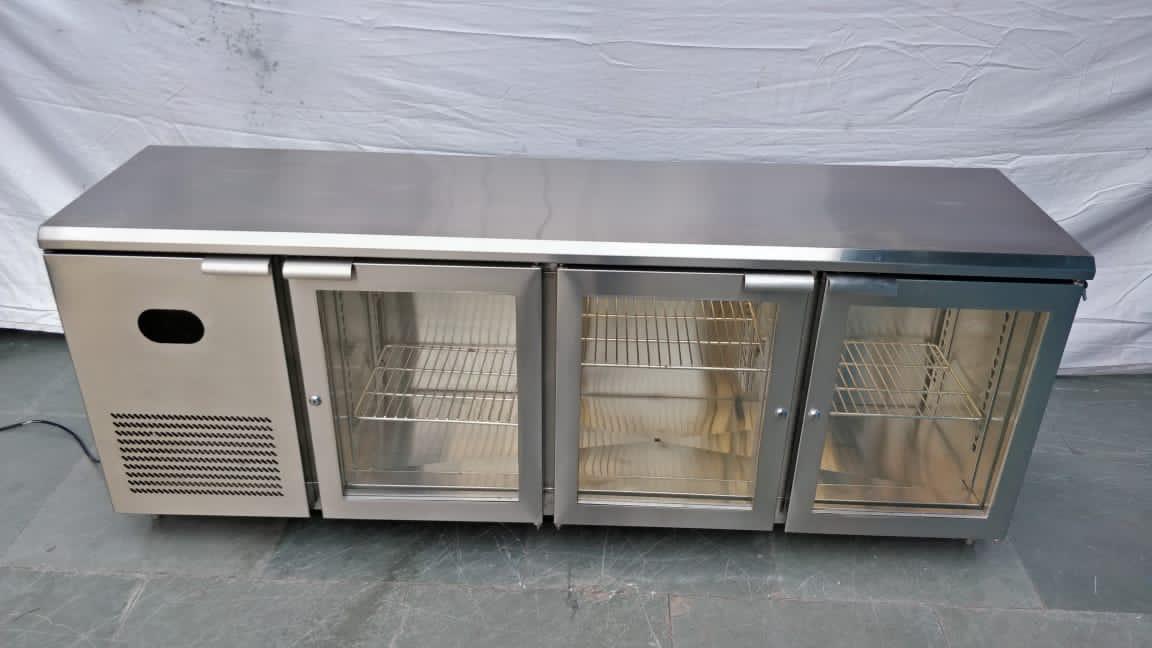 | Bar & Beverage Equipment Vinaayak Enterprises offers premium-quality SS Back Bar designed for efficient beverage storage, cooling, and display in commercial hospitality... View product → |
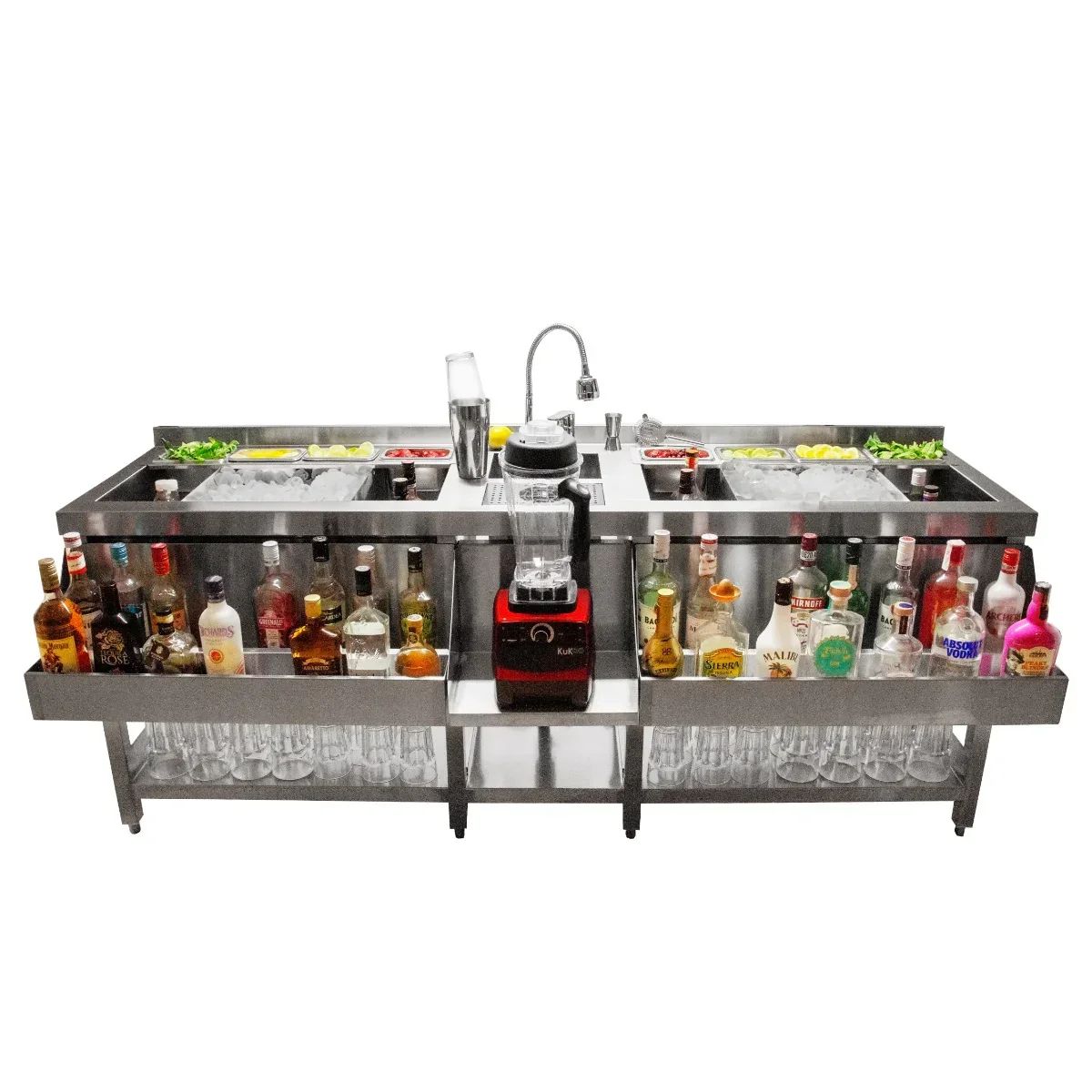 | Bar & Beverage Equipment Vinaayak Enterprises offers premium-quality Cocktail Stations designed for efficient beverage preparation and organized bar operations in commercial... View product → |
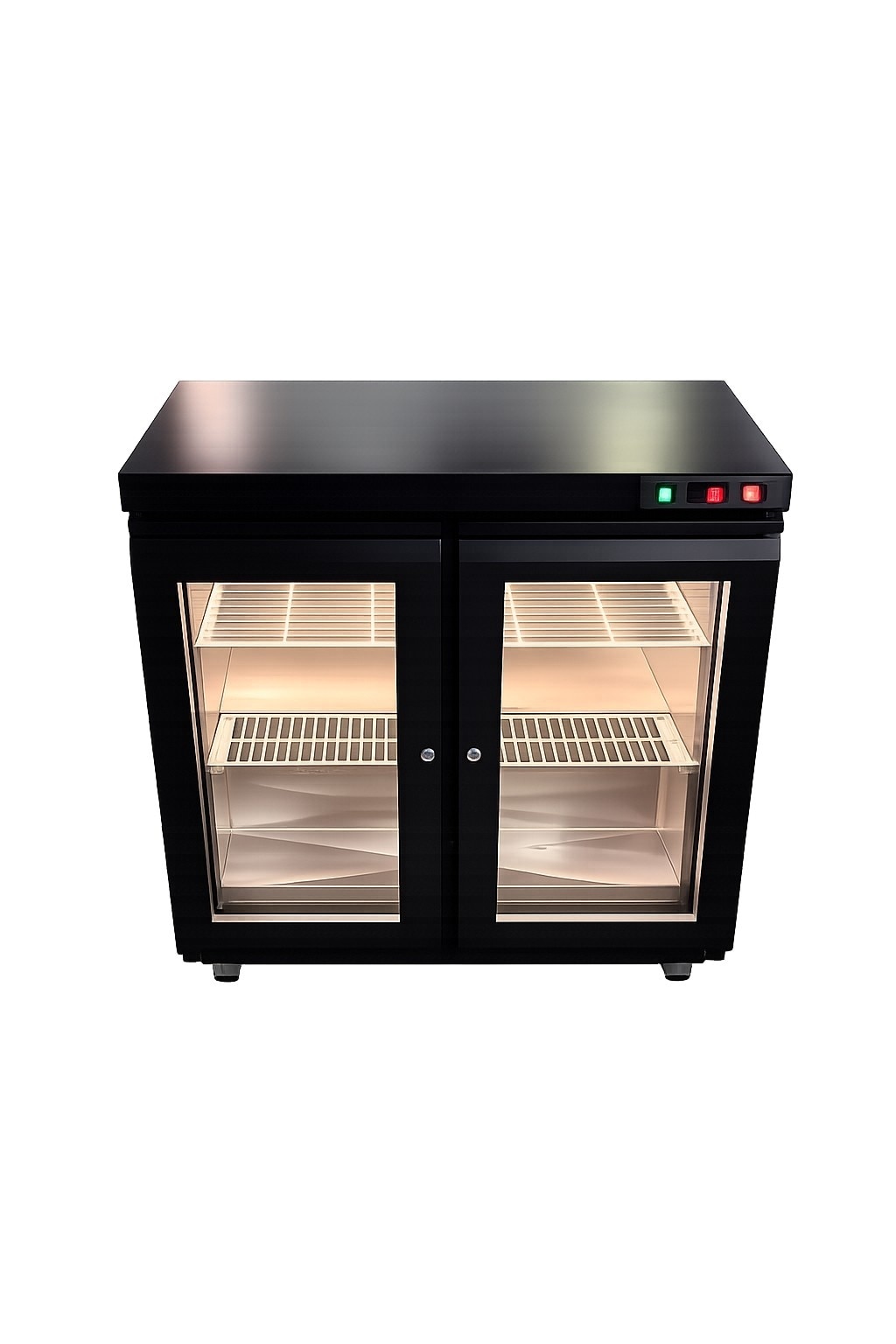 | Bar & Beverage Equipment Vinaayak Enterprises SS 2-Door Back Bar Chiller is designed for professional bars, restaurants, hotels, cafés, lounges and hospitality establishments... View product → |
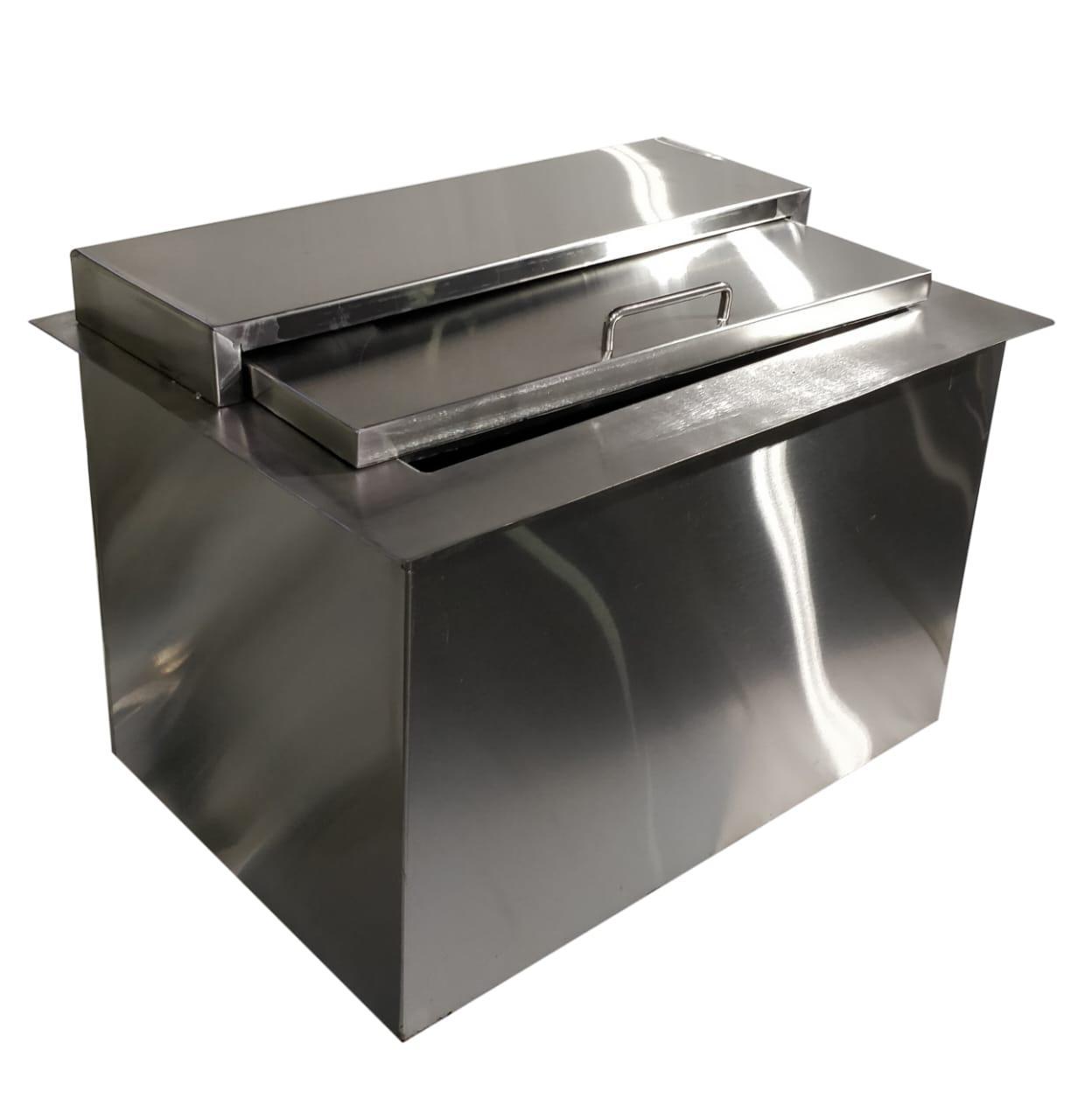 | Bar & Beverage Equipment Vinaayak Enterprises Built-In Ice Bin is designed for commercial bar and beverage stations that require convenient access to ice during drink... View product → |
Keywords