A burner count alone cannot tell you whether a cooking station will keep up with service. By comparing pan capacity, vessel weight, heat control, operator access, fuel, ventilation and cleaning requirements, you can specify equipment that fits both your menu and your kitchen.
Key takeaways
- Size equipment for the busiest 15 minutes of service.
- Choose burners by usable vessel capacity, not burner count alone.
- Match each station to its vessels, heat pattern and cooking movement.
- Test gas safety, heat control, cleaning access and installation before purchase.
Start with the menu, not the burner count
Calculate cooking capacity from the busiest 15 minutes of service, not your average order count or a range’s burner total.
1. List every pan used during that peak period. Record each pan’s diameter, batch size and cooking time, then estimate simultaneous demand by multiplying orders per hour by cooking time in hours. Twenty orders per hour with a six-minute pan time equals two active pan positions, before allowing for transfers, overlap and reheating.
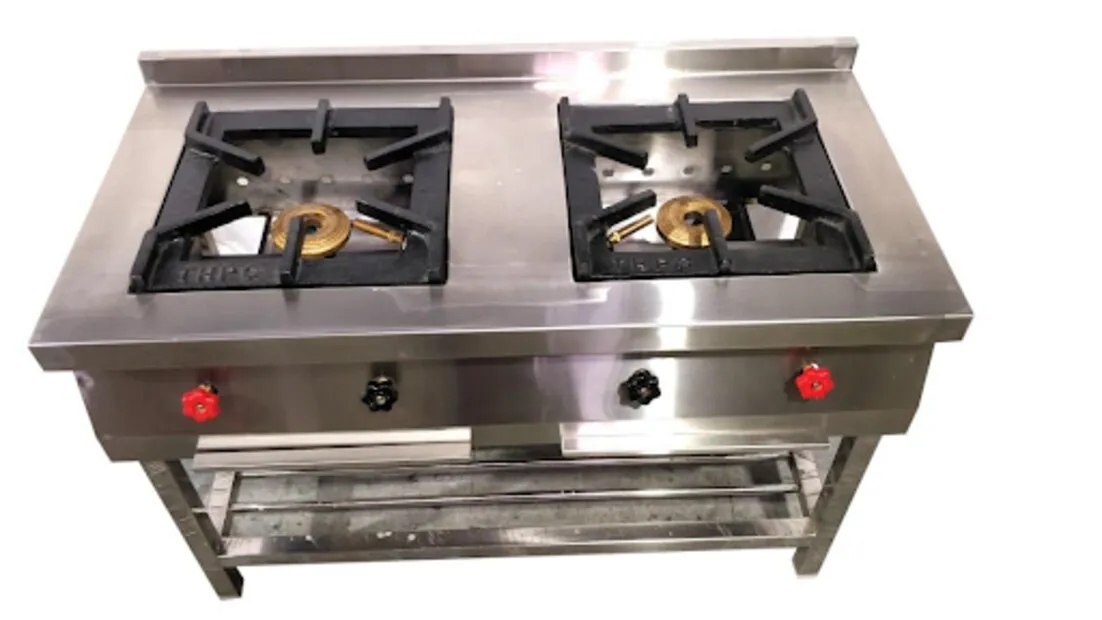
2. Add separate positions for sauces, boiling water, frying, finishing and backup work. A 2-Burner Commercial Cooking Range suits a menu that genuinely needs two active pans, but a 3-Burner Commercial Cooking Range may deliver more useful capacity when one station handles sauce or finishing while two handle core production.
Test the layout with your actual kadai, tawa, saucepan and stockpot.
3. Measure the installed footprint, not only catalogue width. Include gas-pipe access, rear servicing space, hood overhang, cleaning access and the route for removing the unit. Ask for the maximum recommended vessel diameter at each position. A four-burner range accepting small pans can produce less than a two-burner model with wide spacing.
Check that operators can reach every control without crossing hot pans. Peak simultaneous demand determines usable stations.
Choose two, three, four or six burners by usable capacity
Choose the burner count by simultaneous usable pans, not by the number printed on the fascia.
| Size | What it handles | When it applies |
|---|---|---|
| 2 burners | Two active pans | Limited floor space, or large vessels that would overlap on a longer deck |
| 3 burners | Two core-production pans plus one sauce or finishing pan | A compact station needing a practical compromise |
| 4 burners | Four genuinely simultaneous tasks | Menus with sustained parallel cooking |
| 6 burners | Five or six active positions | Peak service keeps nearly every burner occupied |
A 2-Burner Commercial Cooking Range is not half as productive as a four-burner model by default. Pan diameter, burner spacing, output and operator access decide whether both positions can run high-output cookware without collisions. A longer deck wastes capacity when large vessels overlap.
A 3-Burner Commercial Cooking Range loses its advantage when a stockpot, kadai or tawa blocks the rear burner or front controls. Test the actual cookware at working height, with handles and ladling movements included.
Before comparing models, request:
- Fuel type and inlet pressure
- Burner input in kW or kcal/h
- Minimum stable flame and turndown range
- Ignition method and flame-failure protection
- Recommended vessel load and maximum diameter at each position
Run the test with pans in place, not an empty showroom frame. A six-burner range creates unused cost and congestion when peak demand rarely exceeds four active pans.
Match the station to the vessel and cooking movement
Choose the station by the vessel’s base, movement and full working load—not by burner output alone. An open-burner range suits small saucepans, kadai and mixed pan work where direct flame adjustment matters.
| Option | Supports | Choose it when |
|---|---|---|
| Open-burner range | Small pans and direct flame control | Sauce, sauté and mixed-pan cooking share the station |
| Commercial Stock Pot Stove | Heavy, tall vessels on a dedicated ring | Large batches need stable support and easy ladling |
| Commercial Hot Plate | Flat-bottom tawa and contact cooking | You need even contact heat or finishing space |
| Chinese cooking range | Round wok movement and draining | The cook needs room to lift, tilt, toss and control splashes |
| Romali Roti Counter | Dough stretching over a curved or convex surface | Roti production needs work, landing and heat-shielding space |
Select a Commercial Stock Pot Stove by pot base diameter, filled weight and pot height. Place the full vessel on the ring and check wobble, flame spill, restricted combustion air and safe access for lifting and ladling.
Confirm whether the support matches a flat-bottom, round-bottom or externally reinforced pot; a lower height reduces lifting, but it must suit operator stature and the pot-handling method.
A flat Commercial Hot Plate is the wrong choice for a rounded wok that needs concentrated flame access. A Chinese cooking range needs clearance for wok movement, draining and splash control.
For a Romali Roti Counter, inspect curvature, edge clearance, dough and utensil space, landing area and heat shielding. Test recovery after repeated rotis; an empty surface reaching high temperature does not prove consistent production.
Specify heat control, gas safety and cleanability together
A burner with high maximum output can still scorch sauce if its flame will not hold steady at low setting. Specify heat control, gas safety and cleanability together, because poor adjustment, unsafe fuel conversion and trapped grease all damage production.
1. Match output to the job. Sauces need a stable low flame; stock needs rapid boiling and recovery after a cold pot is loaded. Ask for the minimum stable flame in writing, then verify it during a live test with your cookware. Without that figure, a large vessel can scorch food despite ample maximum output.
2. State LPG or PNG before ordering in Delhi. Injector orifice size, regulator arrangement, supply pressure and burner tuning depend on the fuel. An unapproved conversion can cause soot, flame lift or poor combustion.
On every open burner, test flame-failure protection, shutoff response and access to the service parts; a manual knob is not enough when a boil-over extinguishes the flame.
3. Coordinate total gas input with the exhaust hood, heat-load calculation and makeup-air provision. An undersized hood lets heat and smoke escape and can disrupt combustion. Apply the same check to a Commercial Stock Pot Stove and a 3-Burner Commercial Cooking Range.
4. Inspect cleanability as an operating specification: removable trivets and burner heads, sealed or minimized crevices, rounded corners, accessible spill zones and a practical grease-removal method. A polished exterior does not compensate for trapped food or inaccessible burners.
Turn the specification into an installation and buying test
Give every supplier the same menu, pan list, filled vessel weights, fuel type and peak service requirement. Compare usable simultaneous positions, not burner count alone.
| Equipment | Select it when | Reject it when |
|---|---|---|
| 2-Burner Commercial Cooking Range | Two pans run together and floor space is tight | Large vessels overlap or two high-output pans cannot operate together |
| 3-Burner Commercial Cooking Range | Two stations cook core items while one handles sauce or finishing | A kadai, saucepan or stockpot blocks the third burner |
| 4-burner range | Four tasks genuinely run at peak service | The extra positions remain idle |
| 6-burner range | Five or six pans stay active during the peak period | The deck adds unused equipment and cleaning work |
Request a dimensioned drawing showing working height, burner spacing, maximum vessel diameter at each position, rear clearance, service access and connection points. A narrow burner layout can make a nominally larger range less productive.
Bring the actual cookware. Place every pan on its intended burner, operate adjacent positions together, check front-control access and confirm that handles do not collide. On a Commercial Stock Pot Stove, test the full intended pot for wobble, ring contact, flame spill, working height and safe lifting clearance.
For a Romali Roti Counter, mark dough, flour, utensil and cooked-roti landing areas around the heated surface. Ask for written fuel and pressure requirements, input rating, minimum stable flame, ignition system, flame-failure device, recommended load and cleaning instructions.
Confirm hood coordination before delivery, including heat load and makeup air, and preserve a route for installation and future removal. Vinaayak Enterprises can help compare ranges, stock-pot stations and roti layouts against one production brief. Judge usable output, serviceability and operator safety—not stainless-steel finish or burner count.
Related products
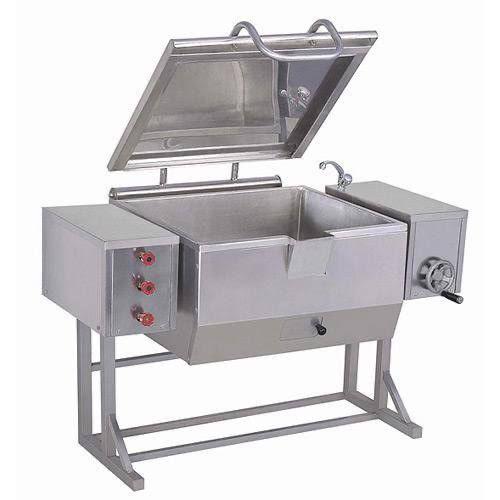 | Bulk Cooking Equipment Vinaayak Enterprises Tilting Braising Pan is a commercial bulk cooking solution designed for professional kitchens that require controlled,... View product → |
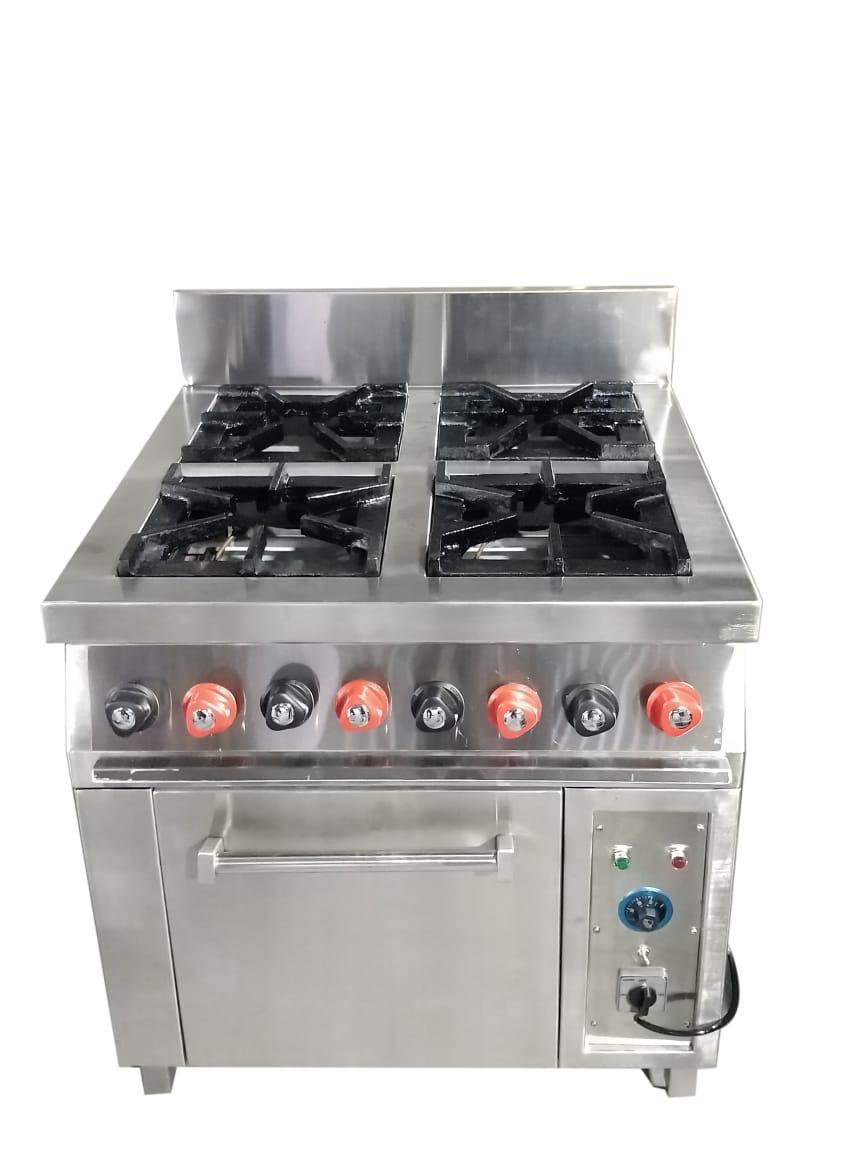 | Hot Cooking Equipment & Specialty Counters 4-Burner Commercial Cooking Range with Oven Vinaayak Enterprises 4-Burner Commercial Cooking Range with Oven is designed for professional kitchens that require multiple cooking stations along... View product → |
Frequently asked questions
How should you decide how much cooking capacity a professional kitchen needs?
Calculate the number and type of dishes produced during the busiest 15 minutes of service, then match that demand to usable vessel space and recovery time.
How do you choose between two-, three-, four- and six-burner commercial ranges?
Compare the vessels you need to run at peak service, including their diameters, clearances and cooking times, rather than counting burners alone.
When is a commercial stock pot stove better than a standard cooking range?
Choose a commercial stock pot stove for large, tall or heavy vessels that need concentrated heat and stable support.
What should you test before buying and installing cooking equipment?
Check heat control, flame failure protection, gas connections, cleaning access, ventilation clearances, service access and the floor or counter requirements.
Related products
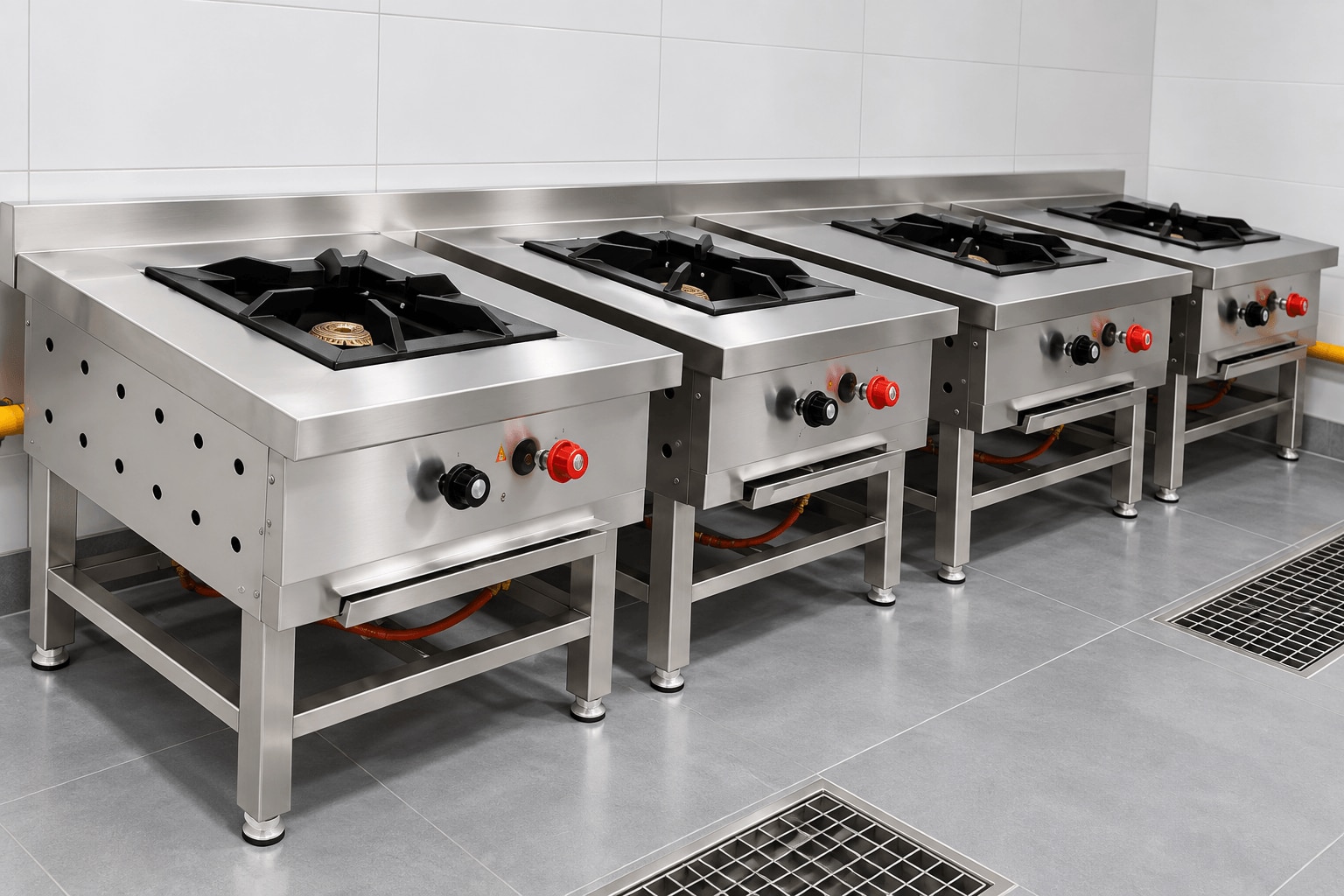 | Bulk Cooking Equipment Vinaayak Enterprises Commercial Stock Pot Stove is designed for high-volume cooking applications where large quantities of food need to be prepared... View product → |
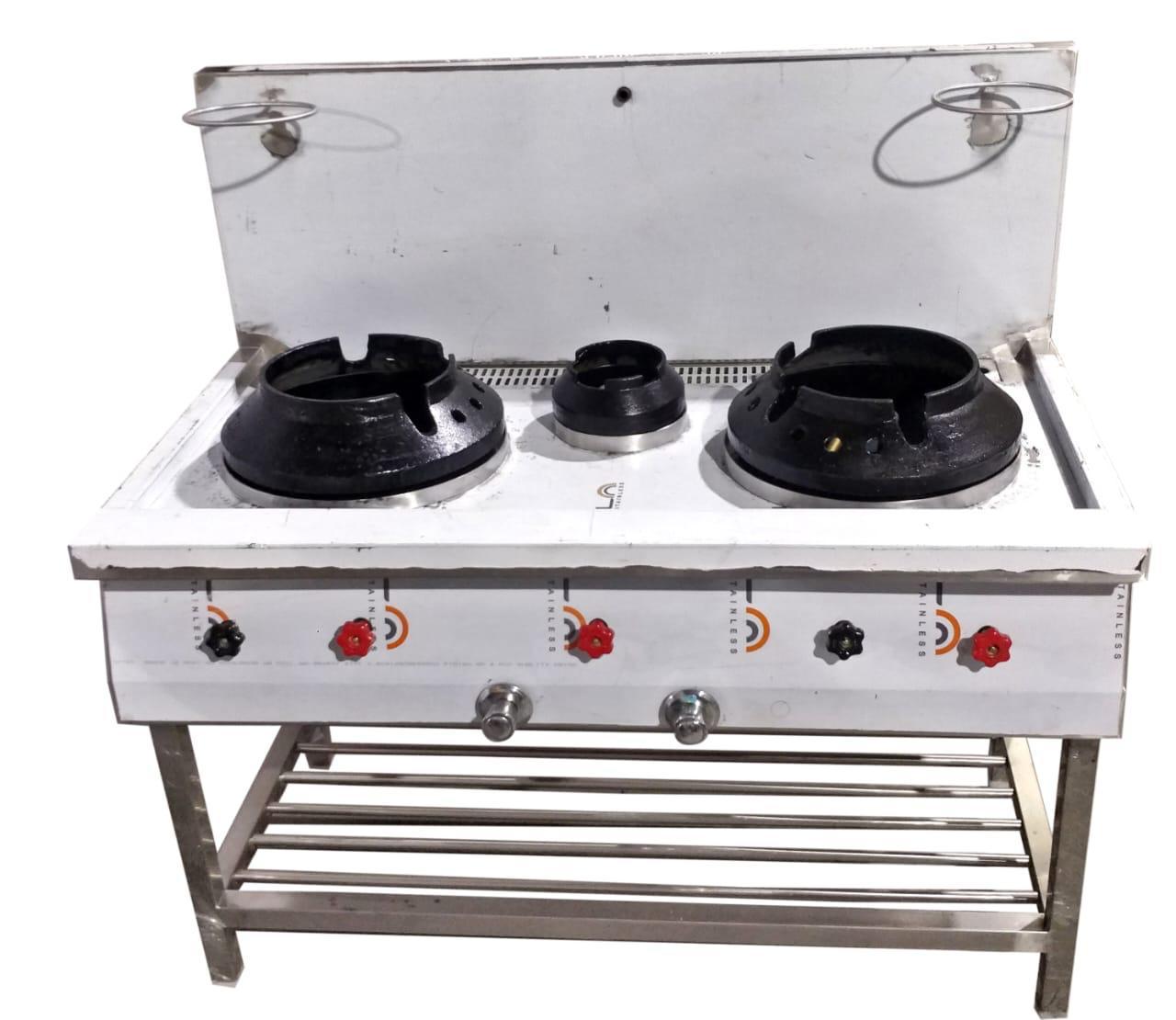 | Hot Cooking Equipment & Specialty Counters Commercial Chinese Cooking Range Vinaayak Enterprises Commercial Chinese Cooking Range is designed for restaurants, hotels, food courts, QSRs and professional kitchens that prepare... View product → |
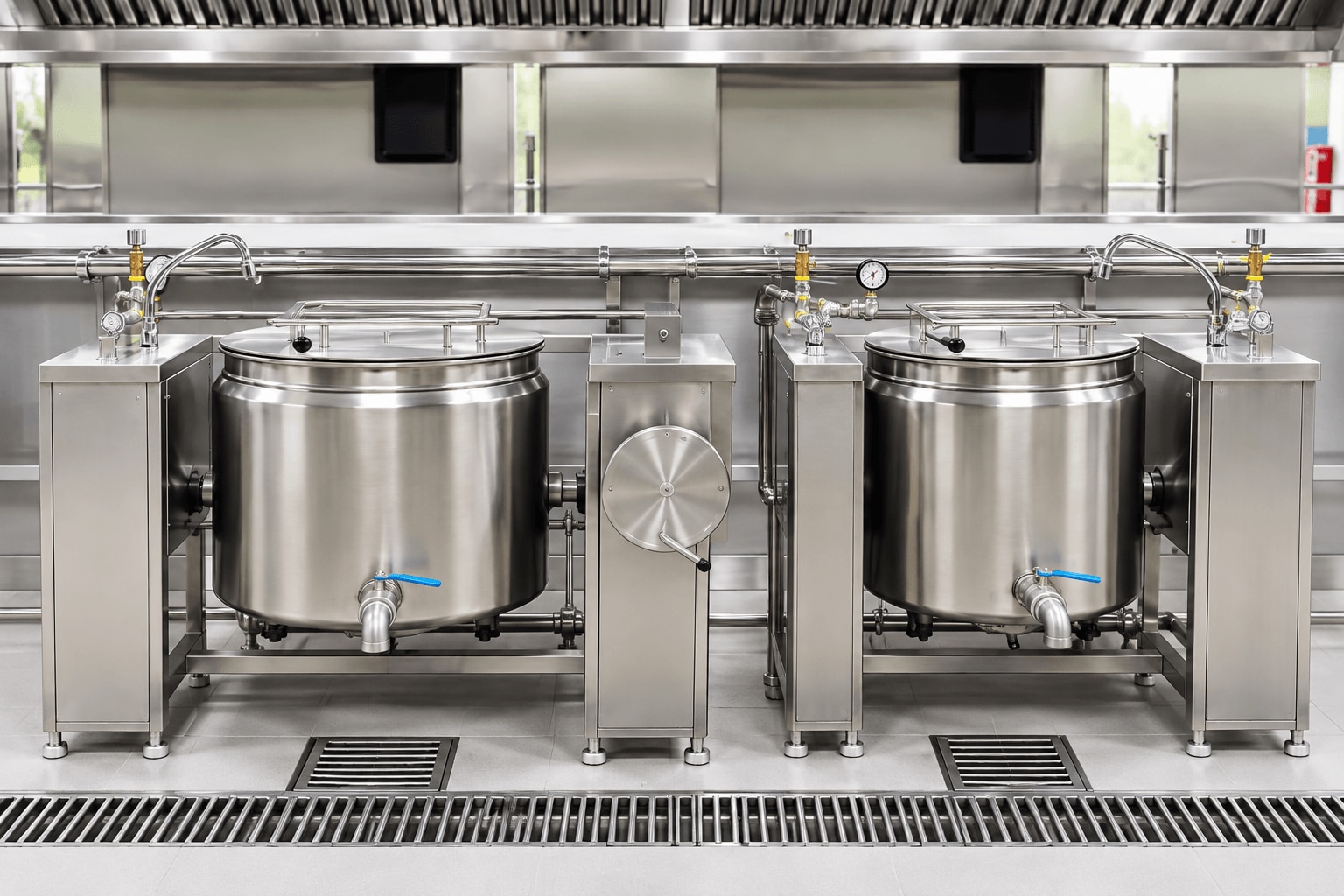 | Bulk Cooking Equipment Tilting Boiling Pan / Bulk Cooker Vinaayak Enterprises Tilting Boiling Pan / Bulk Cooker is designed for large-scale preparation of food in commercial and institutional kitchens. View product → |
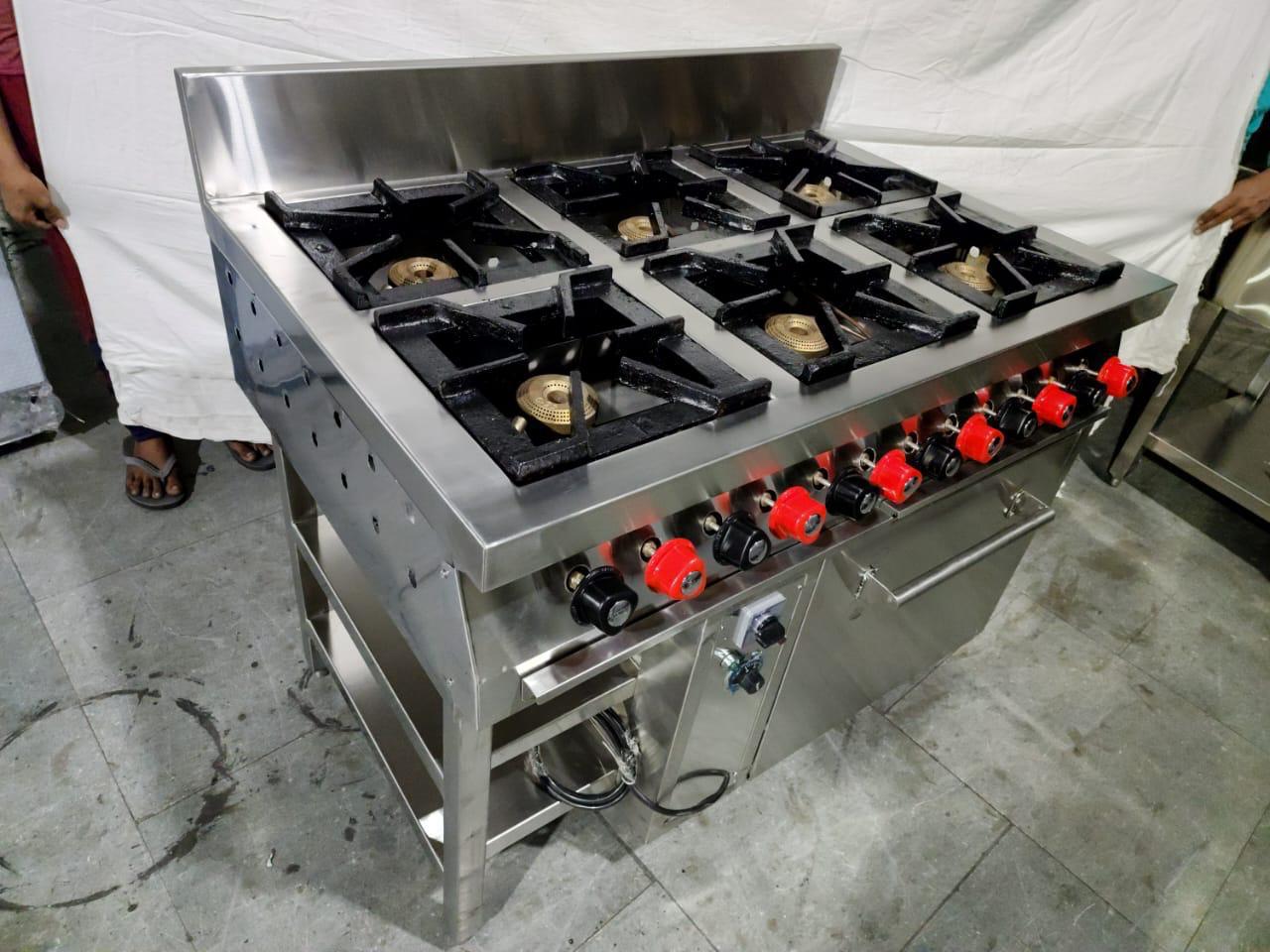 | Hot Cooking Equipment & Specialty Counters 6-Burner Commercial Cooking Range with Oven Base Vinaayak Enterprises 6-Burner Commercial Cooking Range with Oven Base is designed for high-volume commercial kitchens that need multiple cooking... View product → |
Keywords