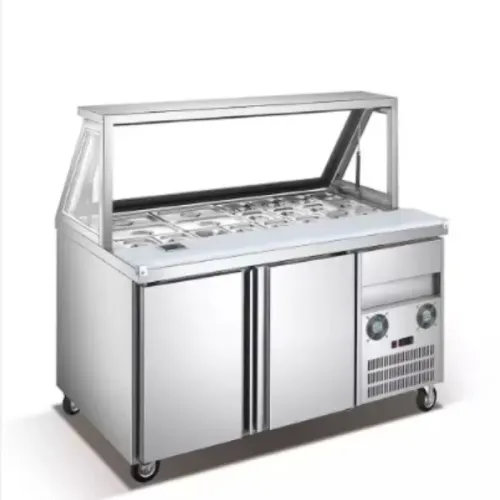
Safe kitchen operations depend on separating dirty, raw, cooked, clean and chemical-handling tasks before you choose equipment. By the end, you will be able to assign each sink and work area correctly, specify cleanable stainless-steel equipment, and check whether storage and warewashing arrangements support daily hygiene.
Key takeaways
- Keep food flow moving from receiving to dispatch without backtracking.
- Install a dedicated hand-wash sink; a Three Sink Unit is not a substitute.
- Match each Stainless Steel Sink to hand washing, food preparation or warewashing.
- Choose smooth, accessible equipment that staff can clean completely.
Build the kitchen around separate hygiene zones
Arrange the kitchen as a one-way flow from receiving and raw-food preparation to cooking, cooked-food assembly, service, and dispatch. Keep hand washing separate from every food-preparation and warewashing activity; a Three Sink Unit never replaces a dedicated hand-wash sink.
| Zone | Equipment arrangement | Cross-contamination control |
|---|---|---|
| Hand washing | Dedicated hand sink at the entry to preparation and cooking areas | Provide running water, cleanser, and effective hand drying; do not use it for utensils |
| Raw-food preparation | Preparation sink and Stainless Steel Work Table near refrigeration | Keep raw meat, poultry, seafood and vegetables away from cooked-food assembly |
| Cooked-food handling | Separate work surface and clean utensil storage after the cooking line | Prevent raw containers and used tools from crossing into this zone |
| Warewashing | Pot-wash sink or three-compartment Stainless Steel Sink at the dirty end, with drainboards | Move dirty items in, then return cleaned items to storage without passing through prep |
| Storage and waste | SS Storage Rack and cabinets on the clean side; covered waste containers near the exit | Keep food and utensils at least 15 cm above the floor and remove waste without crossing clean zones |
Choose a Stainless Steel Work Table with sealed tube ends, cleanable leg-to-top joints, and clearance beneath and behind it. Avoid casters, undershelves, raised lips, hollow sections and overlapping joints that create inaccessible dirt traps. Store chemicals in a labelled cabinet away from food, utensils and packaging.
Keep waste containers out of food-preparation paths, and clean spills before they reach sinks or storage.
Match each sink to the task it must perform
A hand-wash sink is for hands only; preparation, pot-wash and warewashing sinks serve food, equipment or utensils instead.
| Sink | Assigned task | Essential distinction |
|---|---|---|
| Hand-wash sink | Washing hands | Dedicated, conveniently located, with running water, cleanser and effective hand-drying provision |
| Preparation sink | Washing produce and food ingredients | Keep separate from hand washing and dirty utensil washing |
| Pot-wash sink | Cleaning large, greasy cookware | Choose a bowl deep and wide enough to immerse the largest pot |
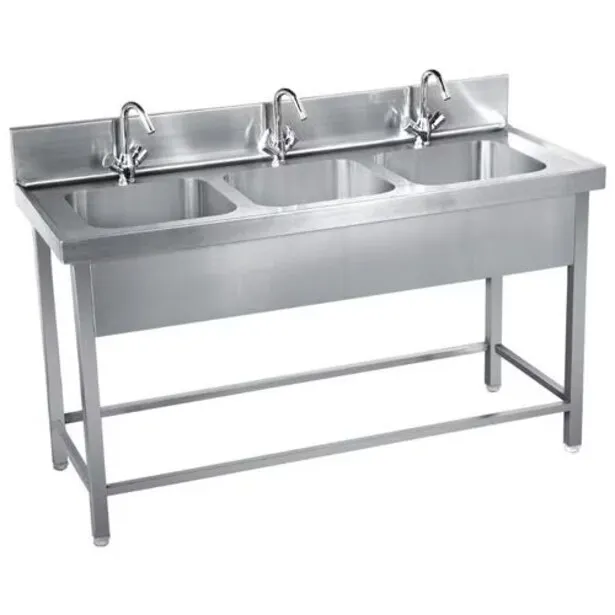
| Three Sink Unit | Manual warewashing | Provides separate wash, rinse and sanitise compartments |
Operate a Three Sink Unit in order: wash with detergent, rinse with clean water, then sanitise with the approved hot-water or chemical method. Follow the sanitiser label for concentration and contact time, and use the correct test strips or chemical test kit; foam, smell and clear-looking water prove nothing.
Keep each compartment at the required working condition and replace dirty water.
- Scrape food into waste before the wash compartment.
- Immerse items fully in the wash basin, then transfer them to the rinse basin.
- Immerse them in the sanitising solution for the stated contact time.
- Place items on a clean drainboard to drain and air-dry; do not towel-dry food-contact surfaces.
- Keep the Stainless Steel Sink’s drainboard, waste outlet and splash areas clean during the shift.
A two-bowl sink cannot provide the same dedicated wash-rinse-sanitise sequence without an additional approved basin or sanitising method. A Three Sink Unit never replaces the dedicated hand sink.
Control hand washing, cleaning and sanitising
A dedicated hand-wash sink must have running water, cleanser, single-use towels or an effective hand dryer, and clear access throughout the shift. Keep it separate from a Stainless Steel Sink used for food preparation or utensil washing; a Three Sink Unit never replaces it.
Keep the hand sink exclusive to handwashing. Do not wash utensils, thaw food, dump waste, or store cleaning chemicals there. Refill soap and towels before service, and require handwashing after handling raw food, waste, chemicals, dirty utensils, or touching the face and hair.
Operate the Three Sink Unit in this order:
- Fill the wash compartment with detergent solution at the product’s stated temperature and concentration.
- Rinse every item in clean water until detergent and food soil are removed.
- Immerse items in the sanitising compartment at the label-specified concentration and contact time; verify strength with the correct test strips or chemical test kit.
- Air-dry items on the drainboard. Do not towel-dry them, and do not judge sanitizer strength by foam, smell, or appearance.
Clean and sanitise food-contact surfaces between raw and ready-to-eat work, after spills, and at the frequency required by your local food code. Use separate, identified cloths for dirty and sanitised areas, rinse chemical residue where the label requires it, and dry stainless steel after cleaning.
Bleach residue, salt, steel wool and prolonged moisture can pit stainless steel.
Specify equipment that can be cleaned completely
A genuinely hygienic unit has no place where food soil, water or insects can hide. Judge a Stainless Steel Work Table, SS Storage Rack and Kitchen Storage Cabinet by their joints, undersides and internal sections—not by the polished front.
| Feature | Specify | Reject |
|---|---|---|
| Food-contact surface | Smooth, corrosion-resistant, nonabsorbent stainless steel; no pits, folds, open seams or crevices | Rough welds, exposed fasteners, dents or folded edges that retain residue |
| Joints and tubes | Ground or finished welds, sealed tube ends and cleanable leg-to-top connections | Hollow sections, unsealed tube ends and overlapping joints |
| Edges and interiors | Closed, smooth cabinet interiors with protected edges and no moisture pockets | Exposed particleboard, raw plywood, gaps or damp internal cavities |
| Clearance | Enough space beneath and behind equipment for a mop, brush and inspection—or a continuous seal to the floor and wall | A cabinet or rack pushed tight against a wall, or an inaccessible underside |
| Accessories | Sealed adjustable feet, hygienic casters and shelves that do not create dirt traps | Raised lips, feet, undershelves or castors that block cleaning access |
Specify cleanability rather than sheet thickness. A thick panel does not compensate for a crevice or inaccessible underside. Ask for construction drawings or inspect a sample, then confirm that the equipment conforms to NSF/ANSI 2 where applicable; the mark does not replace local plumbing, drainage, electrical, fire or food-safety checks.
Turn hygiene requirements into a purchase and installation check
Accept the installation only after the supplier demonstrates cleanability, correct sink separation, and access for routine cleaning.
1. Inspect every Stainless Steel Work Table for smooth, corrosion-resistant surfaces without pits, folds, open seams, or crevices. Require sealed tube ends, finished welds, cleanable leg-to-top joints, and enough clearance beneath and behind the table.
2. Check the Three Sink Unit against the largest utensil you will wash. Confirm three usable compartments for wash, rinse, and sanitise, plus drainboard space, and obtain the correct sanitizer test strips or chemical test kit. Foam, smell, or clear-looking water proves nothing about sanitizer strength.
3. Confirm the dedicated handwashing sink is separate from the Three Sink Unit and any Stainless Steel Sink used for preparation or warewashing. It must have running water, cleanser, and an effective hand-drying provision within convenient reach.
4. Ask the supplier to show the equipment’s final position, including plumbing clearance, backsplash, waste outlet, and drainboard orientation. Floor-mounted units need sufficient elevation for cleaning underneath or a continuous floor seal; counter-mounted units need the same treatment.
5. Pull an SS Storage Rack away from the wall and inspect its rear, underside, feet, and joints. Reject any layout that leaves inaccessible dirt traps or stores clean utensils where splash from raw-food preparation can reach them.
Whether you buy from Vinaayak Enterprises or another supplier, record dimensions, materials, test-kit specifications, seals, clearances, and the signed installation drawing before delivery. Photograph defects before acceptance.
Related products
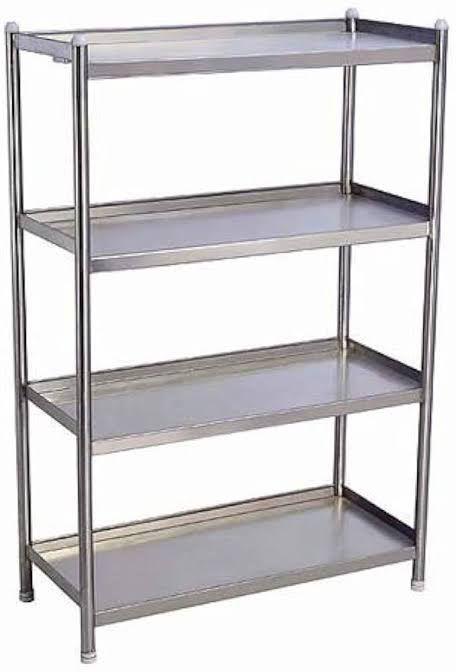 | Worktables, Sinks & Storage Vinaayak Enterprises offers premium-quality Clean Dish Racks designed for hygienic storage and organized handling of cleaned utensils and dishes in... View product → |
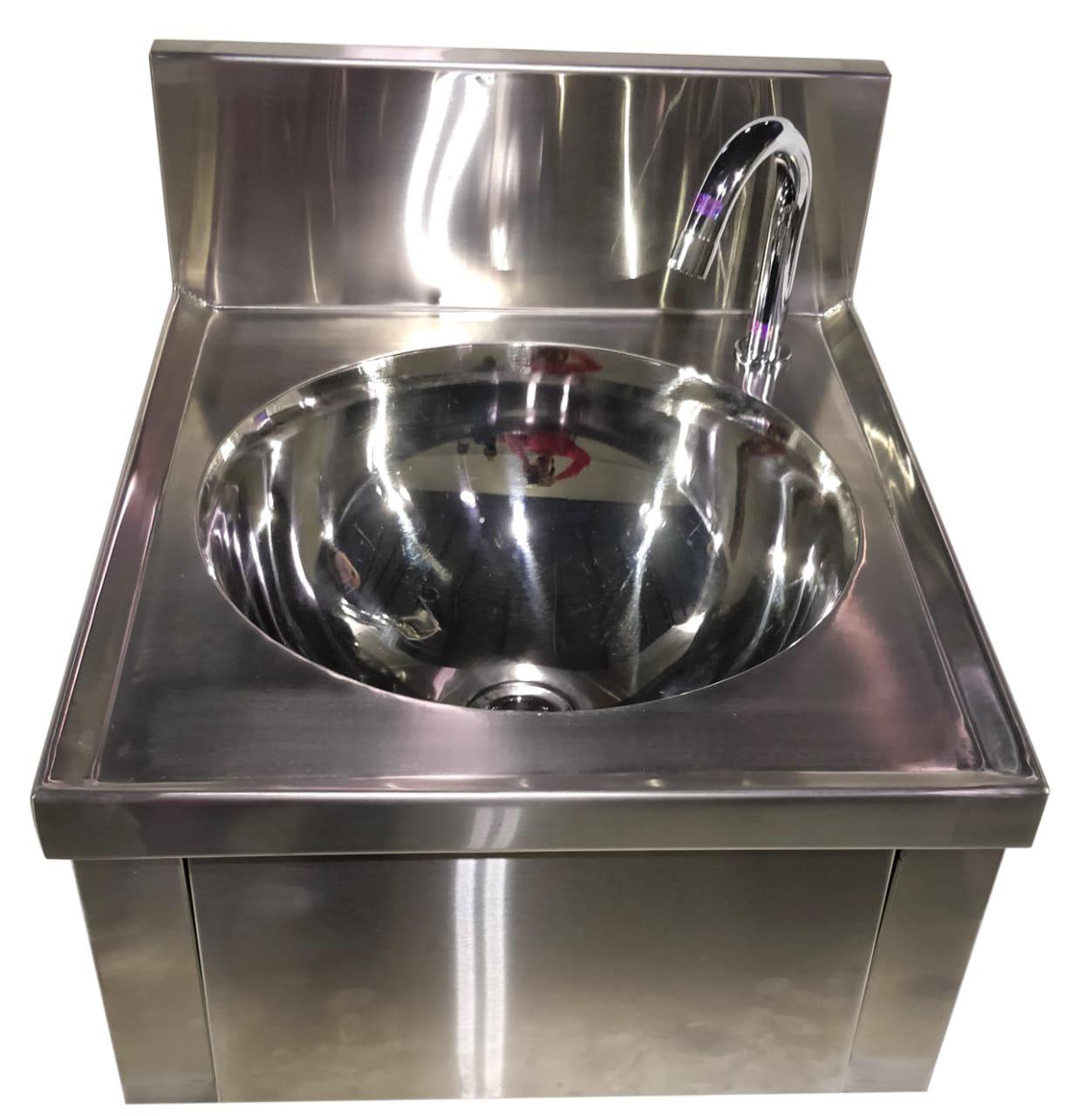 | Worktables, Sinks & Storage Vinaayak Enterprises Commercial Hand Wash Sink is designed for professional kitchens and foodservice environments where convenient hand-washing... View product → |
Frequently asked questions
Why must a commercial kitchen use separate hygiene zones?
Separate zones support one-way movement from receiving and raw-food preparation to cooking, cooked-food assembly, service and dispatch. They reduce contact between raw and ready-to-eat food areas.
Can a Three Sink Unit replace a dedicated hand-wash sink?
No. Hand washing must remain separate from food preparation and warewashing. Install a dedicated hand-wash sink where staff can reach it without crossing work zones.
How should you choose a Stainless Steel Sink?
Match the sink to its task: hand washing, food preparation or warewashing. Check its location, bowl size, drainage, splash control and access for cleaning before purchase.
What makes commercial kitchen equipment hygienic?
Specify smooth, durable surfaces, accessible joints, sealed edges and designs without unreachable gaps. Equipment must let staff clean and sanitise every food-contact and high-touch area.
What should you check before installing kitchen equipment?
Confirm the layout, sink roles, hand-wash access, cleaning access, drainage, clearances and storage locations. Check that Stainless Steel Work Tables, SS Storage Racks and Kitchen Storage Cabinets do not obstruct the intended workflow.
Related products
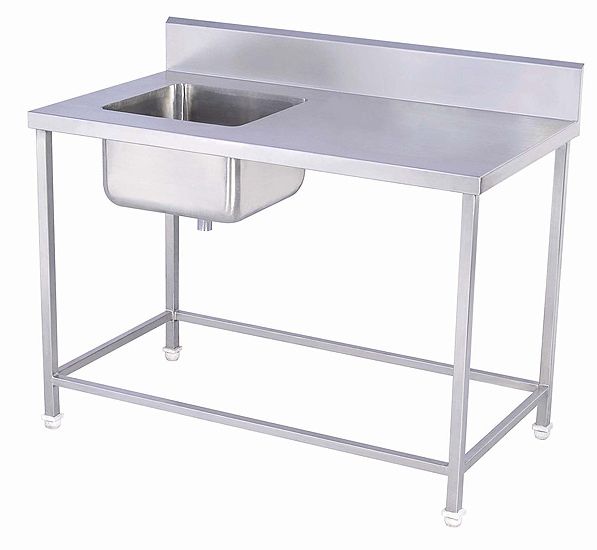 | Worktables, Sinks & Storage Vinaayak Enterprises offers premium-quality Work Table with Sink designed for efficient food preparation, washing, and workspace management in... View product → |
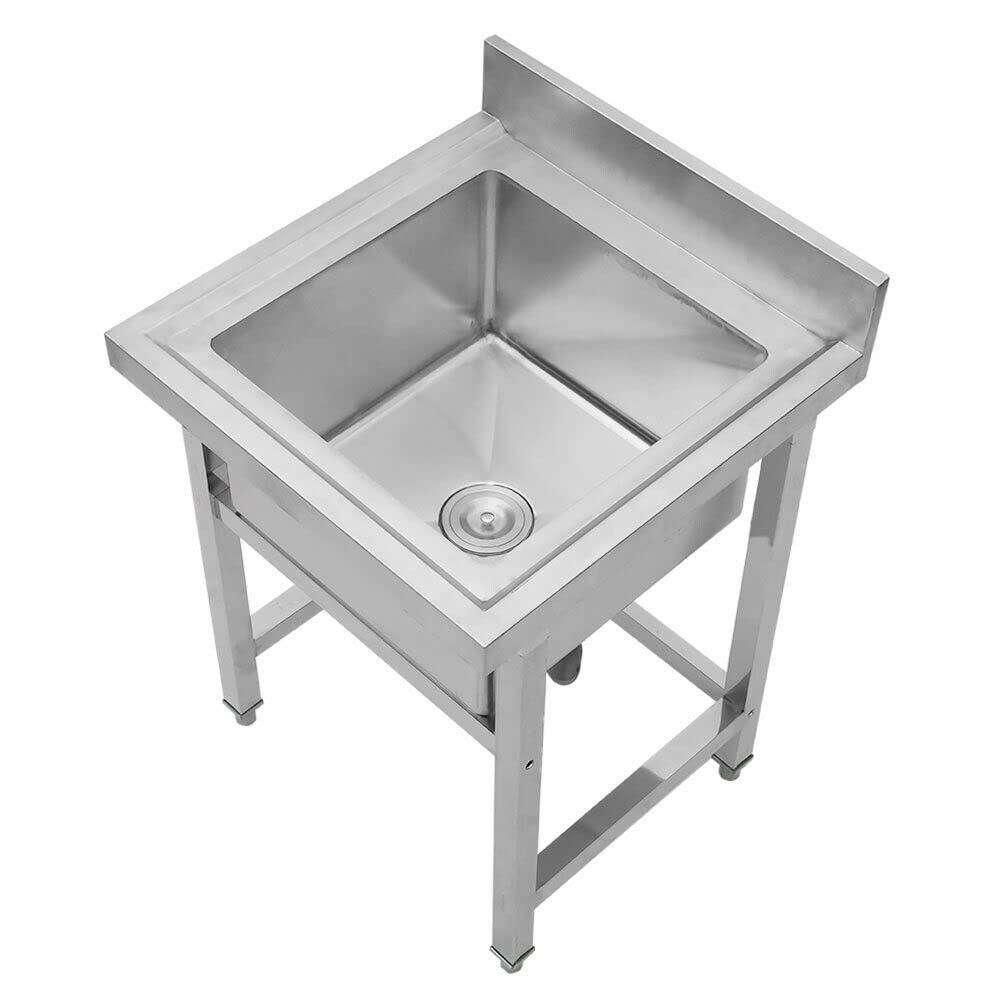 | Worktables, Sinks & Storage Vinaayak Enterprises offers premium-quality Single Sink Unit designed for efficient washing, cleaning, and food preparation applications in... View product → |
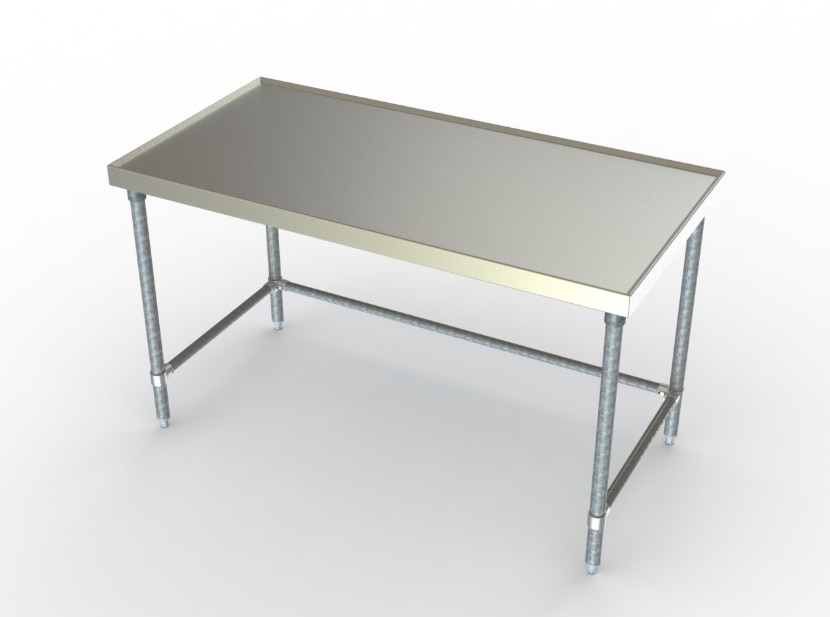 | Worktables, Sinks & Storage Commercial Work Table with Bracing Vinaayak Enterprises Commercial Work Table with Bracing is designed for professional kitchens that require a strong, practical and hygienic work... View product → |
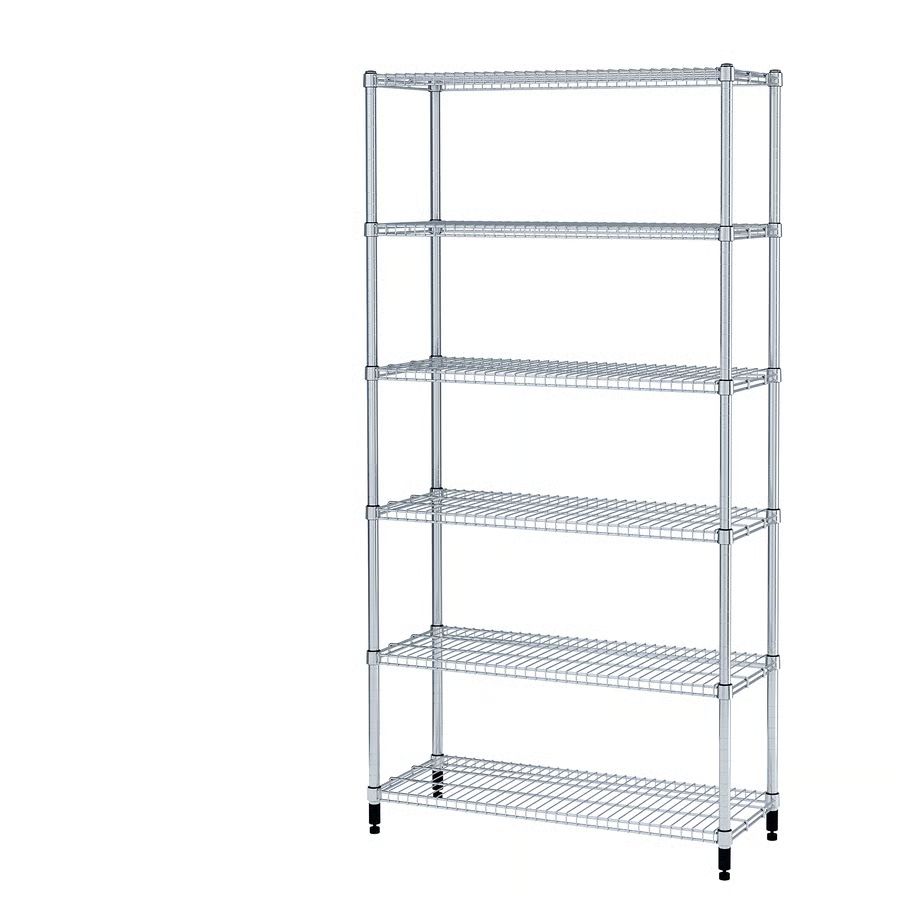 | Worktables, Sinks & Storage Vinaayak Enterprises offers premium-quality Storage Shelves designed for organized storage and efficient space management in commercial kitchens,... View product → |