Food storage becomes inefficient when staff walk too far, open the wrong cabinet, mix product categories or rely on a display temperature that does not match the food. By the end, you will be able to map storage zones, compare refrigeration formats, calculate usable capacity, verify operating performance and judge the support a manufacturer must provide.
Key takeaways
- Place frequently used ingredients beside the station that consumes them.
- Use bulk storage separately from smaller service refrigerators.
- Size cabinets by usable capacity, airflow and door-clearance needs.
- Test temperatures during peak service, not only when the kitchen is idle.
How storage zoning reduces handling, waste and door-open time
Place frequently used ingredients beside the preparation or cooking station that consumes them. The shorter route reduces handling and speeds service. Keep bulk stock in a separate cabinet or cold room, then replenish a smaller service cabinet instead of repeatedly opening one large unit.
Assign fixed shelf zones: raw meat on the lowest leak-proof shelf; seafood in its own sealed zone above raw meat; dairy in a separate labelled zone; produce away from raw animal products; ready-to-eat food above all raw foods; and allergens in sealed, clearly marked containers. This layout limits drips, cross-contact and searching.
- Inspect every delivery for damaged packaging, broken seals, leaks or unacceptable temperature.
- Record the supplier batch or lot number before putting the product away.
- Label each item as “Received: DD/MM/YYYY | Use by: DD/MM/YYYY | Lot: XXXXX”.
- Store it immediately in its assigned zone, leaving the evaporator outlet and air paths unobstructed.
- Use first-expire-first-out for dated products: move the earliest use-by date to the front. Use FIFO when no date is available.
- Check daily for uncovered food, blocked airflow, leaking containers and products resting directly against the evaporator outlet.
A drawer unit or narrow service cabinet beside the line limits each retrieval to a small door or drawer, reducing warm-air entry and temperature swings.
Cold holding does not replace safe cooking or cooling: cool cooked food from 135°F (57°C) to 70°F (21°C) within two hours, then to 41°F (5°C) or below within four more hours.
Which refrigeration format matches each storage role?
Match the cabinet to the movement of food: keep line ingredients close, bulk stock central, and high-volume storage separate from service access.
| Format | Best role | Wrong-choice warning |
|---|---|---|
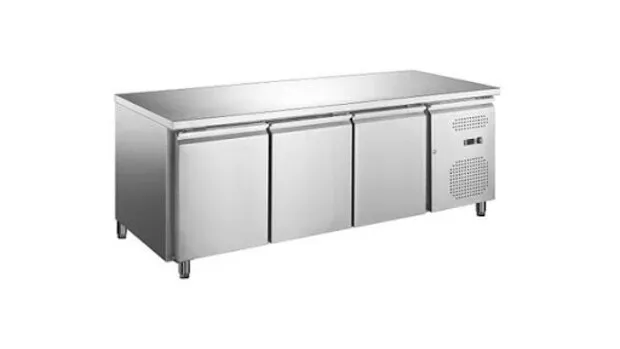
| 3-Door Undercounter Refrigerator | Ingredients below the worktop and beside the line | Do not choose it by door count; dividers, the compressor compartment and shelf layout reduce usable capacity. |
| 2-Door Commercial Vertical Refrigerator | More storage per square metre for reach-in stock | Avoid it where door swing, vertical service clearance or aisle space is unavailable. |
| 4-Door Commercial Refrigerator | Frequent access to several product groups | Avoid it if extra gaskets, hinges, mullions and adjustment points exceed the access benefit. |
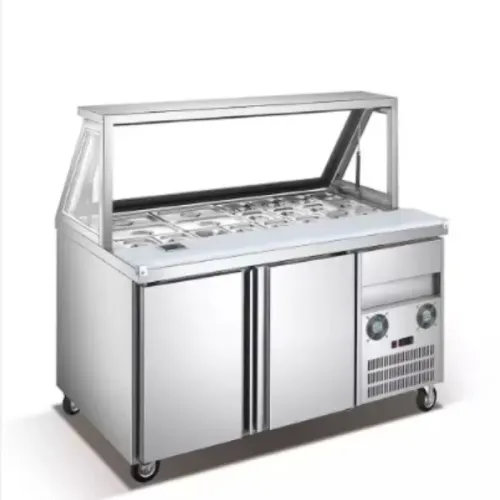
| Prep Refrigerator with Drawers | Rapid mise en place access at the preparation station | Do not use it for bulk holding; drawer height and pan depth limit capacity. |
| Cold room | High-volume central storage | Avoid it for a small line; it wastes space and adds walking distance. |
A 3-Door Undercounter Refrigerator keeps ingredients at hand without raising the work surface, but three doors do not guarantee more usable space. Check internal dimensions and container fit rather than counting openings.
A 2-Door Commercial Vertical Refrigerator stores more in a smaller floor area, yet its door-swing arc and vertical service clearance can disrupt a tight kitchen. A 4-Door Commercial Refrigerator exposes less cabinet volume with each narrower opening, although its dividers reduce usable width and create more maintenance points.
Use a Prep Refrigerator with Drawers for pans of chopped vegetables, sauces and proteins needed during service. Confirm the actual drawer height, maximum pan depth and cleaning access before buying. Choose a cold room only when replenishment volume justifies a separate central store and the extra travel.
How to size the cabinet for real capacity and site conditions
Size the cabinet from the space, containers and service demand—not its advertised gross litres. A cabinet that fits the menu but blocks an aisle, door or service panel will slow work and create installation failures.
1. Measure floor space, wall clearance, aisle width, door-swing arc, counter height and service access before comparing models. Mark the full opening path and the clearance needed to remove panels, shelves and filters.
2. Record internal width, depth and height, then count usable shelf levels. Subtract the compressor housing, centre mullions and drawer hardware from the available space. Confirm that GN pans, standard containers, beverage cartons, crates or sheet pans fit on the loaded shelves; nominal cabinet width proves nothing.
3. Check the manual for clearance around stored products and evaporator outlets. An undercounter unit beside an oven or dishwasher needs the specified breathing arrangement: front-breathing equipment differs from top-breathing and rear-breathing equipment. Ignore this detail and heat or blocked airflow can reduce capacity.
4. Calculate peak service demand, daily ingredient volume and replenishment frequency. For a 4-Door Commercial Refrigerator, decide whether separate access points justify the wider footprint, extra mullions and greater gasket, hinge and maintenance load. Frequent retrieval does not compensate for a cabinet that cannot hold the required stock.
5. Complete the nameplate check at the Delhi site: voltage, phase, frequency, rated current and plug type must match the supply, circuit capacity and backup-power arrangement. Check starting-current implications as well; long cable runs, extension leads or undersized circuits can cause voltage drop, nuisance tripping and compressor-start failure.
How to verify temperature control during real kitchen use
A cabinet display does not prove that food is cold enough. For TCS food, use the FDA Food Code reference of 41°F (5°C) or below, measured in the product at the cabinet’s warmest representative location.
1. Verify the cooling process separately. Cooked food must cool from 135°F (57°C) to 70°F (21°C) within two hours, then to 41°F (5°C) or below within four more hours. Do not load a large batch of hot food into a cold cabinet; it can raise the temperature of food already inside.
2. Ask the manufacturer for the operating temperature range, tested ambient condition, loaded recovery result and complete test method. The record must state the product load, initial product temperature, door-opening schedule and measurement point. Empty-cabinet pull-down time says little about service recovery.
3. Test a 3-Door Undercounter Refrigerator or Prep Refrigerator with Drawers under representative loading, including the containers and access pattern used during service. Place a calibrated probe or data logger at the warmest representative location, not only beside the cold-air outlet.
4. Record readings at opening, during peak service and closing, at the frequency required by your food-safety plan. Repeat the test after normal replenishment and door openings.
If a reading is out of range, isolate the affected food first. Check door closure and airflow, then call service when the reading persists. Do not treat a colder display reading as evidence that the product is safe.
What manufacturer support keeps refrigeration efficient after installation
Efficiency after commissioning depends on support evidence, not the cabinet’s display or compressor label. Request installation clearances, electrical requirements, temperature range, ambient operating class, container compatibility, cleaning instructions, preventive-maintenance schedule and a recovery test stating ambient temperature, product load, starting temperature, door-opening schedule and measurement point.
Ask for these maintenance instructions in writing:
- Inspect gaskets for tears, hardening and poor seating; check hinges for misalignment. A thin sheet should meet consistent resistance around the closed frame, but service must follow the manual.
- Clean condenser surfaces at the stated interval. Grease, flour and dust restrict heat rejection, while blocked cabinet airflow leaves cleaning ineffective.
- Check fan motors, controllers and probes, including alarm and service access.
Compare ENERGY STAR data only across matching configurations. A glass-door merchandiser and a solid-door kitchen cabinet are not valid comparisons.
| Equipment category | Door type | Temperature class |
|---|---|---|
| Commercial refrigerator | Solid door | Matching refrigerator class |
| Commercial refrigerator | Glass door | Matching refrigerator class |
| Commercial freezer | Solid or glass door | Matching freezer class |
For Delhi sites, confirm local access to correct gaskets, fan motors, controllers, probes and refrigerant-compatible service. Define response time and warranty boundaries for sealed-system faults, consumable parts and installation problems. Vinaayak Enterprises can help buyers assess those operating requirements alongside the cabinet. Compare this evidence before choosing a unit.
Related products
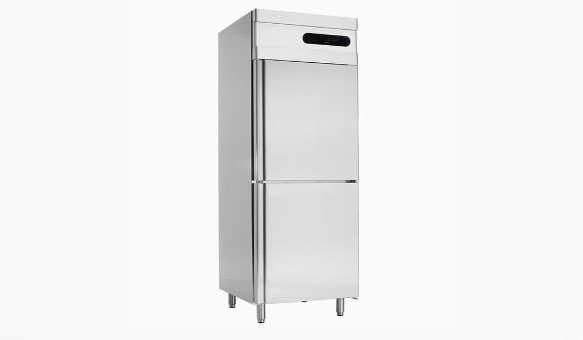 | Commercial Refrigeration & Cold Equipment 2-Door Commercial Vertical Refrigerator Vinaayak Enterprises 2-Door Commercial Vertical Refrigerator is designed for professional kitchens that require reliable, organized and easily... View product → |
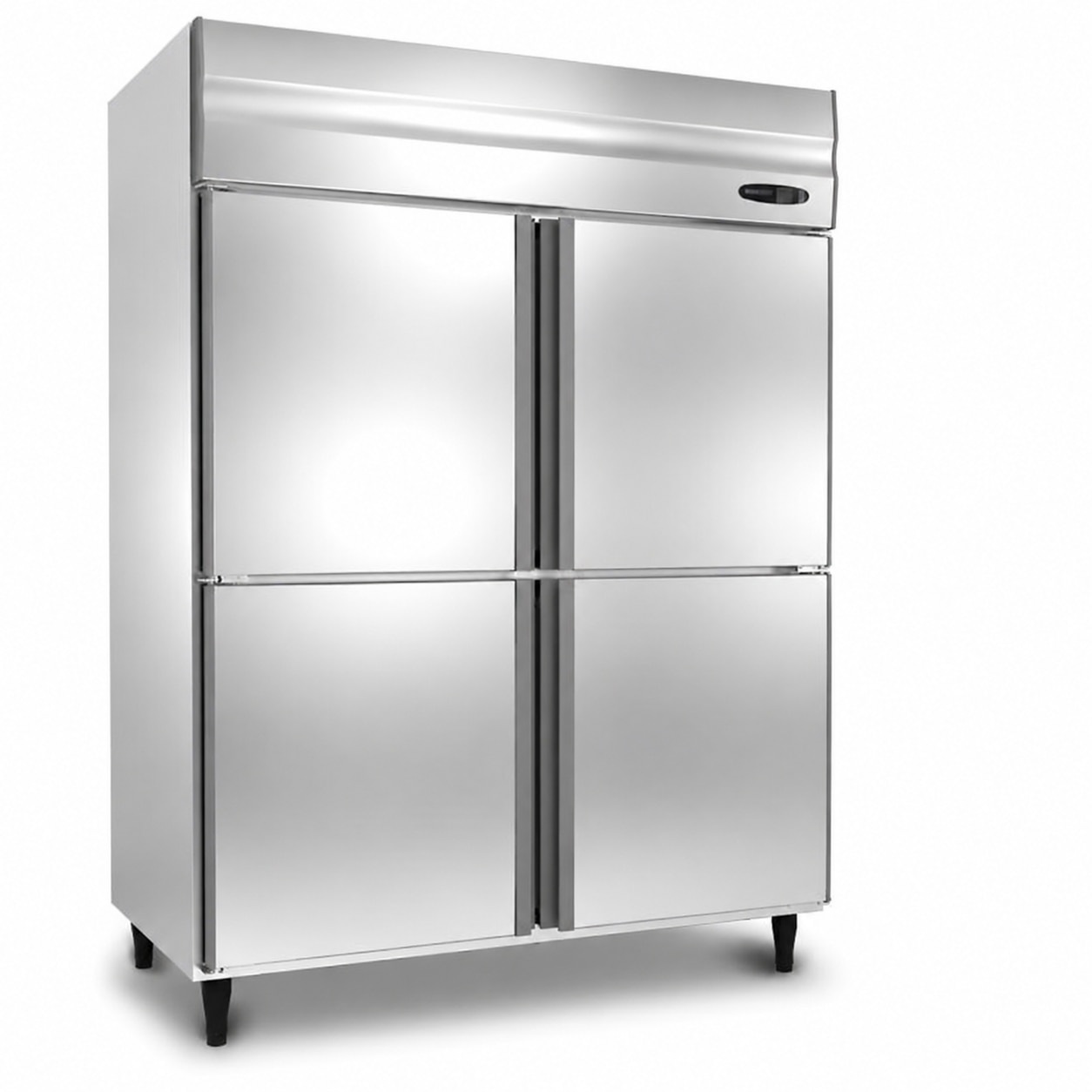 | Commercial Refrigeration & Cold Equipment 4-Door Commercial Refrigerator Vinaayak Enterprises 4-Door Commercial Reach-In Refrigerator is designed for restaurants, hotels, catering kitchens, cloud kitchens, institutional... View product → |
Frequently asked questions
How does storage zoning reduce refrigeration waste?
Place frequently used ingredients near preparation or cooking stations, and keep bulk stock in a separate cabinet or cold room. Replenishing a smaller service cabinet reduces handling, waste and repeated door opening.
Which refrigerator format suits each storage role?
Use a 3-Door Undercounter Refrigerator for nearby service storage, a 2-Door Commercial Vertical Refrigerator for organised general stock, a 4-Door Commercial Refrigerator for higher-volume central storage, and a Prep Refrigerator with Drawers for ingredients used directly at a preparation line.
How should you size a commercial refrigerator?
Calculate usable shelf or drawer capacity rather than relying on external dimensions. Allow space for air circulation, loading access, door swing, wall clearance and the kitchen’s ambient heat.
How can you verify temperature control during real kitchen use?
Measure product and air temperatures during loading, replenishment and peak service. Check recovery after door openings, confirm the display against a calibrated thermometer, and record results across the operating day.
Related products
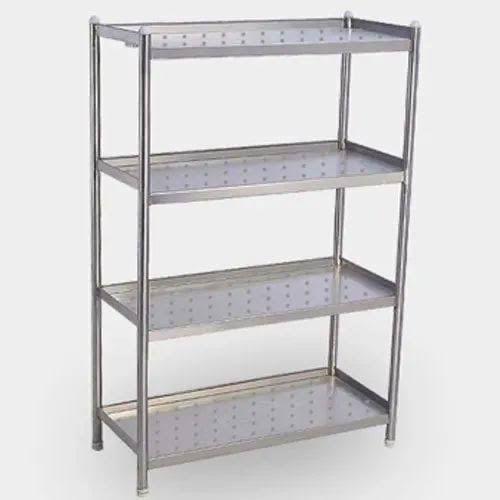 | Worktables, Sinks & Storage Vinaayak Enterprises Cold Room Storage Rack is designed to improve storage organization inside commercial cold rooms and refrigerated storage areas. View product → |
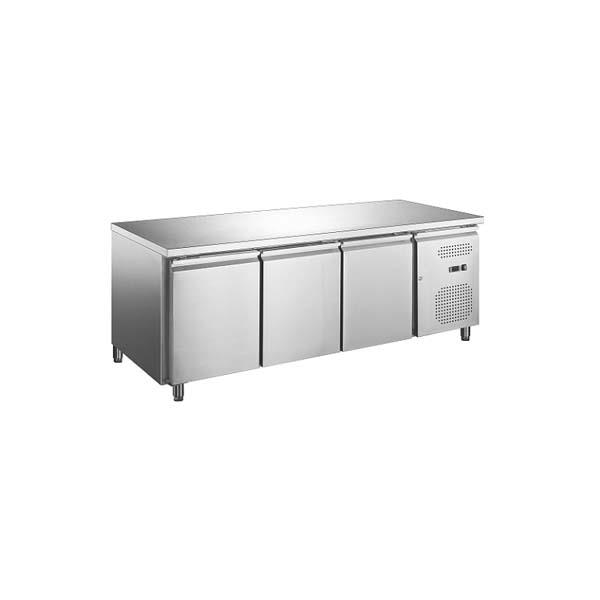 | Commercial Refrigeration & Cold Equipment 3-Door Undercounter Refrigerator Vinaayak Enterprises 3-Door Undercounter Refrigerator is designed for commercial kitchens that need refrigerated storage within easy reach of food... View product → |
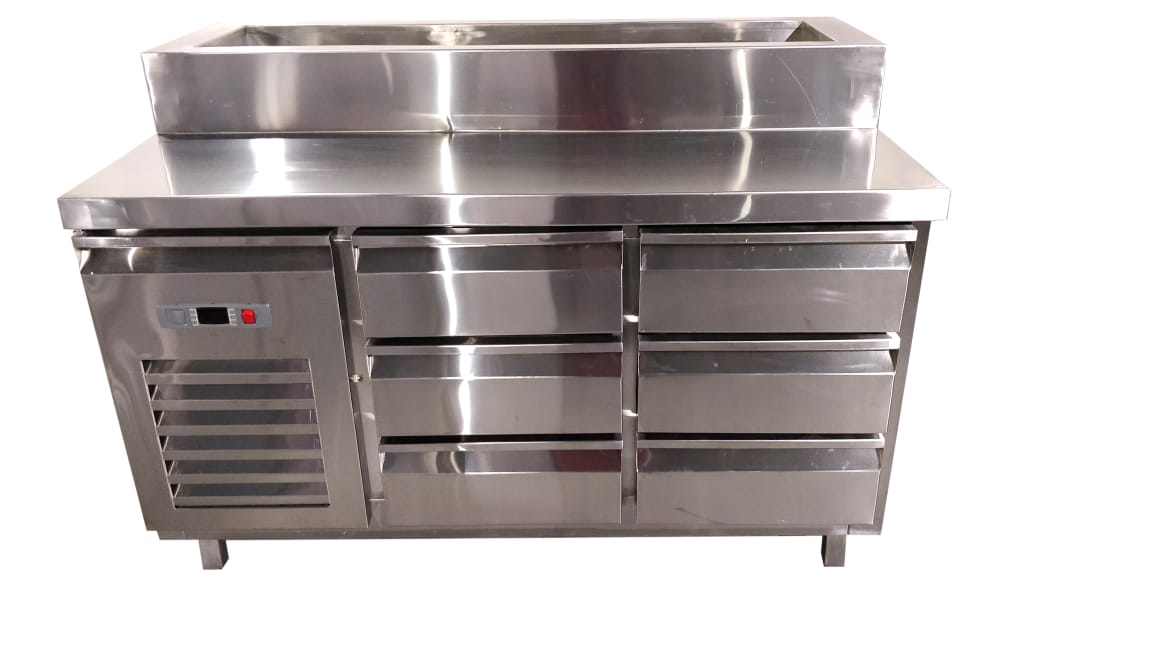 | Commercial Refrigeration & Cold Equipment Mizza Prep Undercounter Refrigerator with Drawers Vinaayak Enterprises Mizza Prep Undercounter Refrigerator with Drawers is designed for commercial kitchens that need refrigerated ingredient storage... View product → |
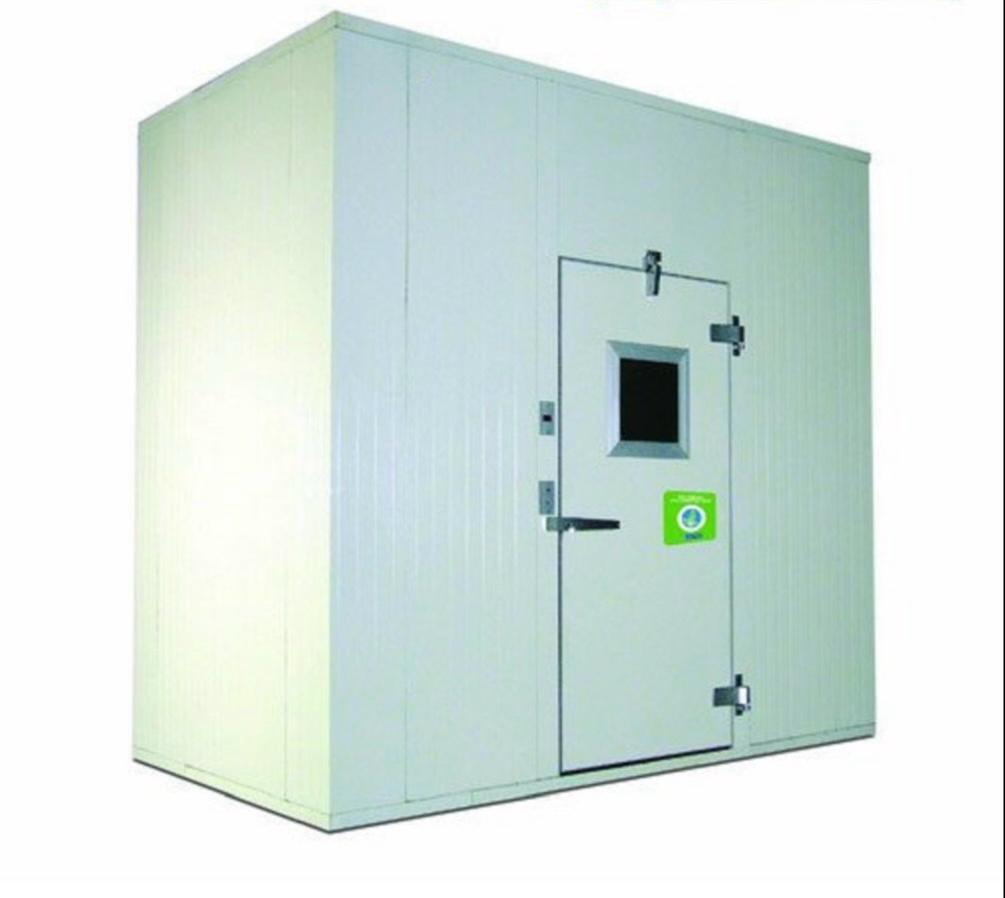 | Commercial Refrigeration & Cold Equipment Vinaayak Enterprises Commercial Cold Room is designed for businesses that require dedicated temperature-controlled storage for food ingredients,... View product → |
Keywords