A display that looks attractive can still dry croissants, warm cream cakes, soften chocolate or waste valuable floor space. By the end, you will be able to match each product group to the right temperature, shelf layout and cabinet format, then check whether the proposed unit will work safely in your shop.
Key takeaways
- Keep cream cakes and custard pastries at 5 °C or below.
- Measure doorways, service space and usable shelf dimensions before ordering.
- Choose shallow trays for fast replenishment and tall shelves for whole cakes.
- Test product temperature, airflow and door seals during handover.
Match the Display to the Product, Not Just the Shop’s Style
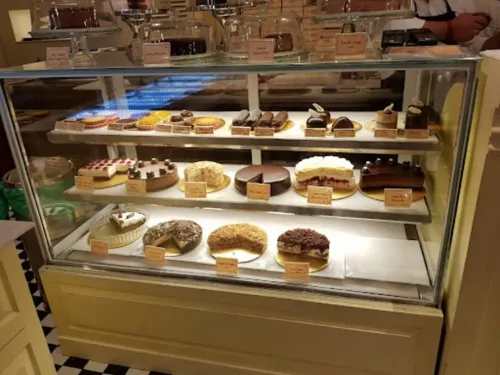
Whole cakes need a tall chilled cabinet with deep, stable shelves and enough vertical clearance for domes and boards. Sliced cakes, cream pastries and custard fillings need refrigeration at 5 °C or below at the product, with shallow trays that staff can replenish without leaving the door open.
| Product | Best display environment | Shelf arrangement |
|---|---|---|
| Whole cakes | Chilled, low-airflow case | Deep shelves; generous vertical clearance; non-slip boards |
| Sliced cakes | Chilled case | Shallow trays; front-facing rows; space for tongs |
| Cream pastries | Chilled, enclosed case | Single layers; clear air gaps; quick staff access |
| Macarons | Cool, dry case; chill only when filling requires it | Shallow trays; low airflow; protection from moisture |
| Bread and croissants | Ambient enclosed or humidity-controlled case | Wider shelves; room between products; no forced air |
| Chocolate and coated sweets | Stable, cool, dry cabinet or humidity-controlled zone | Shelves away from lights and air outlets; no heat sources |
| Packaged confectionery | Ambient or chilled according to the label | Adjustable shelves; clear labels; easy stock rotation |
A macarons display case temperature that is too cold, humid or unstable can create condensation and soften shells. Chocolate also suffers from temperature cycling, high humidity and heat from lighting, producing bloom or softening, so do not place it in a cold, high-airflow cake case.
Check that the cabinet’s shelf line leaves air returns clear. Forced air can dry croissants, Danish pastry, choux shells and cut cake even when the air reading is correct; choose enclosed or humidity-controlled display for crisp products, and verify product temperature with a probe thermometer during full loading and service.
Calculate Capacity and Measure the Space Before Ordering
Capacity is the space you can load without blocking airflow, not the cabinet’s advertised external volume. Base your bakery display capacity calculation on daily sales, replenishment frequency, reserve stock and the usable area below the manufacturer’s load line.
1. Record each product’s tray dimensions, height and selling rate. Multiply the number sold between replenishments by its footprint, then add the reserve products kept behind or below the cabinet. Leave clearance between tall cakes, shelves and air returns instead of packing every centimetre.
2. Measure the intended position in three dimensions: available width, maximum depth and counter height. Add the door-swing or sliding-door travel, ventilation clearance, service access and space for staff to replenish stock. A cabinet that fits the counter can still block a walkway or prevent condenser cleaning.
3. Compare the required footprint with the actual shelf depth and shelf count. A deep shelf does not equal useful capacity if customers cannot see the rear row, staff cannot reach it, or the load line leaves part of the shelf unusable. Keep products away from discharge and return-air paths.
4. Check the operating connections before ordering. Confirm the socket rating, drain route or automatic condensate evaporation, drain-cleaning access and what happens during a power interruption. Poor drainage can put water beside food, flooring and electrical components.
5. For refrigerated equipment, require product-temperature mapping with calibrated probes or data loggers on representative shelves, including the front edge and loading line. Confirm the ISO 23953 climate class and maximum ambient temperature; a cabinet tested in mild conditions may fail during Delhi’s hot season.
Choose the Layout That Supports Service and Visibility
A straight bakery display usually gives the best balance: customers see the full assortment, staff can replenish from one side, and the cabinet fits neatly against a wall. Choose another format when the room’s traffic pattern or selling method justifies its extra cleaning and floor-space demands.
| Format | Visibility and access | Floor space and cleaning |
|---|---|---|
| Straight bakery display | Strong front visibility; simple rear or top access for service | Most efficient against a wall; fewer joints and corners to clean |
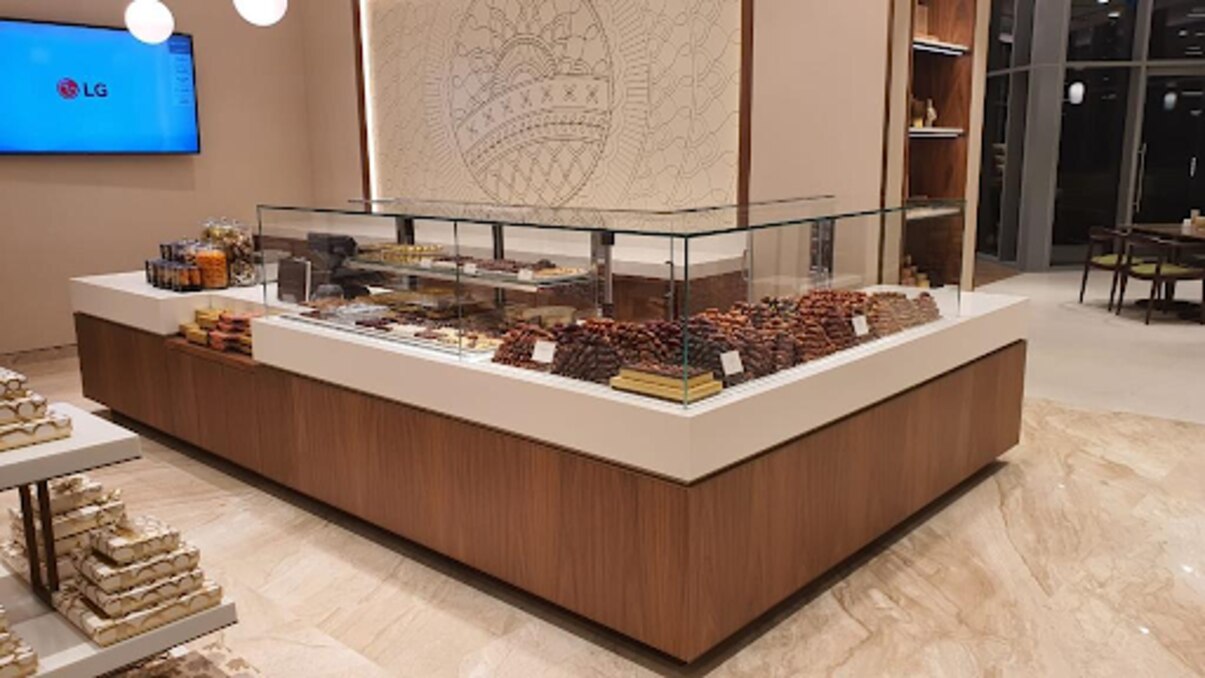
| L-shaped display | Exposes products along two customer-facing sides; useful for separate service and collection points | Uses a corner well but creates a joint that collects crumbs and complicates glass cleaning |
| Curved-glass display | Broad sightlines with fewer visual breaks; attractive for premium cakes and pastries | Projects farther into the aisle; curved glass costs more to replace and takes longer to polish |
| Revolving bakery display | Customers can view several sides; staff can present a changing selection | Requires clear circulation around the unit and more moving parts to clean and maintain |
Open-front cases speed service and impulse purchases, but warm air, drafts and customer contact make product protection harder. Use a guard that blocks coughing and hand contact without forcing staff to reach through the airflow path. Doors improve temperature stability but slow service.
Check the layout around drains, too. A blocked or badly sloped condensate drain can put water beside food, floors or electrical parts. In humid Delhi periods, compare heated or double-glazed glass by anti-fog performance, energy use, glass temperature and cleaning effort rather than selecting it automatically.
Check Temperature, Airflow and Product Protection
A thermostat reading does not prove that food stays protected. Require product-temperature mapping with calibrated probes or data loggers on representative shelves, including the front edge, loading line, door area and air-return path, during a full trading cycle.
Check the refrigerated bakery display temperature against the target for the actual cream, custard, mousse or chocolate products.
Specify the test conditions, not just the cabinet’s nominal temperature. Ask for the ISO 23953 climate class, the test ambient temperature and relative humidity, and the maximum ambient temperature at which the cabinet maintains the required product temperature. A unit tested in mild indoor conditions may fail during Delhi’s hot season.
Before acceptance, run these checks:
- Load shelves only to the marked line, leaving the manufacturer’s required clearance around air supplies and returns. Stacking above it can create warm zones.
- Record temperatures during loading, repeated door openings and peak service. A pass at an empty cabinet proves little.
- Test an open-front display case with its guard in place. The guard must block customer contact, coughs and airborne contamination without forcing food into the airflow or obstructing cleaning.
- Operate every light during testing and measure product-surface temperature. Low-heat LED lighting with replaceable drivers reduces heat transfer, but measurement confirms performance.
- Test choux, meringue, crisp tart shells and laminated pastry after a full trading cycle. Refrigeration can soften crisp textures through moisture migration even when temperature remains correct.
Specify the Cabinet, Installation and Handover Tests
Require a written bakery display cabinet specification before placing the order. It must state the ISO 23953 climate class, maximum ambient temperature at which the required product temperature is maintained, shelf loading line, clearance, lighting, electrical load and food-contact materials.
1. Confirm the refrigeration arrangement. A self-contained refrigeration cabinet rejects compressor heat into the shop, so check room ventilation, socket capacity and summer heat load. A remote condensing unit reduces indoor heat and noise, but require condenser location, refrigerant pipe sizes, isolation, service clearance and access for cleaning.
2. Specify condensate control. Record whether condensate is automatically evaporated or discharged through a condensate drain. Inspect the drain slope, trap, cleaning access and termination; ask what happens during a power interruption. Water must not reach food, flooring or electrical components.
3. Run the cabinet empty and loaded before acceptance. Use a calibrated probe or data logger to map product temperature on representative shelves, including the front edge, loading line, door-opening area and air discharge and return paths. Reject warm zones that the thermostat display does not reveal.
4. Check operation under real use. Load products only to the marked line and keep air returns clear, then test door or service openings, lighting and recovery. For an open cabinet, verify the guard blocks customer contact and airborne contamination without obstructing replenishment or cleaning.
Obtain wiring diagrams, cleaning instructions, warranty terms and recorded test results at handover. Whether supplied by Vinaayak Enterprises or another manufacturer, accept the cabinet only after these documents match the installed equipment.
Related products
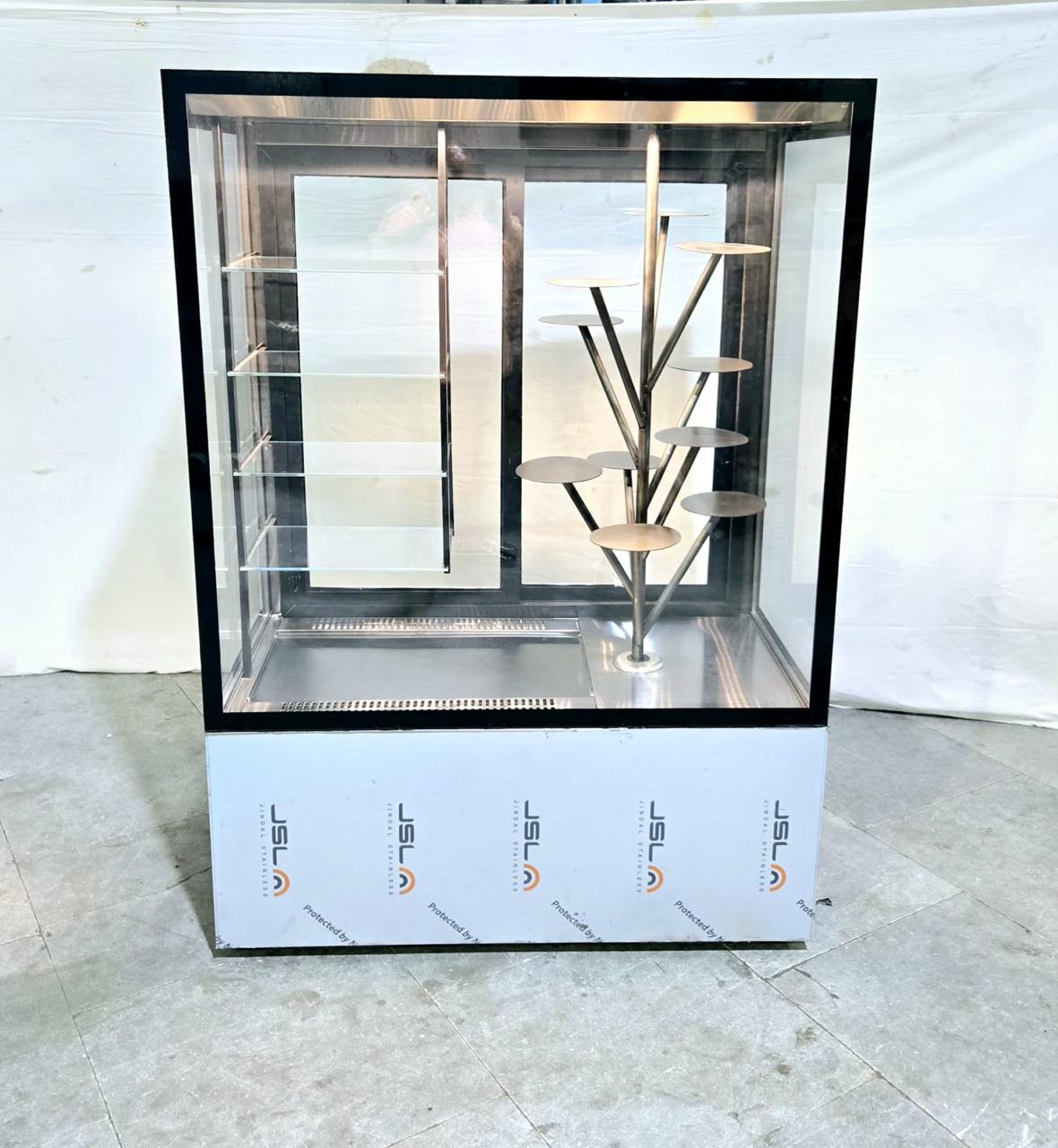 | Bakery, Cake & Confectionery Displays Vinaayak Enterprises offers premium-quality Revolving Bakery Display counters designed to provide an attractive and modern presentation for bakery... View product → |
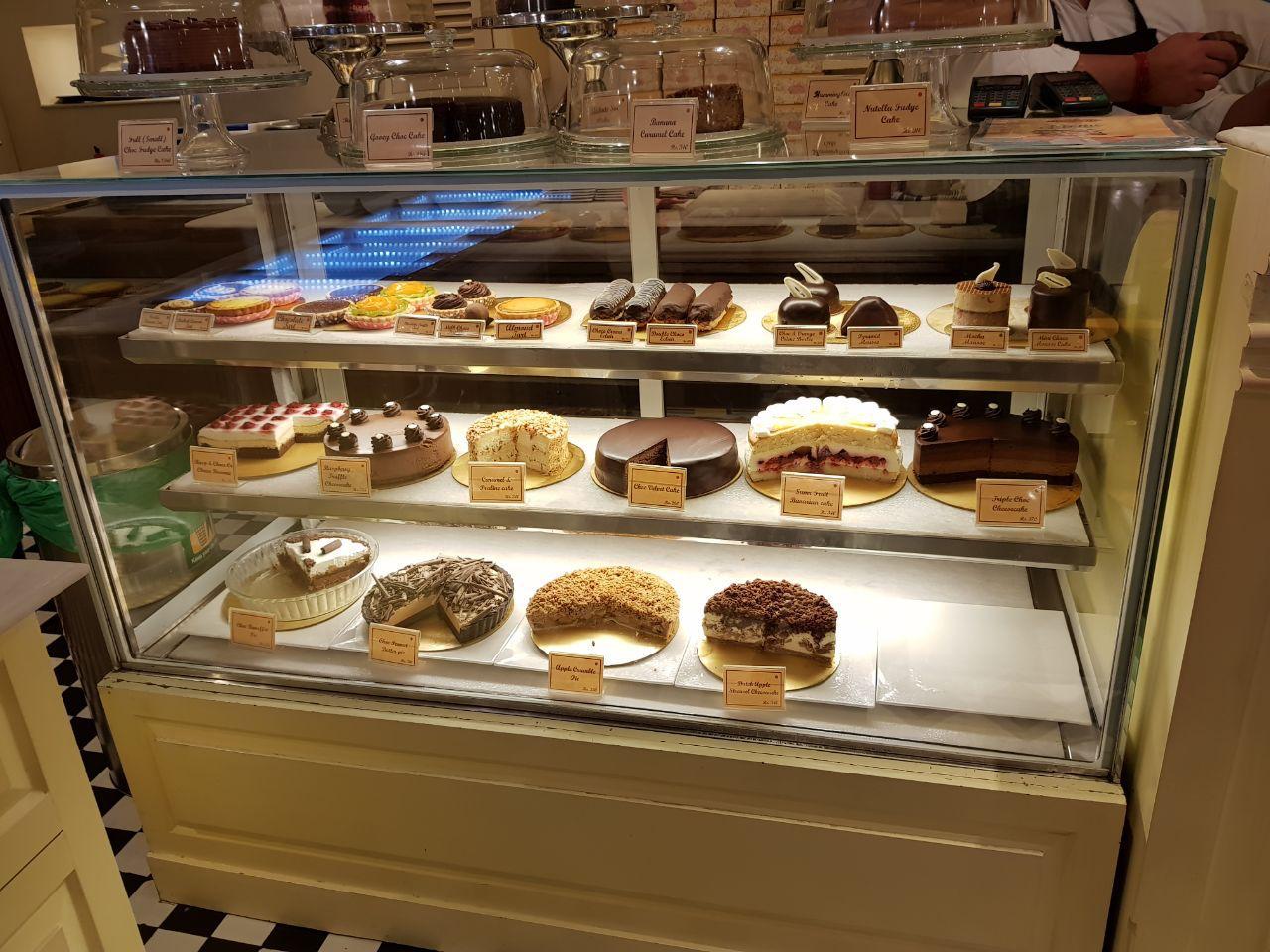 | Bakery, Cake & Confectionery Displays Commercial Bakery Display Counter Vinaayak Enterprises Commercial Bakery Display Counter is designed for bakeries, pastry shops, cafés, hotels, restaurants and confectionery outlets... View product → |
Frequently asked questions
What type of bakery display suits whole cakes and cream pastries?
Whole cakes need a tall chilled cabinet with deep, stable shelves and enough clearance for domes and boards. Cream pastries and custard-filled products need product temperature of 5 °C or below, with shallow trays for quick replenishment.
How do you calculate the capacity and size of a bakery display?
Measure the available floor width, depth and height, including doorways and service clearance. Then calculate usable shelf area and vertical clearance rather than relying on the cabinet’s external dimensions.
Which display layout supports faster bakery service?
Use shallow trays and accessible shelves for products that sell quickly or need frequent replenishment. Arrange high-margin or fragile products at eye level, while keeping customer visibility clear from the queue.
What temperature and airflow checks should you make?
Check product temperature at 5 °C or below for cream and custard products, inspect airflow across every shelf, and confirm that doors, seals and lighting do not create warm spots or condensation.
What should be tested before accepting a bakery display cabinet?
Confirm the cabinet fits the measured space, reaches its specified operating temperature, holds that temperature under normal loading, closes squarely, seals correctly and provides stable shelves and working lights.
Related products
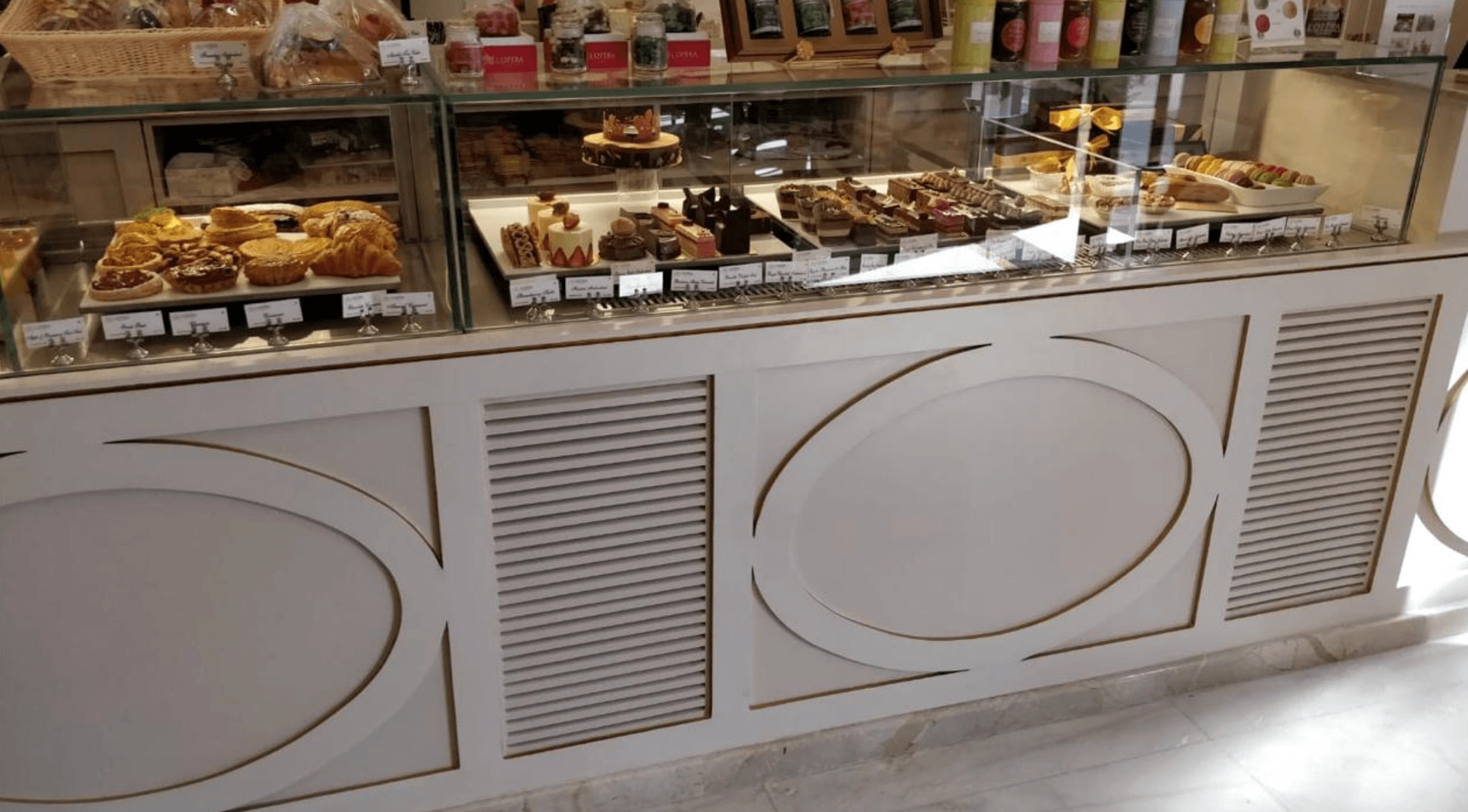 | Bakery, Cake & Confectionery Displays Jewellery Cake & Pastry Display Counter Vinaayak Enterprises Jewellery Cake & Pastry Display Counter is designed for bakeries, cake shops, pastry stores, cafés, hotels and dessert outlets... View product → |
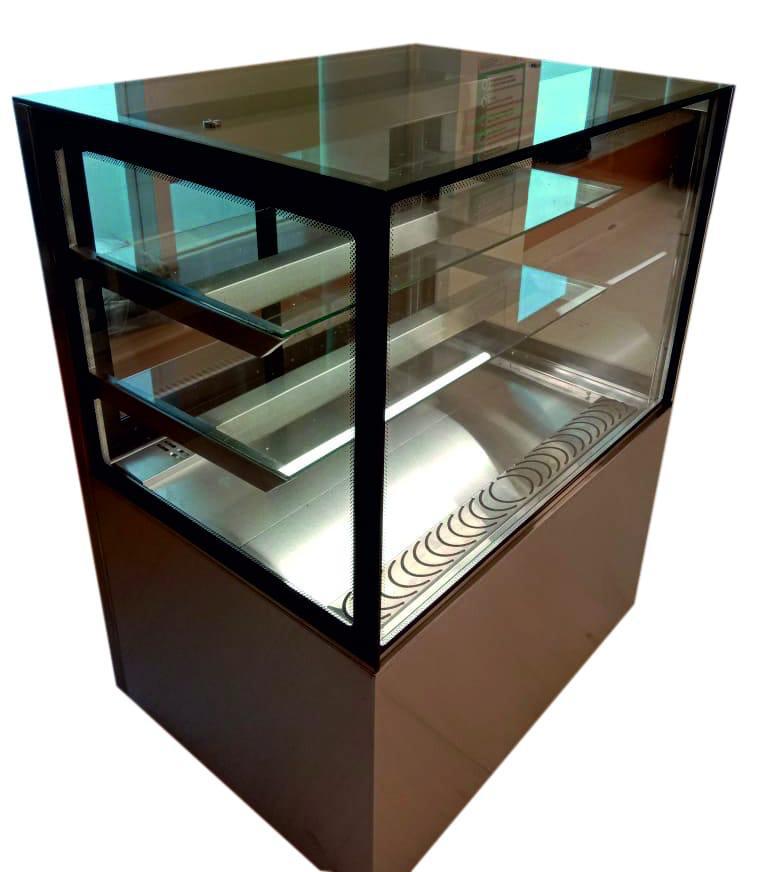 | Bakery, Cake & Confectionery Displays Vinaayak Enterprises offers premium-quality Bronze Plated Bakery Display counters designed to provide an elegant and sophisticated presentation for... View product → |
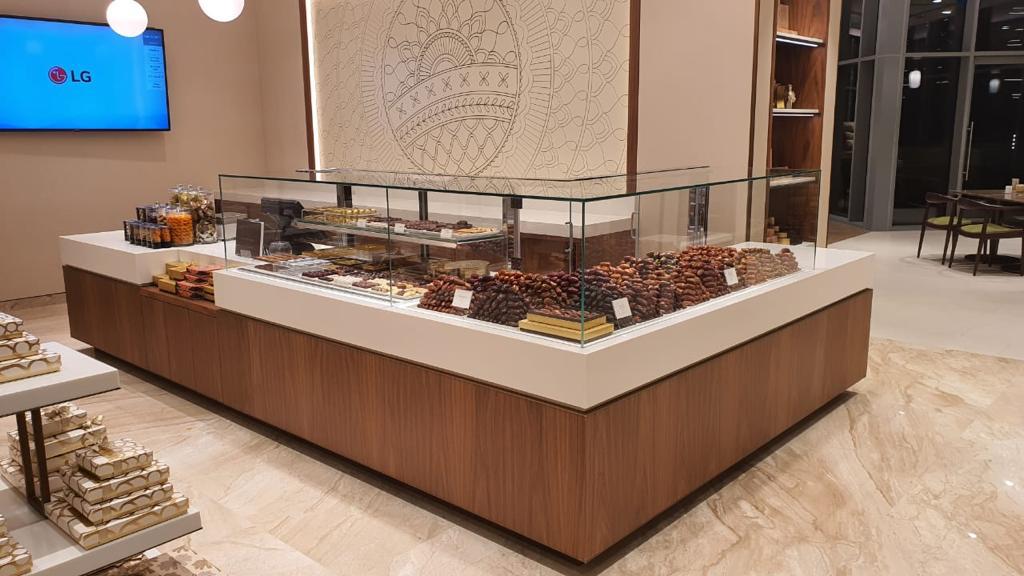 | Bakery, Cake & Confectionery Displays L-Shaped Bakery Display Counter Vinaayak Enterprises L-Shaped Bakery Display Counter is designed for bakeries, cake shops, cafés, hotels, restaurants and confectionery stores that... View product → |
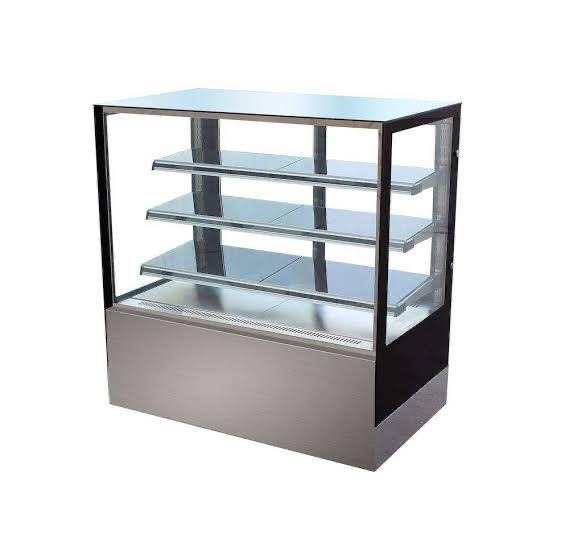 | Bakery, Cake & Confectionery Displays Vinaayak Enterprises offers premium-quality Three Stories Bakery Display counters designed for attractive and organized presentation of bakery and... View product → |