A bakery producing 300 loaves a day may need more oven and proofing capacity than a daily average suggests when a large share of orders leaves in one dispatch window. You will be able to convert sales into peak-hour equipment requirements, compare oven and mixer types, identify workflow bottlenecks, and prepare a specification that suppliers can quote accurately.
Key takeaways
- Size equipment for peak dispatch hours, not average daily sales.
- Calculate oven capacity from real batch time and usable tray space.
- Match mixer, divider and proofer output to the same dough flow.
- Reserve cooling space and plan equipment around product movement.
Convert Daily Sales into Peak Production Requirements
A bakery producing 600 loaves daily may still need equipment for 400 loaves in a two-hour dispatch window. That demand equals 200 loaves per hour, so sizing every machine from the 24-hour average would create a morning bottleneck.
Use this batch size calculation:
- Required hourly output = peak demand in the busiest interval ÷ available production hours.
- Required hourly machine capacity = hourly output ÷ realistic utilisation. Use 80% when loading, unloading, cleaning and changeovers consume the remaining time.
- Required batch size = hourly output × the machine’s full cycle time, including loading and unloading.
- Required positions = hourly loading rate × dwell time. A 120-piece hourly rate and a 45-minute proof require about 90 occupied proofer positions before circulation space.
For example, two 20-loaf trays baked every 30 minutes produce 80 loaves per hour. Meeting 200 loaves per hour requires five tray loads in each cycle; allowing 80% utilisation raises the rated requirement to 250 loaves per hour.
Check the same peak-hour production against the mixer’s dough weight, divider or depositor’s changeover time, proofer positions, cooling racks and packing space.
Base bakery production capacity on sellable output, not an equipment label. Record the daily bakery output by SKU, the busiest time window, batch size, cycle time and available working time; then add refrigeration capacity for the specified product temperature and holding period.
Size the Oven by Real Batch Throughput
An oven’s commercial bakery oven capacity is its completed product per hour, not its tray capacity. Calculate it from usable trays per batch × products per tray, divided by bake time plus loading, unloading and door-recovery time.
For example, 12 trays holding 15 buns each produce 180 buns per batch. If loading takes 8 minutes, baking 18 minutes and unloading 6 minutes, the 32-minute cycle yields 337 buns per hour before breaks or changeovers. Reduce that figure when products need wider spacing, steam, different temperatures or staggered loading.
Ask suppliers for output using your tray dimensions, product count, temperature and full cycle.
The deck oven vs convection oven choice depends on product mix and handling:
- Deck oven: Choose it for bread, pizza, artisan loaves and products needing strong bottom heat, separate deck temperatures or steam. Manual loading makes labour and loading time part of capacity.
- Convection oven: Choose it for cookies, cakes, pastries and smaller batches needing even forced-air baking. Fan speed and airflow can limit delicate products.
- Rotary rack oven: Choose it for high-volume, repeatable production where a full rack can be loaded and wheeled in. Confirm rack size, usable tray positions and recovery time; a nominal rack count does not guarantee hourly output.
Select the oven that completes your peak window with realistic cycles, not the largest chamber. A slow loading process can make a smaller, faster-turning oven more productive than a larger unit.
Match Mixing, Dividing and Proofing to Dough Flow
Size the line for the busiest dough window, not total daily output. A bakery making 600 loaves per day still needs enough mixing, dividing, proofing and sheeting capacity if 400 loaves must move through production in two hours.
- Mixer: Specify kilograms of flour and finished dough, not bowl volume. Check usable minimum and maximum loads for stiff, enriched and high-hydration doughs. Planetary mixer capacity suits batters, creams and smaller varied batches; spiral mixer dough weight matters more for repeat bread production.
- Dough divider: Match pieces per hour to the peak batch, then subtract weighing, changeover and cleaning time. Automation pays when dough weight and product shape stay consistent; hand division is more flexible for irregular doughs and short runs.
- Sheeter: Base capacity on pieces per hour at your actual thickness, pass count and product width. A slower machine with quick thickness adjustment can outperform a faster model when several SKUs share one bench.
- Proofer: Calculate bakery proofer capacity from pieces entering each hour multiplied by proofing dwell time, then add rack space for loading and unloading. If 120 pieces enter hourly and proof for 45 minutes, capacity must hold at least 90 pieces before allowance for movement.
Control dough temperature as part of the calculation: flour temperature + room temperature + friction factor + desired dough temperature = three times the desired dough temperature. Mixer speed, load and mixing time change friction, so verify dough temperature in Delhi’s seasonal conditions.
Leave staff a workable route between weighing, mixing, dividing, proofing and baking. A machine that needs one operator per batch can reduce output despite impressive advertised capacity.
Prevent Cooling, Refrigeration and Layout from Becoming Bottlenecks
An oven upgrade can increase congestion instead of sellable output if bakery cooling capacity is ignored. Count the racks, floor positions and minutes needed for bread and pastry to cool before finishing, packing and dispatch. Add bench length for decorating and packing, plus a defined dispatch staging area; otherwise hot product blocks the next load.
A blast chiller for bakery production is not a universal substitute for a larger refrigerator. Use it when a product must move quickly through a temperature-sensitive range or when you need to separate production from service. Specify kilograms per cycle, target product temperature and loaded-rack cooling time; chamber volume alone does not prove performance.
Size commercial bakery refrigeration for ingredients, chilled dough, cream, fillings and finished goods held between production runs.
Build the bakery workflow layout around one-way movement:
- Receiving and dry or cold storage
- Weighing and mixing
- Dividing and shaping
- Proofing
- Baking
- Cooling
- Finishing, packing and dispatch
Keep flour handling, wash-up and finished-product packing out of the rack route. Measure turning clearances, door swings and lift access, not just equipment footprint. A rack that cannot pass cleanly becomes a queue.
Check utilities before purchase: electrical load, gas capacity, water pressure, drainage, ventilation and heat rejection. Choose smooth, sealed, washable surfaces with removable guards and accessible drains; difficult cleaning turns maintenance into lost production and creates contamination risk.
Turn the Calculation into a Supplier-Ready Equipment Brief
State the busiest SKU, dispatch window and required output, not just daily volume. Include batch size, cycle time, loading and unloading minutes, working hours, realistic utilisation, products per tray and trays per rack. Ask each supplier to calculate usable units per hour from those figures.
Your bakery equipment selection checklist should include:
- Connected load, voltage, phase, rated current, starting current and simultaneous demand; request a single-line load schedule before sizing panels, cables or backup power.
- Cooling load in kilograms per cycle, starting temperature, target temperature and required time; separate cream, custard, meat or dairy fillings from ambient-stable bread.
- Staff required per batch, loading and cleaning time, changeover time, and the number of racks or trays moving through each stage.
- Footprint, door clearances, drainage, water points, ventilation and the route from receiving to dispatch.
- Contact-surface finish, accessible joints, removable tools and guards, drainability, and whether cleaning risks wetting electrical parts.
Compare quotes on the same evidence:
| Item | Supplier must state | Useful comparison |
|---|---|---|
| Oven | Output per hour at your recipe and cycle | Capacity, not chamber size |
| Blast chiller | Kilograms per cycle to target temperature | Cooling rate under load |
| Mixer or proofer | Batch weight, cycle and labour time | Labour saved and bottleneck removed |
Give this brief to a commercial kitchen equipment supplier Delhi buyers can reach, including Vinaayak Enterprises, and demand layout drawings plus utility schedules. A lower price is not better bakery equipment ROI if rack handling, cleaning or dispatch adds labour every day.
Related products
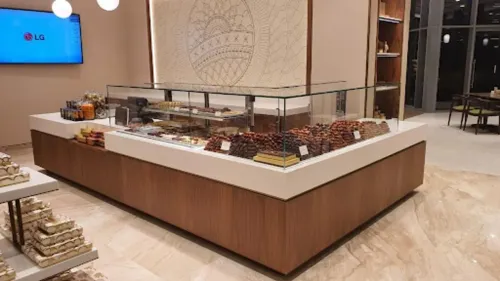
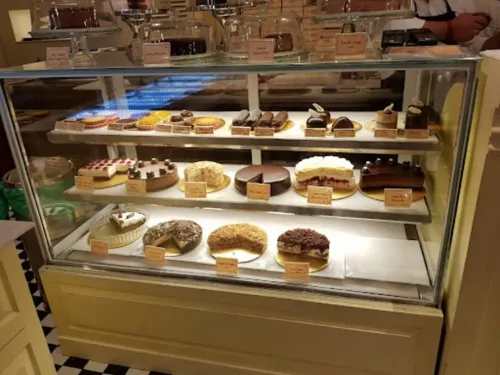
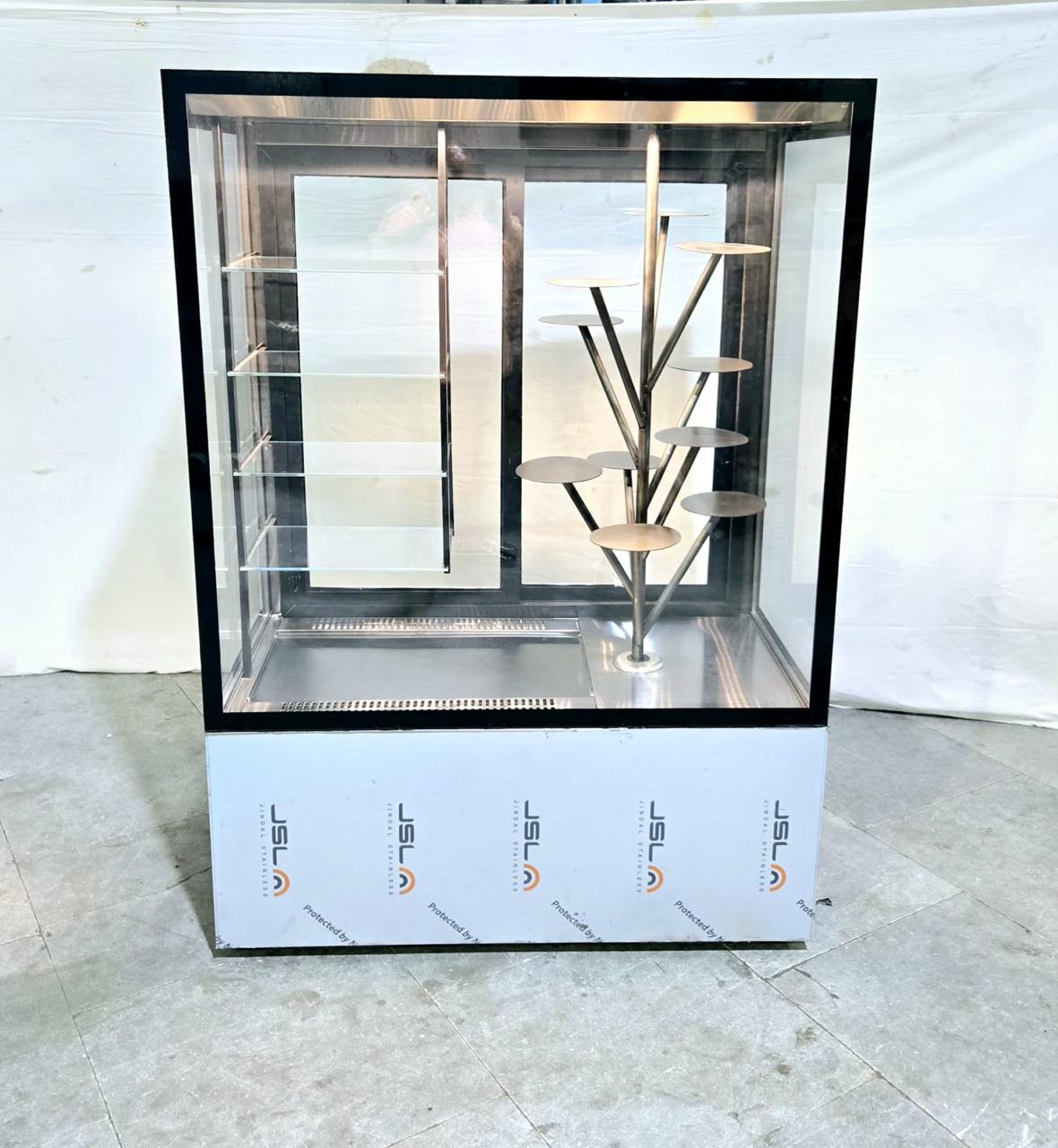 | Bakery, Cake & Confectionery Displays Vinaayak Enterprises offers premium-quality Revolving Bakery Display counters designed to provide an attractive and modern presentation for bakery... View product → |
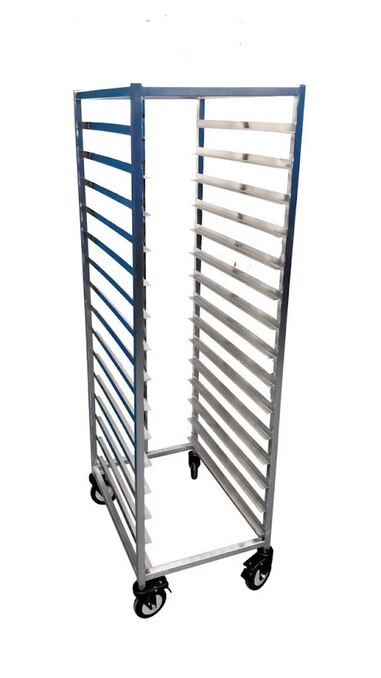
 | Trolleys & Service Equipment Vinaayak Enterprises offers premium-quality Baking Tray Trolley designed for efficient handling, storage, and transportation of baking trays in... View product → |
Frequently asked questions
How do you convert daily bakery sales into equipment capacity?
Identify the busiest dispatch window, divide the required units by available production hours, and add time for loading, unloading, cleaning and changeovers.
How do you size an oven for bakery production?
Calculate output from usable tray capacity, units per tray, bake time, loading and unloading time, then compare that figure with peak hourly demand.
How should mixing, dividing and proofing equipment be matched?
Match each machine’s hourly output to the next process, using dough weight, batch size, cycle time and proofing duration to find the slowest stage.
How can cooling, refrigeration and layout create bakery bottlenecks?
Provide enough rack, refrigerated and freezer capacity for work-in-progress, and arrange equipment in process order to prevent cross-traffic and waiting.
Related products
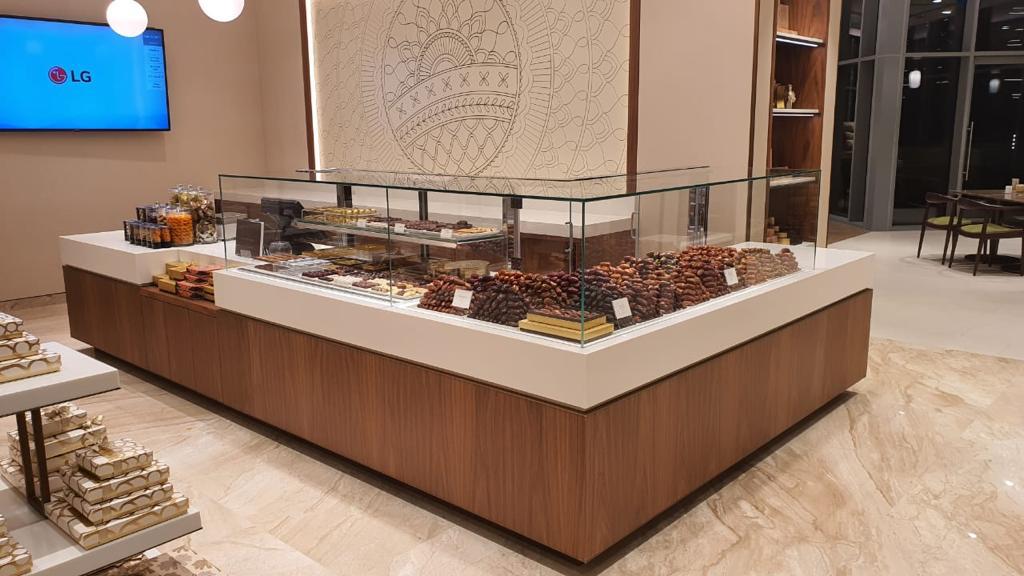 | Bakery, Cake & Confectionery Displays L-Shaped Bakery Display Counter Vinaayak Enterprises L-Shaped Bakery Display Counter is designed for bakeries, cake shops, cafés, hotels, restaurants and confectionery stores that... View product → |
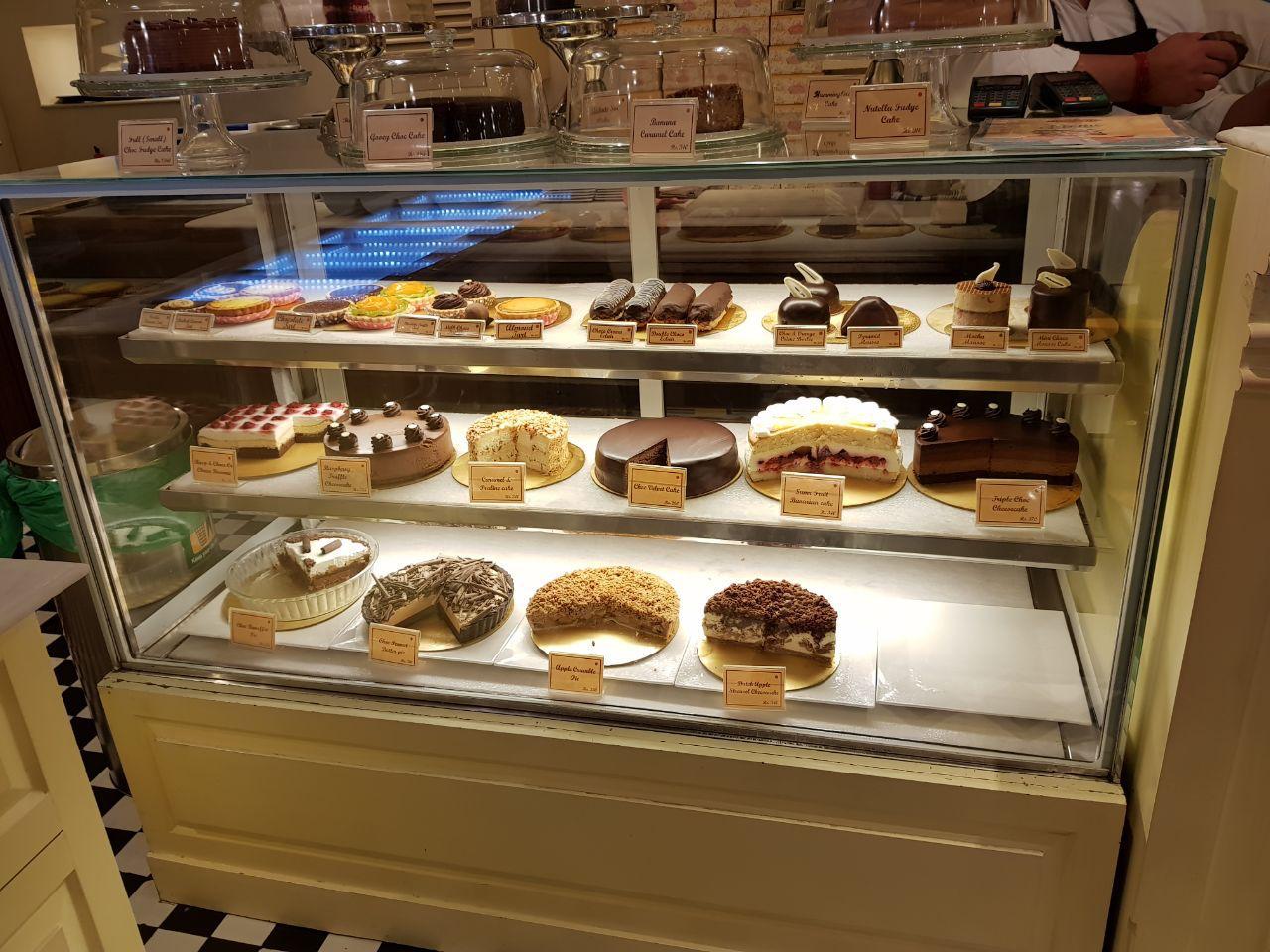 | Bakery, Cake & Confectionery Displays Commercial Bakery Display Counter Vinaayak Enterprises Commercial Bakery Display Counter is designed for bakeries, pastry shops, cafés, hotels, restaurants and confectionery outlets... View product → |
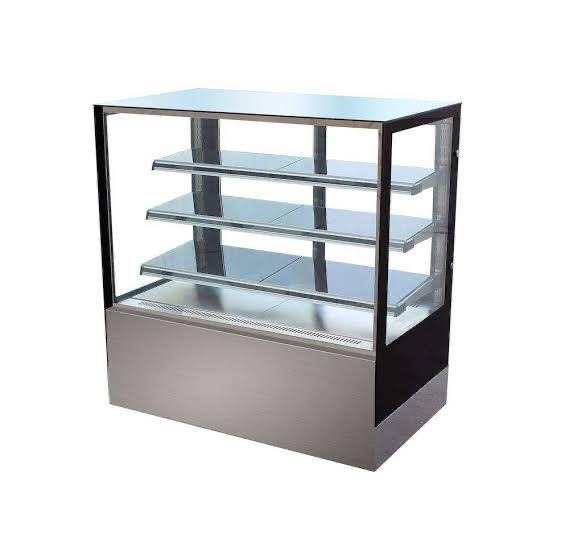 | Bakery, Cake & Confectionery Displays Vinaayak Enterprises offers premium-quality Three Stories Bakery Display counters designed for attractive and organized presentation of bakery and... View product → |
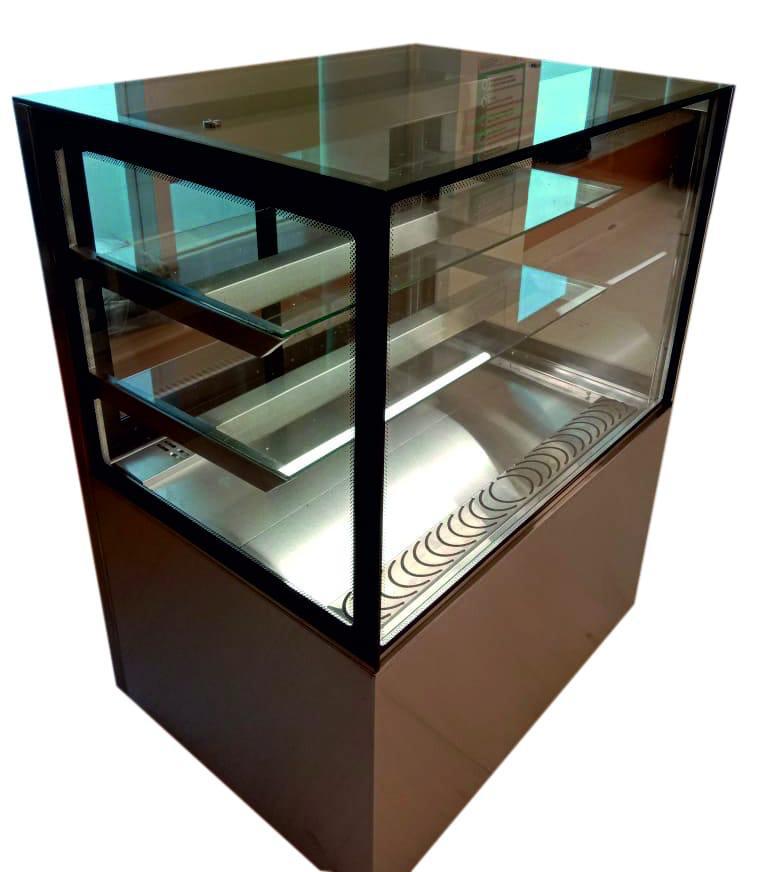 | Bakery, Cake & Confectionery Displays Vinaayak Enterprises offers premium-quality Bronze Plated Bakery Display counters designed to provide an elegant and sophisticated presentation for... View product → |