Choose equipment from peak production, menu demands, room layout and available utilities—not from catalogue appearance or nominal capacity. By the end, you will have a practical method for sizing each station, checking installation constraints, comparing alternatives and writing an acceptance specification that protects food safety and operating costs.
Key takeaways
- Size equipment for your busiest 60-minute production period.
- Assign every menu item to a room, machine and production step.
- Confirm power, gas, water, drainage and ventilation before ordering.
- Require site testing, staff training and handover documents.
Start with Covers, Menu Mix and Peak-Hour Production
Calculate equipment capacity from peak-hour tickets, not daily covers. Start with covers per service, identify the busiest 60-minute period, and convert that demand into portions each station must produce.
A hotel serving 120 breakfast covers in 45 minutes needs more griddle, fryer, holding and dishwashing recovery than a restaurant serving the same number evenly across a day.
Use this worksheet during commercial kitchen equipment selection:
- Record peak-hour tickets and the portions of each menu item sold in that hour.
- Divide the menu mix into cooking methods and assign each item to a station.
- For every machine, record batch size, cooking time, loading time, unloading time and recovery time.
- Divide required portions by available production minutes, then add capacity for overlapping batches, delays and errors.
- Check holding and dishwashing recovery separately; a full oven is useless if plated food waits, and a slow dishwasher can become the service bottleneck.
For example, 60 burger portions in 60 minutes does not automatically require a 60-portion griddle. A griddle producing 20 portions in 10 minutes, with three minutes to reload and recover, may need extra surface area to handle interruptions.
Size refrigeration by usable litres and loading pattern, not cabinet volume alone. Ask for temperature pull-down and recovery data at the warmest expected ambient condition, then verify measured product temperature: chilled high-risk food at 5°C or below and hot holding at 60°C or above.
Map Every Menu Item to a Room and a Machine
Start with a process map, not a catalogue. Trace each menu item through receiving, storage, preparation, cooking, holding, plating, service, dishwashing and waste removal; then assign every step to a room, station and machine.
1. Build the room schedule: receiving needs inspection space and scales; storage needs dry shelving, refrigerators and freezers; preparation needs separate raw-meat, vegetable and cooked-food benches; cooking needs burners, ovens, fryers, griddles or steamers; service needs plating benches and hot or chilled holding; dishwashing needs scraping, washing, rinsing and drying zones.
2. Create the restaurant equipment list from the food preparation workflow. For each dish, record ingredients, batch size, peak-hour quantity, equipment, work surface, utensil and recovery time. A biryani may require a burner, stockpot, rice preparation sink, hot holding and plating space; a breakfast buffet may add griddles, fryers, egg cooking and faster dishwashing.
3. Mark every handoff on the commercial kitchen layout. Separate raw and ready-to-eat routes, provide hand-washing basins at work areas, and prevent dirty dish traffic from crossing food preparation. Include washable, non-corrosive food-contact surfaces, floor drainage, potable water, ventilation and pest-exclusion details required by FSSAI Schedule 4.
4. Add measurable controls, not vague categories. Specify chilled food at 5°C or below, hot holding at 60°C or above, product-temperature checks, alarms and corrective actions. For hotel kitchen equipment, include buffet replenishment, room-service staging and late-shift cleaning so a complete list covers every operating period.
Check Utilities, Ventilation and the Floor Plan Before Ordering
Before ordering, confirm that the room can supply, exhaust, drain and safely service every appliance. A machine can fit physically yet breach fire, building or FSSAI Schedule 4 requirements. Obtain a measured site survey, utility drawings and local authority conditions.
Verify these site conditions:
- Kitchen utility requirements: potable-water pressure, treatment, hot-water capacity, drain size and slope, floor gullies, grease trap, ceiling height, door widths and service clearances.
- Gas: a documented gas-load calculation, regulator and piping specification, manifold or cylinder/PNG capacity, combustion-air provision, accessible isolation valves and flame-failure protection. Use a qualified installer for commissioning.
- Electrical load: connected load, maximum demand, starting current, phase balance, earthing, IP-rated isolators and simultaneous operation against the hotel’s sanctioned supply.
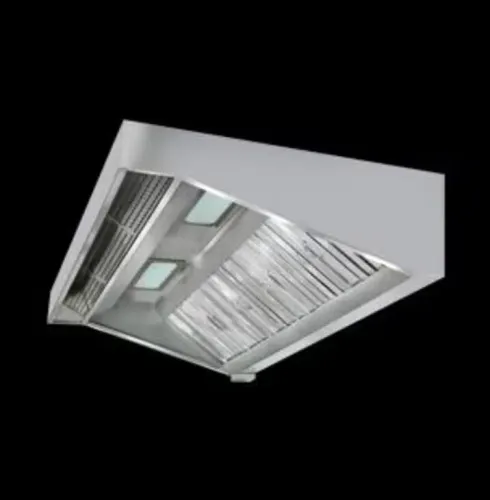
- Commercial kitchen ventilation: hood geometry, overhang, appliance duty, cross-drafts, replacement air, grease filters, duct route, discharge point and cleaning access. Fan CFM alone proves nothing.
- Floor plan: separate receiving, raw preparation, cooking, plating, dishwashing, waste and hand-washing routes, with maintenance access and pest-exclusion details.
| Site check | Evidence to require | Failure if missed |
|---|---|---|
| Gas | Load calculation and pressure test | Poor combustion or unsafe shutdown |
| Electrical | Demand schedule and current test | Nuisance trips or overheating |
| Ventilation | Capture test under appliance load | Smoke escape or negative pressure |
| Drainage | Fall and capacity confirmation | Flooding or hygiene breach |
Make acceptance contractual: measure temperatures, gas pressure, current, hood capture, water settings and cycle times using your pans, racks, recipes and peak load. Empty-factory testing is not site commissioning.
Compare Equipment by Output, Cleanability and Total Cost
Compare equipment by usable capacity, peak-hour output and equipment recovery time, not by catalogue volume alone. Two 20-litre fryers can produce different quantities because burner power, heat-transfer design, basket loading and frozen-product temperature drops vary.
| Measure | What to compare | What failure looks like |
|---|---|---|
| Usable capacity | Product load per batch, not chamber, tank or shelf volume | You cannot fit the planned batch without blocking airflow or overloading the unit |
| Recovery performance | Temperature drop after loading and time to return to setpoint | Slow recovery creates longer queues, uneven cooking or unsafe holding |
| Construction | Stainless steel grade plus welds, corners and access | SS 304 still fails if it has dirt traps, exposed fasteners or unsealed hollow sections |
| Operating cost | Energy, water, filters, chemicals, calibration, parts and downtime | A cheap dishwasher, ice maker or refrigerator becomes expensive every service day |
Ask for test results using your actual batch size and frozen-product load. Record output per hour, measured product temperature and recovery time, rather than accepting “high performance” on a quotation.
Inspect continuous or properly finished welds, radiused corners, sloped surfaces, removable panels, accessible clean-outs and sealed sections. Under FSSAI Schedule 4, washable non-corrosive surfaces, drainage and process separation must remain practical; difficult-to-clean equipment creates a hygiene problem.
Calculate total cost of ownership across the planned service life. Include electricity, water, consumables, preventive maintenance and lost production during breakdowns. For refrigeration and hot holding, specify measured food temperature—5°C or below for chilled high-risk food and 60°C or above for hot holding—plus alarms and corrective action.
Write Site Testing and Handover Into the Purchase
Accept the equipment only after equipment commissioning proves performance on your site, under a representative load. An empty factory test does not prove that your gas line, water supply, exhaust system or electrical circuit will perform during service.
1. Put acceptance tests in the purchase contract. Record electrical current, gas pressure, regulator and piping details, flame-failure protection, isolation-valve access, combustion-air provision, hood capture, duct and grease-filter access, and make-up-air performance. Require commissioning by a qualified gas installer.
2. Run temperature verification with calibrated instruments. Record product temperature, not only the thermostat setting: chilled high-risk food at 5°C or below and hot-held food at 60°C or above. Specify probe locations, alarms and the corrective action for failure.
3. Test each machine using your pans, racks, recipes and peak-load conditions. Record cycle time, output, recovery time, water consumption and cleaning steps. If Vinaayak Enterprises supplies several stations, require one coordinated test so the cooking, washing and extraction systems work together.
4. Write dishwasher specifications into the handover sheet: sanitising method, delivered rinse temperature or chemical concentration, cycle time, rack dimensions, water use and chemical-dosing controls. Compare racks per hour only when rack size, soil level, incoming-water temperature and loading time match.
5. Match water treatment to a water test and the manufacturer’s tolerance. Record hardness, suspended solids, treatment settings and maintenance intervals; excessive treatment can also create unsuitable water and costly reject water.
Get manuals, test records, training, warranty contacts and a named supplier support process before signing acceptance.
Related products
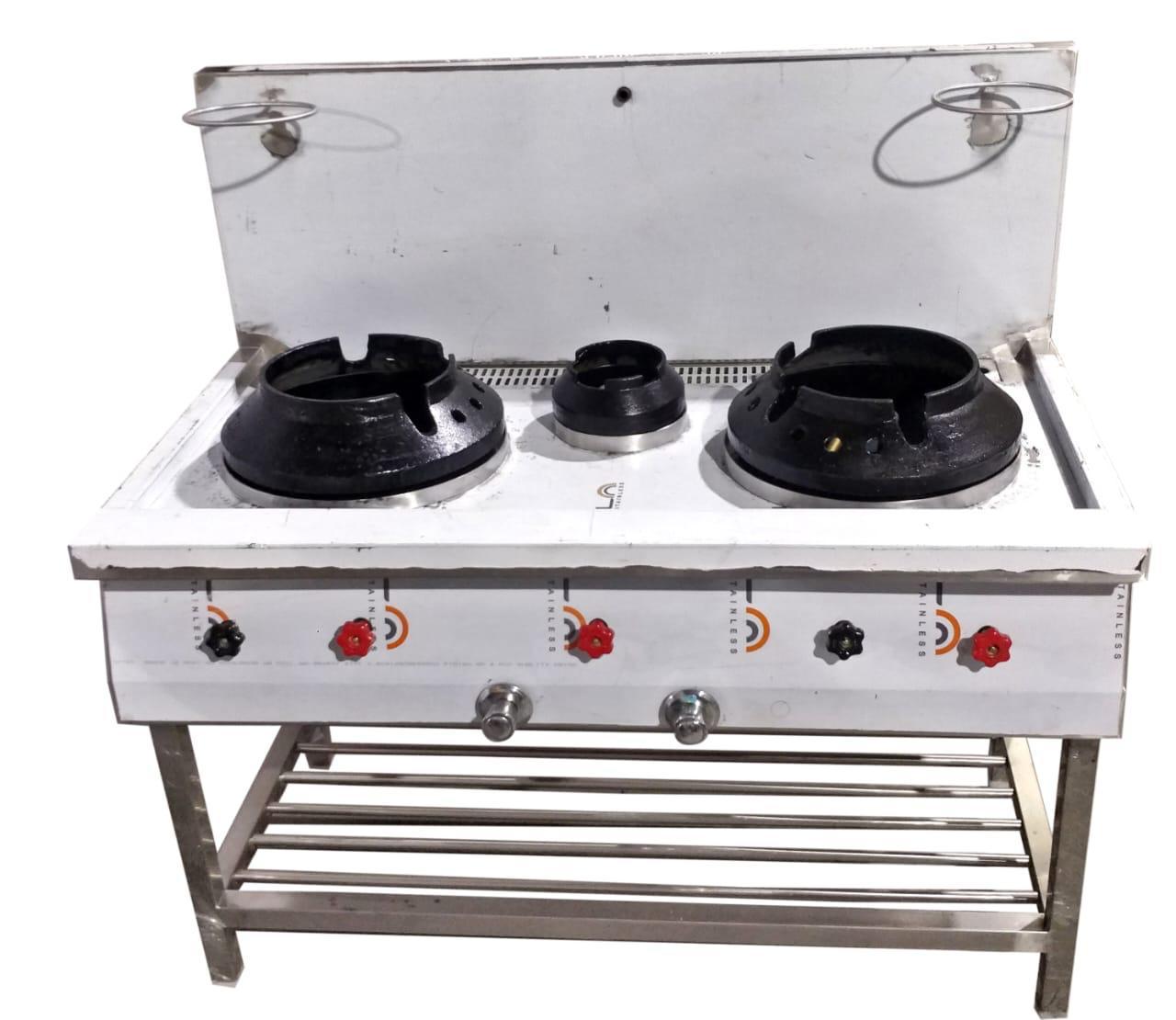 | Hot Cooking Equipment & Specialty Counters Commercial Chinese Cooking Range Vinaayak Enterprises Commercial Chinese Cooking Range is designed for restaurants, hotels, food courts, QSRs and professional kitchens that prepare... View product → |
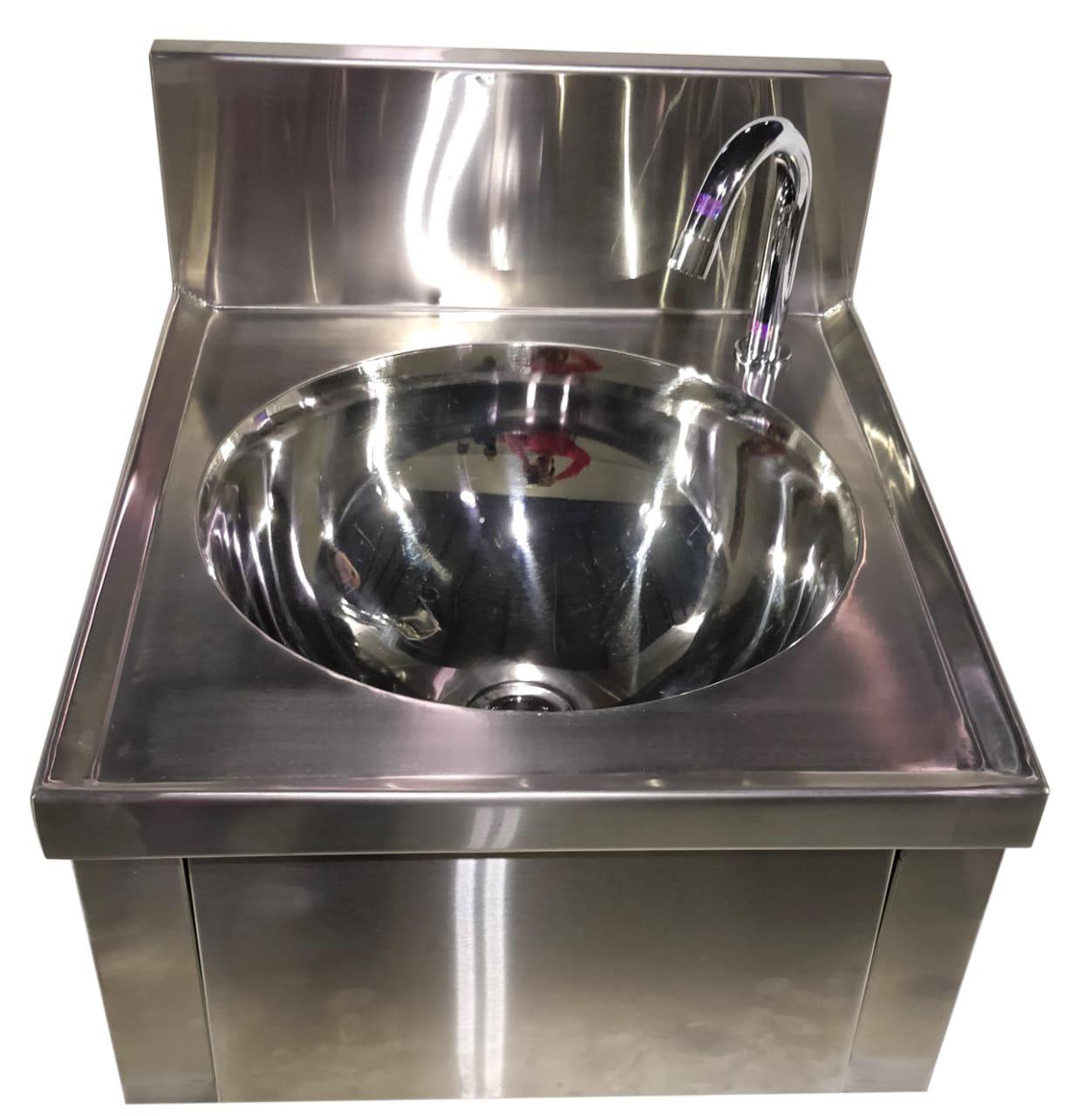 | Worktables, Sinks & Storage Vinaayak Enterprises Commercial Hand Wash Sink is designed for professional kitchens and foodservice environments where convenient hand-washing... View product → |
Frequently asked questions
How should you calculate commercial kitchen equipment capacity?
Use covers per service and the busiest 60-minute period, then convert demand into portions for each station.
How do you match menu items to kitchen equipment?
Map every menu item to its preparation room, production step and required machine before selecting equipment.
What site checks must happen before ordering kitchen equipment?
Confirm floor space, access routes, electrical load, gas supply, water, drainage, ventilation and exhaust requirements.
How should you compare commercial kitchen equipment?
Compare usable output, cleaning time, maintenance access, energy use, expected service life and purchase cost.
What should equipment handover include?
Require site testing, operating instructions, cleaning procedures, warranty details, staff training and records of final performance.
Related products
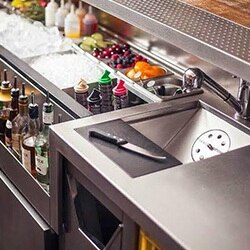 | Bar & Beverage Equipment A well-designed bar setup requires high-quality and durable equipment to ensure smooth operations, efficient beverage preparation, and an excellent... View product → |
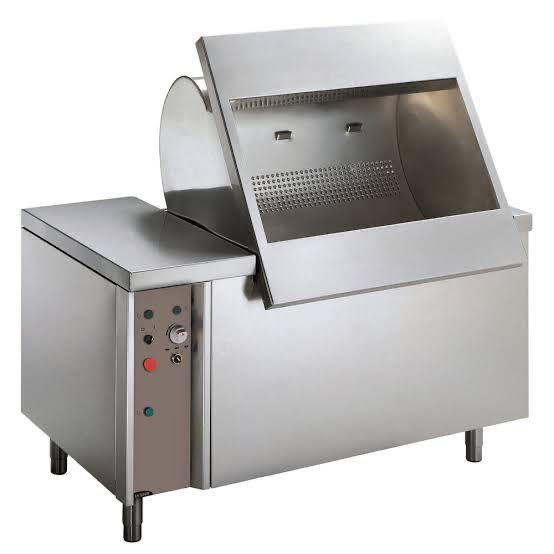 | Bulk Cooking Equipment Vinaayak Enterprises Commercial Vegetable Washer is designed for professional foodservice and large-scale food preparation environments where... View product → |
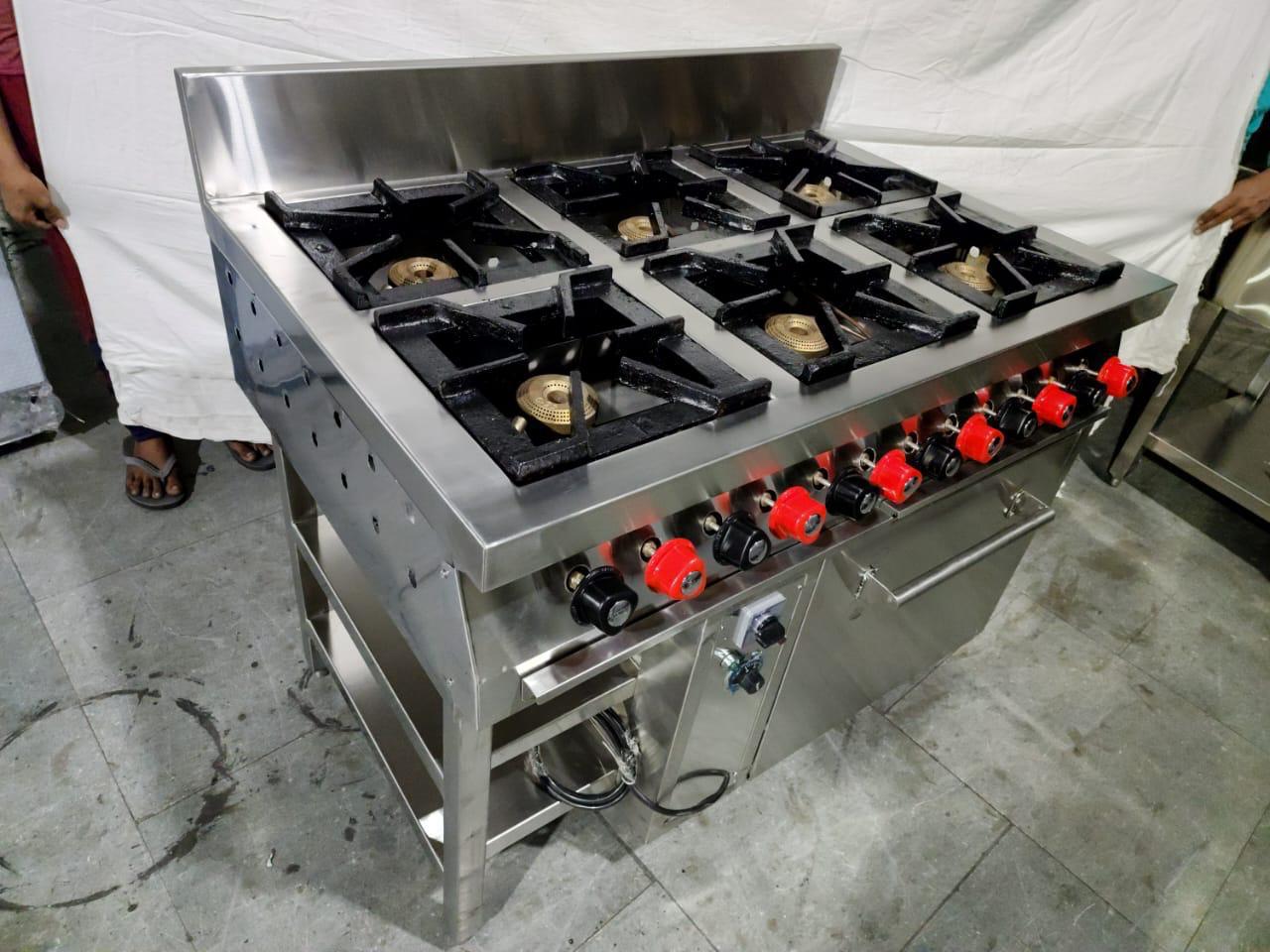 | Hot Cooking Equipment & Specialty Counters 6-Burner Commercial Cooking Range with Oven Base Vinaayak Enterprises 6-Burner Commercial Cooking Range with Oven Base is designed for high-volume commercial kitchens that need multiple cooking... View product → |
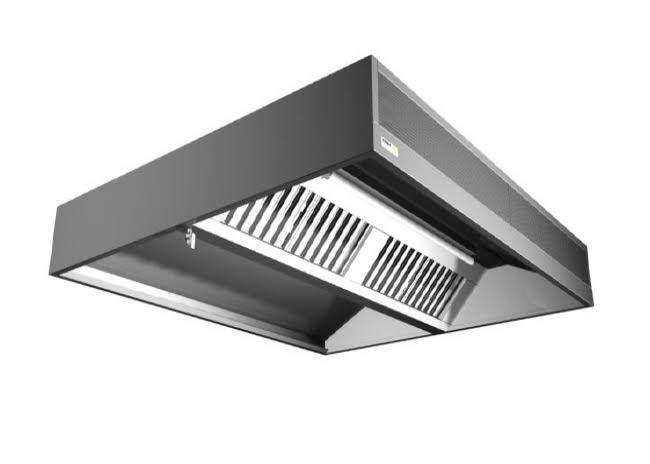 | Commercial Exhaust & Ventilation Vinaayak Enterprises Island-Type Exhaust Hood is designed for commercial kitchens where cooking equipment is positioned in a central island... View product → |