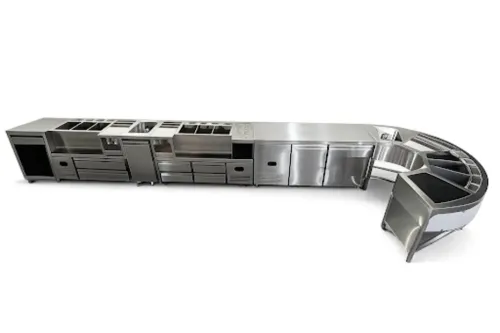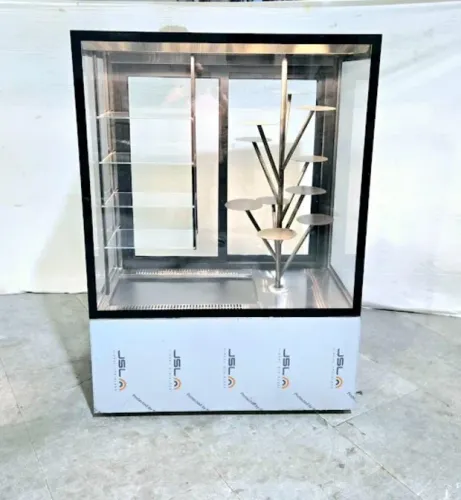
An efficient kitchen is not a catalogue of burners, ovens and refrigerators; it is a system sized for your menu, peak covers, staff movement and available utilities. By the end, you will be able to build an equipment checklist, calculate working capacity, plan safer traffic flow and compare installation and ownership demands before placing an order.
Key takeaways
- Size appliances for peak-hour demand, not average daily covers.
- Keep raw, cooked and dishwashing flows from crossing.
- Confirm gas, electrical, water, drainage and extraction before purchase.
- Specify stainless steel grade, cleanable joints and service access in writing.
Match the Equipment List to Your Menu and Service Pattern
Build the restaurant kitchen equipment checklist from your menu mix, daily covers and peak-hour demand—not from a standard cooking line.
| Menu category | Station or equipment | Best fit |
|---|---|---|
| Made-to-order wok dishes | Open-flame range or wok range | High-flame cooking and rapid recovery |
| Burgers and breakfast | Griddle | Repeated flat-surface cooking |
| Fried menu items | Fryer | Consistent batches and oil recovery |
| Baking and roasting | Oven | Bread, pastries, casseroles and roasted foods |
| High-volume vegetables or rice | Steamer | Moisture-controlled batch production |
| Sauces, soups and gravies | Kettle | Large-volume simmering |
A QSR with a short, repetitive menu needs fast recovery and hot holding capacity. A full-service restaurant needs more finishing space and simultaneous cooking positions; a catering kitchen needs batch production, transport racks and larger pot capacity.
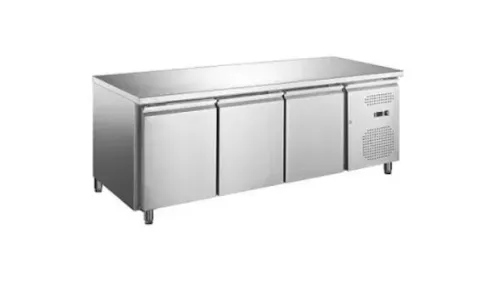
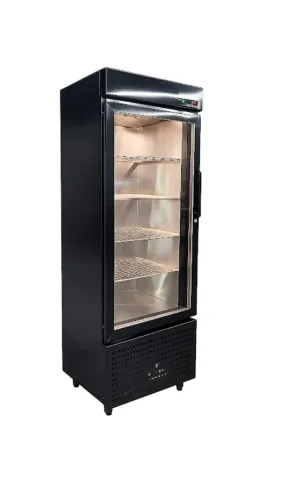
Add preparation tables, refrigerated prep counters, reach-in or under-counter refrigeration, freezers, hand and pot sinks, warewashing equipment, hot holding and pass shelving. Position these for production, storage, sanitation and dispatch, not just around the visible cooking line.
Before buying, count peak-hour covers, average items per cover and dishes cooked at once. That count exposes the required burners, pans, refrigeration space and holding capacity. A menu with one occasional fried item does not justify a fryer; repeated fried orders do.
Calculate Cooking Capacity Before Choosing the Appliance
Size the line for the busiest 15-minute or 30-minute period, not the daily average. Count simultaneous pans and assign one burner or cooking surface to every task that cannot share time. Specify stock-pot capacity by usable pot volume in litres, leave headspace for boiling and stirring, and compare each batch size with burner recovery time.
- Choose an oven by pan format, rack count, temperature range, loading frequency and recovery after the door opens. Cabinet dimensions alone do not define oven capacity.
- Add equipment when tickets queue because a burner, fryer, oven or griddle is occupied—not simply because the kitchen feels busy.
- Reject an integrated oven base if its capacity, access, recovery or heat below the line restricts throughput. A separate oven can add cooking capacity and simplify maintenance.
| Option | Best fit | Capacity decision |
|---|---|---|
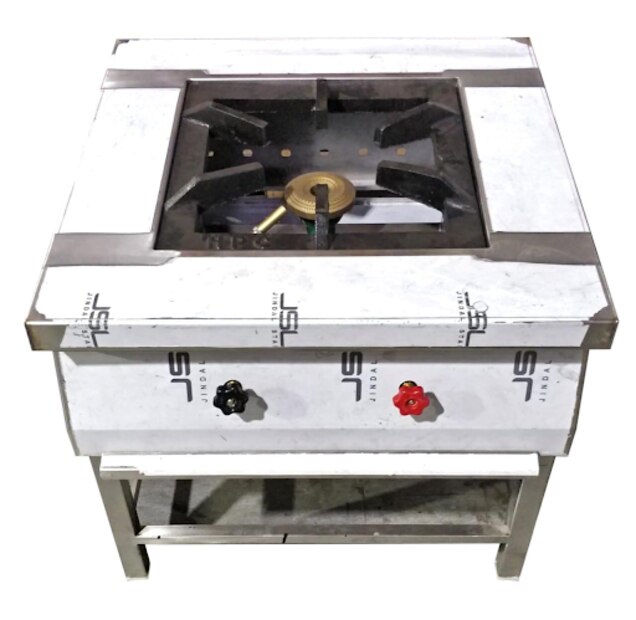
| Stock-pot stove | Repeated soups, sauces or boiling | Match burner output to batch size |
| Four-burner range | Varied small-batch cooking | Suitable when four tasks run together |
| Six-burner range | Higher simultaneous pan demand | Use when burner count exceeds four |
| Chinese cooking range | Wok-heavy menus | Prioritise high flame and wok control |
| Griddle | Continuous flat-surface production | Size by simultaneous items |
| Fryer | Repeated fried batches | Check oil recovery and batch timing |
| Induction or hot plate | Precision, holding or light finishing | Confirm electrical capacity; a hot plate is not a high-output line substitute |
Arrange Stations Around the Work, Not the Walls
A commercial kitchen layout should follow the food and equipment, not the walls. Use this workflow sequencing procedure to reduce backtracking, cross-traffic and delays:
1. Sequence the main route from receiving to dry and cold storage, preparation, cooking, hot holding, plating and dispatch. Send dishwashing and waste removal along separate return routes so dirty items do not cross the pass.
2. Keep refrigerated prep beside the cooking line, landing space beside ovens and fryers, and plating space between hot holding and the pass. This shortens transfers and exposes a cooking line bottleneck quickly.
3. Place handwashing and equipment sinks where staff can use them without carrying dirty pans through the plating zone. Separate dirty dish racks from clean racks; splash and hand contact can recontaminate sanitised items.
4. Leave clearance to open oven doors, remove hot pans and service burners safely. Set work surfaces at heights that limit bending, keep pot handles out of walkways, and use stable supports for heavy vessels.
5. During service, sequence mise en place, batch cooking, hot holding, finishing and plating. Record ticket times and watch where pans queue, staff wait for an oven or fryer, or plated food sits before dispatch. That queue identifies the bottleneck; another burner will not fix a pass or refrigeration constraint.
Verify Utilities, Ventilation and Fire Protection at Design Stage
Before delivery, confirm that the site can carry every utility load at the same time, not merely fit the equipment on the floor.
1. Create an equipment schedule for every electrical item. Record connected electrical load, voltage, phase, maximum coincident demand, earthing, residual-current protection, local isolator position, clearance and heat rejection.
2. Specify gas pressure and fuel type, burner pressure, regulator arrangement, manifold capacity, isolation valves, flexible-connection specification and leak-test responsibility. Do not infer LPG manifold capacity from burner kilowatts.
3. Confirm water inlet pressure, drain size and hot-water temperature. For combi ovens and steam equipment, state hardness, chloride and silica limits, treatment system, cartridge replacement interval and service access; a softener alone may not prevent scale or corrosion.
4. Size refrigeration at the manufacturer’s ambient rating, with condenser clearance from walls and heat-producing equipment. High Delhi temperatures, frequent door opening and nearby cooking heat can reduce pull-down performance.
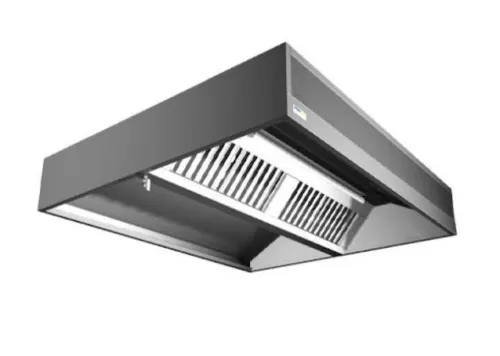
5. Specify exhaust airflow, exhaust hood size, canopy overhang beyond high-plume appliances, baffle filters, duct-cleaning access and make-up air together. Woks, open burners, charbroilers and fryers need capture designed around grease-laden plumes; hood width alone proves nothing. Check cross-drafts from doors, fans and air-conditioning diffusers.
Obtain local authority and fire-code approval for clearances, suppression, extinguishers, emergency gas shutoff and duct cleaning. Commission the make-up-air balance: excessive negative pressure weakens capture, disturbs gas combustion and makes doors difficult to open.
Compare Construction, Hygiene and Ownership Effort
Choose the specification that reduces cleaning, breakdowns and utility waste, not merely the lowest purchase price. Stainless steel grade must match exposure:
| Application | Preferred choice | Reason |
|---|---|---|
| Food-contact worktops | Type 304 | Suits many routine food-contact surfaces |
| Salt-heavy, acidic or continuously wet zones | More corrosion-resistant grade | Reduces corrosion risk |
| Low-corrosion-risk panels | Type 430 | Not interchangeable with 304 for every wet or food-contact use |
Record sheet gauge, weld finish, grate material, insulation, adjustable feet or lockable casters, thermostat controls and service access. Request burner output in kW or BTU/h, oven temperature range and recovery, hot-plate surface temperature, warm-up time, load limits and fuel consumption.
Design the cleaning schedule around daily shutdown: isolate power or gas, remove grease, clean burners and filters, wash removable parts, clear drains and contain spills. Keep floors, wall junctions and undersides accessible.
- Budget installation, civil work, ventilation, fuel or electricity, cleaning labour, water treatment, consumables, spare parts and downtime.
- Obtain local availability for gaskets, elements, probes, solenoid valves, pumps, contactors and control boards, then calculate maintenance cost.
For dishwashers, specify peak racks or utensil loads and incoming-water temperature, not only racks per hour. Give grease traps an accessible cleaning route and documented emptying frequency.
Use a Written Specification and Commissioning Checklist
A signed equipment commissioning checklist confirms fit before payment, not after a failed installation. Give every commercial kitchen supplier one schedule covering:
1. Dimensions, capacity, material, fuel or connected electrical load, phase, voltage, gas pressure, water inlet and drain connections, exhaust volume, clearances, heat rejection, delivery route and service access. Include maximum coincident electrical demand; a product name does not prove floor-plan or utility compatibility.
2. After installation, check level, stability, anti-tip protection, rack strength, door seals, handle clearance, drainage and cleanability. Measure current, verify earthing and have the qualified installer inspect gas connections for leaks.
3. Conduct acceptance testing: test ignition, low- and high-flame stability, burner recovery, even heating, oven calibration, thermostat operation, hot-plate warm-up and emergency shutoff. Record refrigeration pull-down at the stated ambient rating. For a blast chiller, record actual batch mass, product depth, pan format and pull-down time.
4. Run the cooking line while verifying hood capture and make-up-air balance. Obtain cleaning instructions, warranty exclusions, preventive-maintenance intervals, spare-parts availability and response-time commitments in writing.
Vinaayak Enterprises deserves comparison with other suppliers when it converts your menu, covers and site utilities into this signed schedule rather than quoting isolated appliances.
Related products
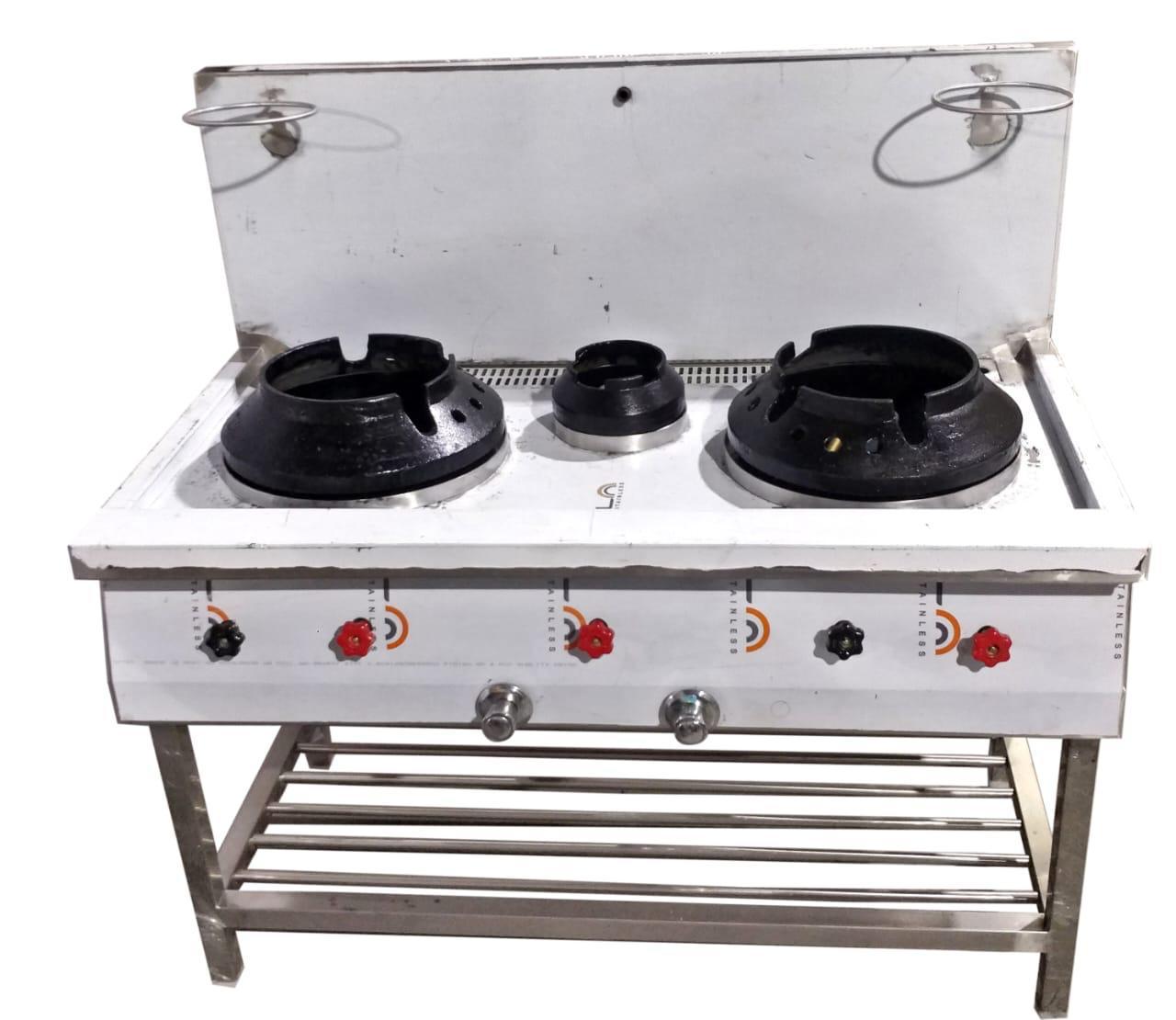 | Hot Cooking Equipment & Specialty Counters Commercial Chinese Cooking Range Vinaayak Enterprises Commercial Chinese Cooking Range is designed for restaurants, hotels, food courts, QSRs and professional kitchens that prepare... View product → |
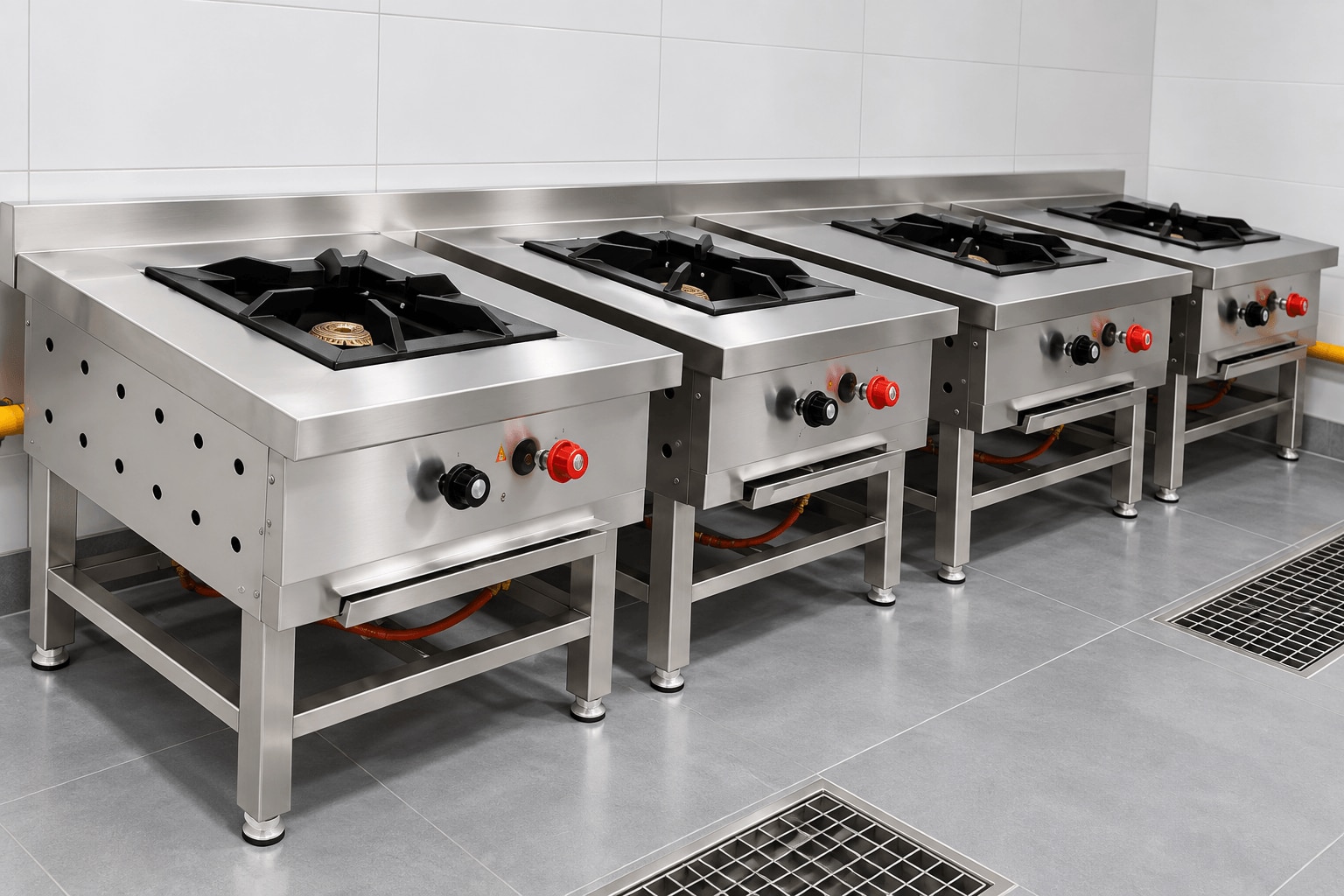 | Bulk Cooking Equipment Vinaayak Enterprises Commercial Stock Pot Stove is designed for high-volume cooking applications where large quantities of food need to be prepared... View product → |
Frequently asked questions
How do you match restaurant equipment to a menu and service pattern?
List each menu item, cooking method, batch size, service window and peak-hour volume. Choose equipment that supports the actual mix instead of copying a standard cooking line.
How do you calculate cooking capacity before choosing an appliance?
Convert peak-hour orders into required portions per hour, then compare that demand with each appliance’s usable capacity, cycle time and recovery time.
What utilities and protections must be checked before installation?
Confirm electrical load, gas pressure, water supply, drainage, exhaust capacity, make-up air, fire suppression and local installation requirements before ordering.
What should a restaurant equipment specification and commissioning checklist include?
Record dimensions, materials, capacities, utility connections, safety features, cleaning access, warranties, test results and staff sign-off for every item.
Related products
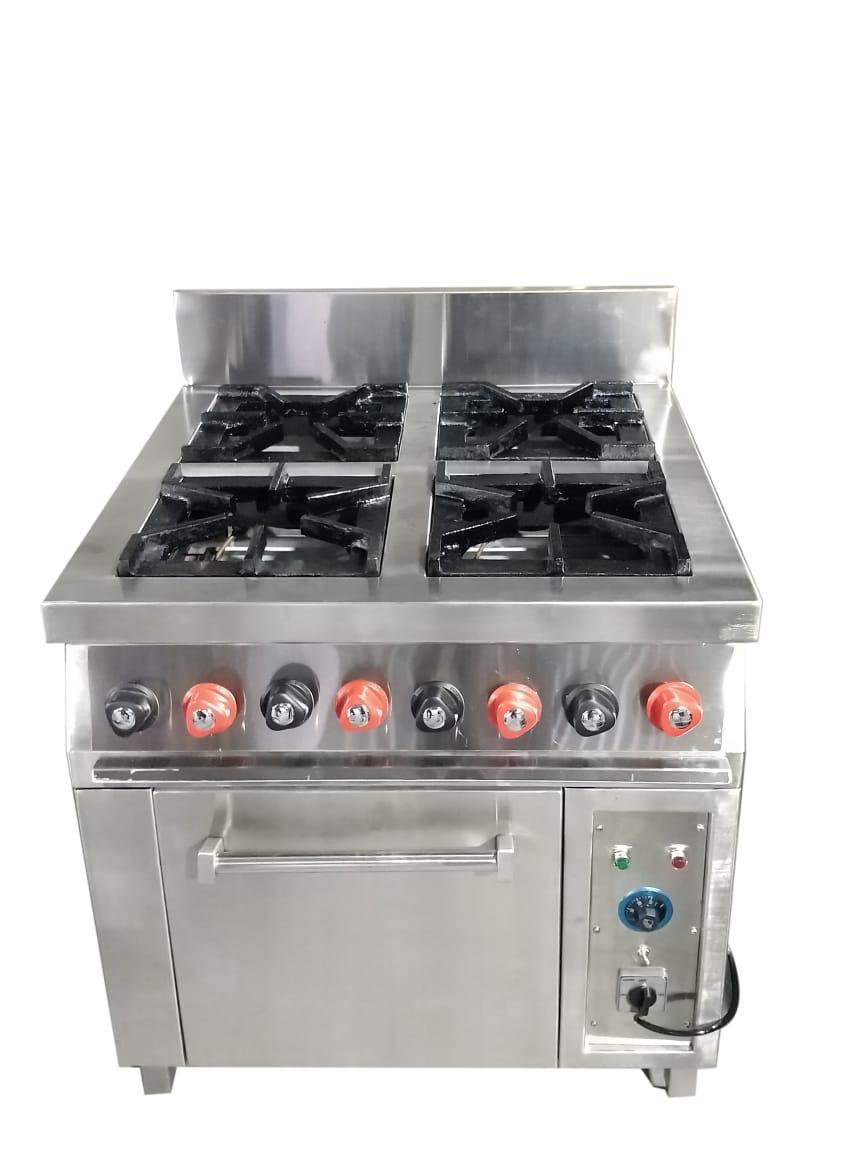 | Hot Cooking Equipment & Specialty Counters 4-Burner Commercial Cooking Range with Oven Vinaayak Enterprises 4-Burner Commercial Cooking Range with Oven is designed for professional kitchens that require multiple cooking stations along... View product → |
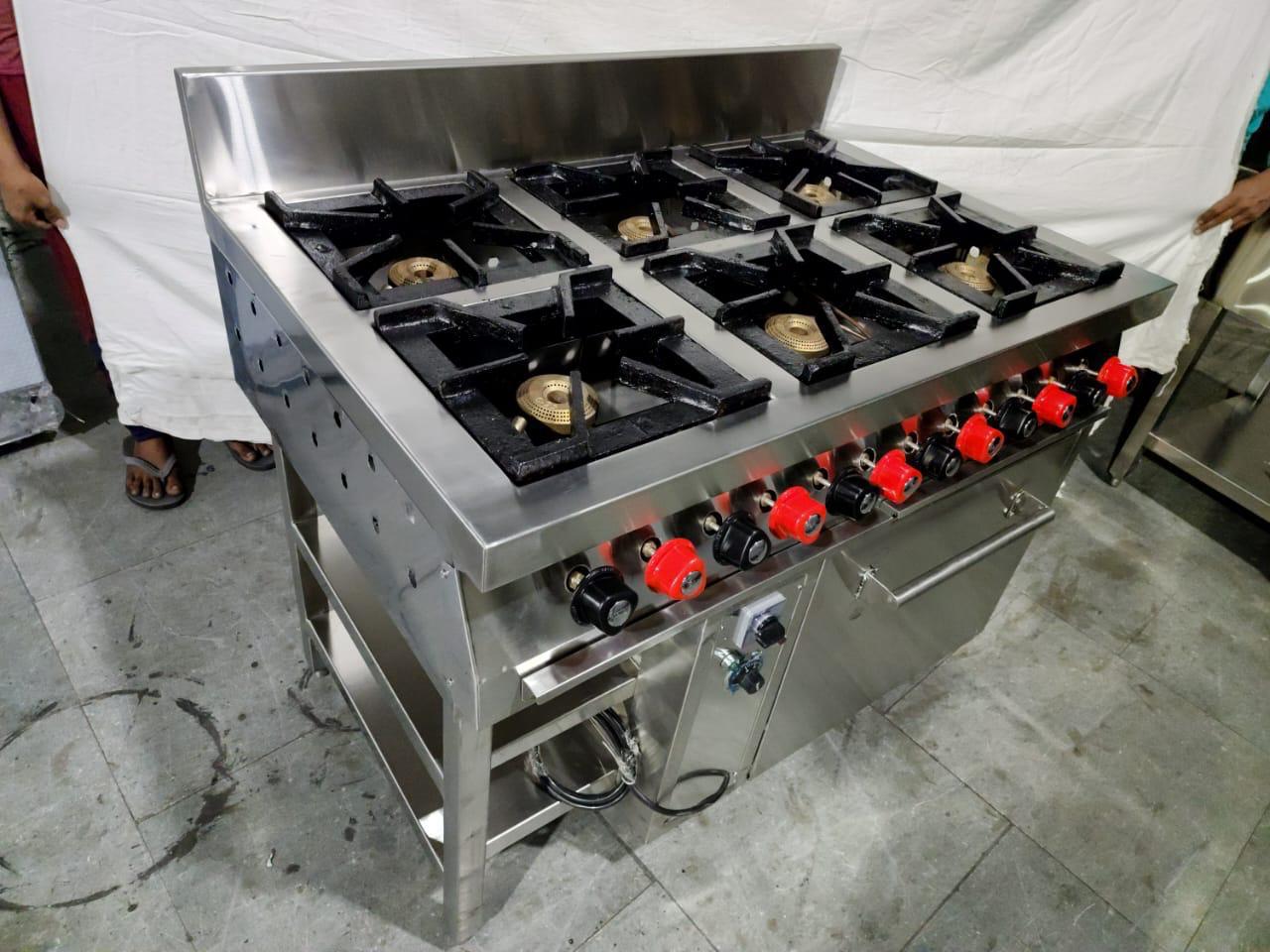 | Hot Cooking Equipment & Specialty Counters 6-Burner Commercial Cooking Range with Oven Base Vinaayak Enterprises 6-Burner Commercial Cooking Range with Oven Base is designed for high-volume commercial kitchens that need multiple cooking... View product → |
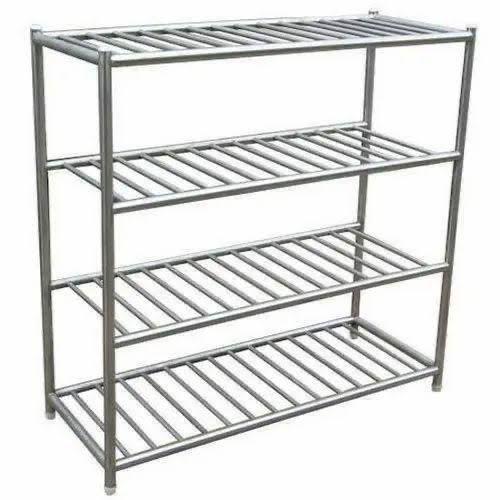 | Worktables, Sinks & Storage Vinaayak Enterprises Stainless Steel Pot Rack is designed for organized storage of large cooking vessels, pots, pans and other kitchen utensils in... View product → |
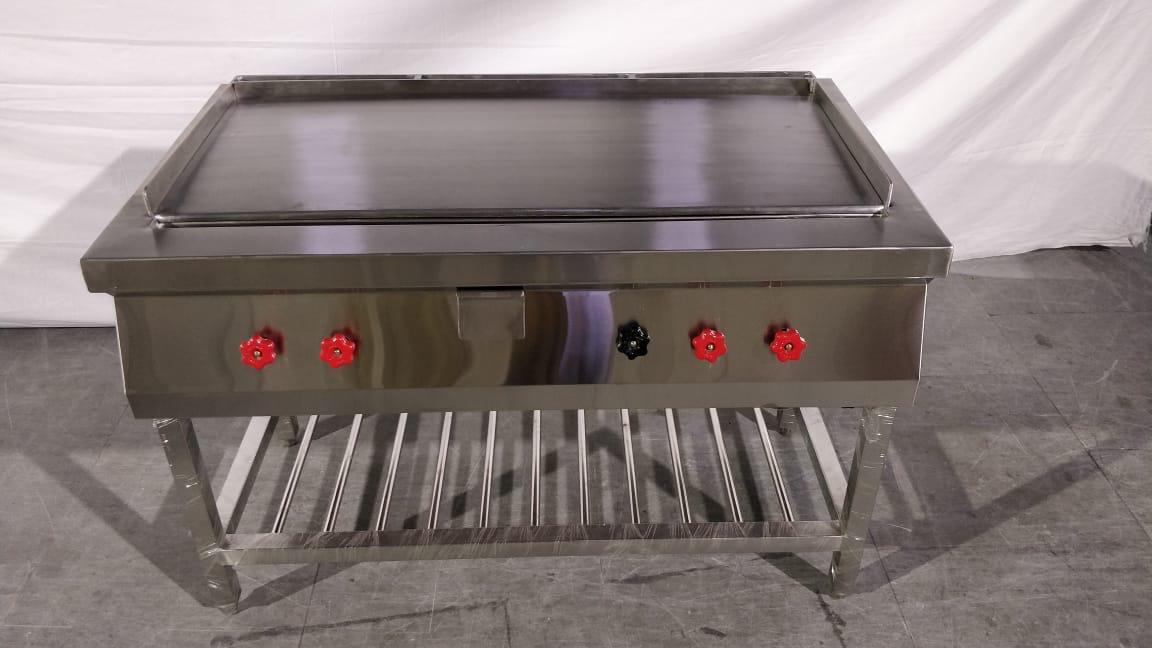 | Hot Cooking Equipment & Specialty Counters Vinaayak Enterprises Commercial Hot Plate is designed for professional kitchens that require a dedicated flat cooking surface for heating, cooking... View product → |