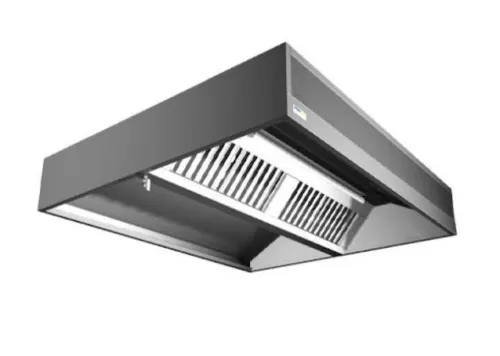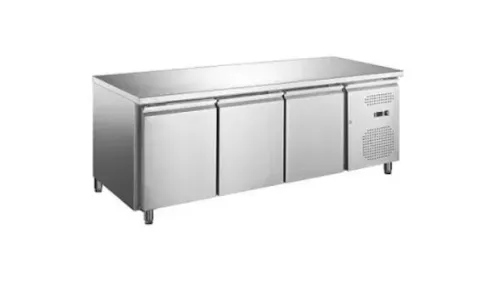
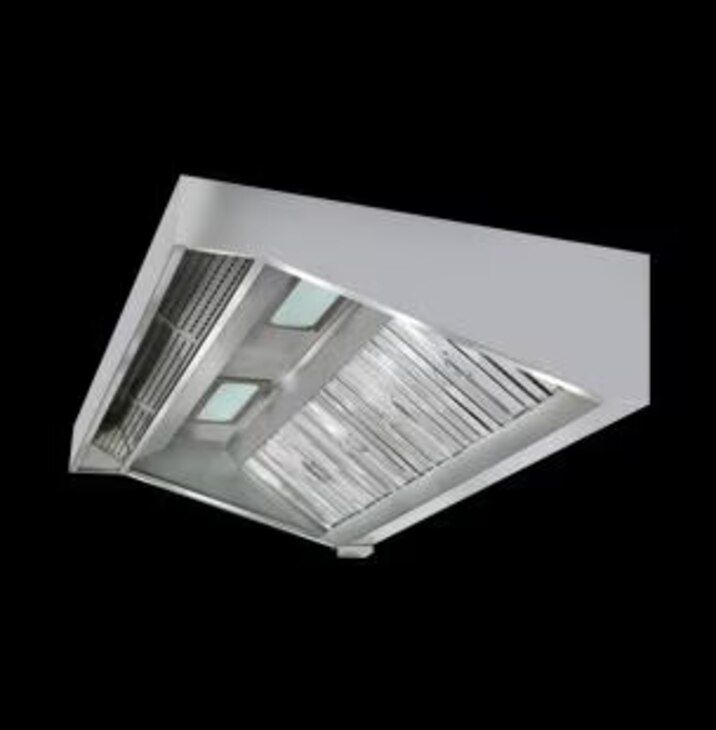
A kitchen can have a powerful exhaust fan and still remain smoky, hot, noisy or difficult to work in when the hood, replacement air and duct system are poorly matched. You will be able to estimate the design requirements, compare equipment choices, plan a compliant installation and verify that the finished system captures vapour without making the room uncomfortable.
Key takeaways
- Size exhaust airflow from appliance duty, fuel type and plume path.
- Extend canopy coverage beyond the cooking equipment to capture rising vapour.
- Balance replacement air to prevent drafts, smoke spillage and negative pressure.
- Compare the fan, ductwork, controls and maintenance access as one system.
Size the hood and exhaust airflow around the cooking load
Calculate the hood dimensions from the equipment footprint and plume path, not the kitchen’s room volume. Record each appliance’s width, depth, fuel type, duty classification and peak load, then select the hood manufacturer’s exhaust airflow for that cooking duty.
Multiply the required airflow per metre of hood length by the canopy length; convert units with 1 cubic metre per hour = 0.589 cubic feet per minute.
- Extend a wall canopy beyond the equipment line by about 150–300 mm at the exposed front and ends; increase the allowance when the appliance produces strong heat, smoke or steam.
- Give an island canopy capture area on every exposed side. Do not copy a wall-hood dimension: cross-drafts from doors, windows and supply grilles make island capture harder.
- Include the fryer, range, griddle, oven or tilting pan within the canopy footprint. An undersized hood lets the thermal plume spill into the room before it reaches the filters.
- Use the listed duty category and appliance arrangement to set exhaust airflow; light electric cooking does not need the same rate as heavy gas frying.
Place high-plume appliances away from canopy edges and keep doors, ceiling diffusers and pedestal fans from blowing across the capture zone. A variable-speed fan does not justify reducing exhaust airflow unless sensors, minimum-flow limits and pressure checks prove capture at turndown. Commission the installed hood with smoke visualisation during representative cooking and door opening.
Match canopy coverage, hood type and grease control to each appliance
A Type I hood belongs over grease- and smoke-producing appliances; a Type II hood is for heat, steam and condensate. Putting a Type II hood over a fryer, griddle or range leaves grease-laden vapour without the required grease-removal protection and creates a safety and compliance failure.
For a wall line-up, place the canopy tight to the wall and extend its front and exposed sides beyond the equipment. Specify at least 150 mm of hood overhang beyond the cooking footprint where the equipment manufacturer gives no larger requirement.
An undersized front edge lets the thermal plume spill into the room before the exhaust can capture it.
An island line-up needs coverage on all four sides, with more overhang where cross-drafts can reach the plume. Doors, ceiling diffusers, supply grilles and pedestal fans can push vapour outside the canopy even when the fan delivers its scheduled airflow.
Match the hood and grease control to the load:
- Put fryers and griddles beneath a Type I canopy with accessible baffle filters or the specified grease-removal device.
- Keep ovens, ranges and tilting braising pans fully inside the canopy footprint, including the front loading edge.
- Separate high-plume appliances from low-output equipment only when the hood design preserves continuous capture.
- Confirm the hood suppression layout, fuel shutoff and fan interlock cover every appliance beneath it.
Test smoke capture with appliances operating and doors opening. If vapour escapes at the front or sides, increase coverage or correct the air movement before accepting the installation.
Balance replacement air for comfort, pressure control and cleaner operation
A kitchen needs make-up air that replaces exhaust without blowing across the hood face. Put fresh-air grilles where the supply travels slowly into the room, away from the capture zone, appliance burners, doors and windows; a grille aimed at the canopy can push vapour into the dining area instead of into the filters.
Use tempered air when outdoor conditions would create heat gain, humidity or a cold draft. In Delhi’s hot season, untreated outdoor air can make the kitchen hotter even while the exhaust fan runs correctly.
Filter the intake for seasonal particulate loading, and specify the filter’s clean and final pressure drops, differential-pressure monitoring and an accessible replacement route.
Keep the kitchen from drifting into excessive negative pressure. That condition pulls air through door gaps, disrupts gas-appliance combustion, increases door-opening drafts and can draw conditioned air from adjacent dining spaces. Provide transfer air through a deliberate path rather than relying on random cracks.
At commissioning, record the operating condition, not just the fan setting:
- Hood exhaust, make-up air and transfer-air volumes
- Kitchen pressure relative to adjacent rooms
- Fan speed, filter pressure drop and control interlocks
- Capture performance during representative cooking and door opening
Demand-controlled ventilation can reduce both exhaust and make-up-air volume during quiet periods, but set a minimum airflow and verify capture at turndown. Coordinate temperature or optical sensors with the supply and exhaust controls; adding a variable-frequency drive to the exhaust fan alone does not protect burner operation or capture.
Use smoke visualisation to expose cross-drafts from ceiling diffusers, pedestal fans and nearby grilles before handover.
Compare fans, ducts and controls as one ventilation system
A fan rated only by airflow is not enough: select it against the system’s static pressure, including filters, grease filters, duct length, bends, discharge fittings and dampers. Check the motor rating, duty cycle, voltage, phase, starter or variable-frequency drive, outdoor suitability and access for belt or bearing service.
| Component | Check before ordering | Failure at commissioning |
|---|---|---|
| Fan | Airflow at the stated static pressure; motor rating; duty cycle; speed control; rotation and noise limits | The fan delivers its nameplate airflow only with clean filters, then loses capture as resistance rises |
| Duct | Grease-rated construction; sealed joints; duct routing; access doors; cleaning points; clearances from combustible materials | Hidden ledges collect grease, bends increase pressure loss, or cleaners cannot reach the run |
| Controls | Fan–make-up-air interlock; appliance and fuel shutoff; fire-suppression shutdown and restart logic; minimum speed; sensor location | A VFD reduces airflow below safe capture, or cooking continues after exhaust stops |
Ask Vinaayak Enterprises to show the fan curve, calculated static pressure, motor electrical data and duct access points on the quotation, not just the hood dimensions. Confirm that grease filters are not being counted as removal of carbon monoxide, nitrogen dioxide, odours or fine particles; supply-air filtration requires its own pressure-drop allowance.
Commission the complete system with appliances operating. Record actual exhaust, make-up-air and transfer-air volumes, room pressure against adjacent spaces, fan speed, filter pressure drop, control interlocks and capture performance. A balanced exhaust fan alone proves little.
Related products
 | Commercial Exhaust & Ventilation Stainless Steel Exhaust Hood with Fresh Air Grilles Vinaayak Enterprises Stainless Steel Exhaust Hood with Fresh Air Grilles is designed for commercial kitchens that require both effective exhaust... View product → |
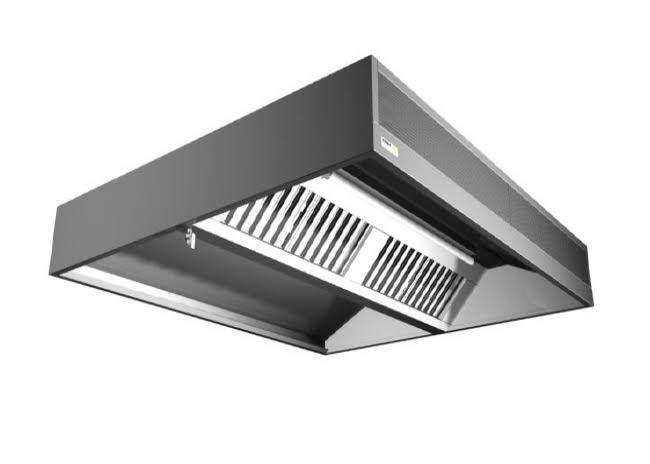 | Commercial Exhaust & Ventilation Vinaayak Enterprises Island-Type Exhaust Hood is designed for commercial kitchens where cooking equipment is positioned in a central island... View product → |
Budget maintenance, approvals and the limits of a hood solution
A low purchase price is meaningless if the system is difficult to clean, repeatedly trips, or fails inspection. Confirm the hood classification first: use a Type I hood for grease- and smoke-producing appliances, not a Type II hood intended for heat, steam and condensate.
Type I grease filters protect the duct and fan, but they do not reliably remove carbon monoxide, nitrogen dioxide, odours or fine particles.
- Request drawings showing grease-duct access doors, clearances from combustible construction, concealed ledges, joint details and the specified duct fire rating. Ordinary HVAC ductwork is not an automatic substitute for a commercial-kitchen grease duct.
- Price the service life, including filter replacement, duct cleaning, fan belts or bearings, motor energy, access equipment and downtime. Reject a design that hides cleaning points above ceilings or inside inaccessible shafts.
- Confirm Delhi requirements with the approving authority and fire consultant. Check fire suppression coverage, fuel shutoff, hood suppression interlocks, fan shutdown and restart behaviour before installation.
Commissioning must prove more than fan airflow. Record exhaust, makeup-air and transfer-air volumes; room pressure against adjacent spaces; fan speed; filter pressure drop; control interlocks; and capture performance during representative cooking and door-opening conditions. Smoke visualisation exposes cross-drafts that a volume reading misses.
A hood also has limits. If the room needs cleaner incoming air, specify a separate supply-air filtration system and budget for its pressure drop and filter-loading maintenance. Capture failure, excessive noise or uncomfortable drafts will cost more to correct after handover than to design out.
Frequently asked questions
How do you size a commercial kitchen hood?
Record each appliance’s width, depth, fuel type, duty classification and peak load. Use the hood manufacturer’s exhaust airflow for that cooking duty, then check canopy dimensions and plume capture rather than sizing from total room volume.
What hood type and grease control should each appliance use?
Match the hood to the appliance layout and plume path. Use canopy coverage for equipment producing heat, smoke or grease, and select grease filters or extractors rated for the cooking load. High-grease appliances need stronger capture and accessible filter cleaning.
Why is replacement air important in a commercial kitchen?
Exhausted air must be replaced without creating drafts at the cook line. Poorly balanced air causes negative pressure, smoke spillage, uncomfortable working conditions and combustion or door-operation problems. Coordinate outdoor air, transfer air and supply diffusers with the exhaust system.
What should you compare when choosing a kitchen ventilation system?
Compare the exhaust fan, duct size and route, grease removal, controls, noise, access for cleaning and maintenance requirements together. A powerful fan cannot correct undersized ducts, poor hood coverage or badly positioned replacement-air diffusers.
Related products
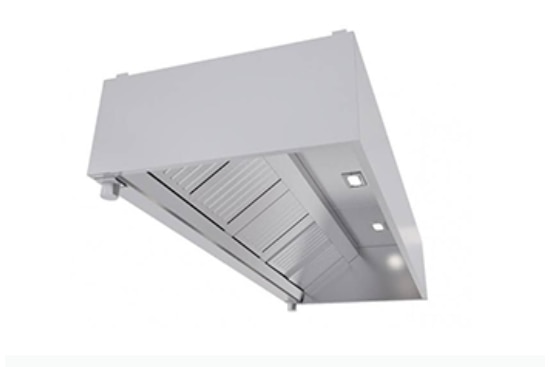 | Commercial Exhaust & Ventilation Exhaust Hood Worktable with Bracing Vinaayak Enterprises Exhaust Hood Worktable with Bracing is designed for commercial kitchens that require a practical work surface integrated with a... View product → |
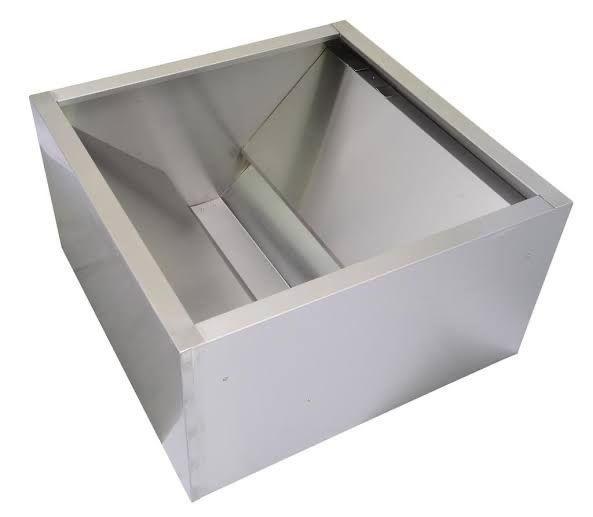 | Commercial Exhaust & Ventilation Commercial Vapour Exhaust Hood Vinaayak Enterprises Commercial Vapour Exhaust Hood is designed for professional commercial kitchens to help remove grease-laden vapours, cooking... View product → |