Food can look chilled while its centre remains warm, or a refrigerator display can show 5°C while overloaded shelves create unsafe local temperatures. By the end, you will know how to verify food temperatures, organise and cool stock safely, respond to failures, and choose refrigeration that fits your kitchen’s actual workload.
Key takeaways
- Keep chilled food at 5°C or below and frozen food at −18°C or below.
- Measure food temperature instead of trusting the cabinet display.
- Cool cooked food quickly, label it, and rotate stock by date.
- Leave airflow space, service equipment, and plan for power outages.
The temperatures your food must actually reach
Keep chilled food at 5°C (41°F) or below; the practical chilled storage 0–5°C range limits bacterial growth without freezing most fresh products. Food intended to stay frozen belongs in frozen storage −18°C or below. A cabinet display set to these numbers does not prove the food has reached them.
Verify the commercial refrigeration food storage temperature with a calibrated probe thermometer, not the controller alone:
- Check representative products, including containers in the centre of the load and near doors or evaporator outlets. Measure the thickest part of packaged food without touching the probe to shelving or the container.
- Record readings at defined intervals, then repeat after loading, during peak service and after a defrost cycle. Clean and sanitise the probe between products to prevent cross-contamination.
- If a reading exceeds the limit, identify the affected batch and record the action: move it to a working unit, rapidly cool it when appropriate, apply an approved time-control procedure or discard it.
Frozen food should remain solid. Partial thawing followed by refreezing damages texture and signals poor door discipline, excessive frost, inadequate capacity or a failing unit.
During an outage, use measured food temperature and exposure time for decisions; an unopened refrigerator’s approximate four-hour holding period and a freezer’s 24- to 48-hour guidance are not substitutes for checking the product.
How refrigeration protects food without replacing safe handling
Refrigeration at 5°C or below slows bacterial growth and enzymatic deterioration, extending food shelf life without sterilising it. It will not reliably destroy pathogens or toxins, and it cannot make food safe after prolonged temperature abuse.
Check food with a calibrated probe at representative locations after loading, during service and after defrosting, then record the readings; a 5°C controller display does not prove every container is at 5°C.
- Keep raw meat below ready-to-eat food, using leak-proof, covered containers so drips cannot contaminate food needing no further kill step.
- Leave space around containers and evaporator outlets; blocked airflow creates warm pockets even while the display shows a safe temperature.
- Separate raw and cooked food, clean spills immediately, and sanitise shelves after leaks to stop cross-contamination from spreading through shared storage areas.
During cooling, size refrigeration for the actual food load, not just cabinet volume. Cooked TCS food must fall from 57°C to 21°C within 2 hours, then reach 5°C within 6 hours total; a holding refrigerator is not automatically a blast chiller. Thaw TCS food under refrigeration at 5°C or below, not at room temperature.
The receiving, cooling and rotation routine that keeps stock safe
Reject or quarantine stock that fails the receiving temperature check, has damaged packaging, or arrives without a readable use-by date and batch number. Check product with a calibrated probe between packages rather than trusting the delivery vehicle’s display, and record the supplier, time, temperature and decision.
Move accepted food into storage immediately. Keep TCS food at 5°C (41°F) or below, leave space for cold air to circulate, and store raw meat, poultry and seafood below ready-to-eat food. Never place warm containers against temperature-sensitive stock or directly over an evaporator outlet.
Cool cooked food rapidly in shallow, labelled containers. Divide large batches, use an ice bath or blast chiller when available, and verify the centre temperature with a probe. A container that feels cool at the surface can still hold a warm core that supports bacterial growth.
Use this control sequence for every batch:
- Label the product with its preparation or opening date, use-by date and batch number.
- Apply first-in, first-out rotation; move older stock forward and remove expired food before service.
- Record refrigerator temperatures at set intervals and after loading, defrosting or a power interruption.
- If a reading is out of range, identify the affected batch, transfer it to a working unit, assess time and measured temperature, then discard it when safety cannot be proved.
An unopened refrigerator holds cold for about four hours during an outage; use that only as emergency guidance. Decide from food temperature and exposure time, not the clock alone.
Why loading habits, maintenance and outages affect reliability
Prevent warm zones and slow pull-down by treating loading, cleaning and outage response as operating controls, not housekeeping. Leave airflow around containers and keep evaporator discharge and return vents clear; a packed cabinet has less usable capacity than its stated volume.
Cool food in shallow pans, keep warm stock away from temperature-sensitive food, and leave containers loosely covered during active cooling when your procedure permits.
- Record refrigerator recovery time after loading, door-heavy service and defrost. If the cabinet does not return promptly to its operating range, reduce the load and call for service.
- Perform condenser coil maintenance on the manufacturer’s schedule; grease, dust and high kitchen temperatures make the compressor work harder and delay recovery.
- Include door gasket cleaning in the daily close-down. A torn or dirty seal admits warm, humid air and creates frost, condensation and temperature swings.
- Keep clearance around the refrigeration plant. Blocked ventilation can make a cabinet fail during lunch service despite performing normally overnight.
Power events require a written decision rule:
| Condition | Immediate control | What failure causes |
|---|---|---|
| Power loss | Keep doors shut; measure product temperature and exposure time | Repeated opening accelerates warming |
| Unopened refrigerator | Use about four hours only as emergency guidance | Time alone cannot prove food is safe |
| Full freezer | Use about 48 hours as emergency guidance; half-full, about 24 | Dispose based on measured condition, not the estimate |
| Cabinet not recovering | Move stock to verified equipment and call service | Continued loading deepens the warm zone |
Choosing refrigeration that matches the kitchen’s real workload
A cabinet’s advertised litres are not its working capacity. Compare the space you can load without blocking evaporator airflow, crowding shelves or placing warm containers against chilled food; a full cabinet that recovers slowly is less useful than a smaller one that holds product at 5°C or below.
| Type | Useful capacity and workload | Installation and service checks |
|---|---|---|
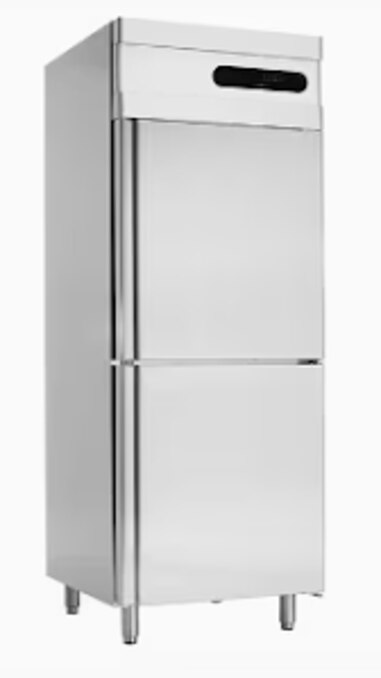
| Reach-in refrigerator | Suits routine back-of-house stock; count shelf positions, door swing and clear loading space | Confirm service clearance, condenser ventilation, test ambient and door-gasket replacement support |
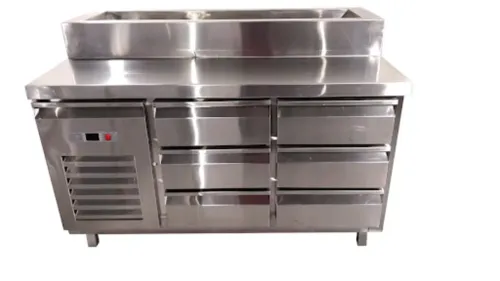
| Undercounter refrigerator | Saves floor space at a station but holds less stock; choose it for short-reach ingredients | Measure the counter, allow heat to escape and check drawer or door access during service |
| Prep refrigerator | Fits frequent ingredient access beside a preparation line; verify pan capacity and usable space beneath | Check worktop height, airflow around pans and cleaning access |
| Walk-in cold room | Fits bulk stock and deliveries; size it for racks, aisles and required air circulation, not floor area alone | Plan insulation, drainage, evaporator clearance, door seals, power backup and technician access |
Ask each supplier for performance at your kitchen’s ambient temperature, loading assumptions, defrost behaviour and recovery time. Specify a unit evaluated to NSF/ANSI 7, then test food with a calibrated probe after loading, during peak service and after defrost.
- Who responds to breakdowns, and what parts are stocked locally?
- What electrical load, ventilation gap and service clearance does the model need?
- Is the cooling load sufficient for incoming warm stock, or do you need a blast chiller rather than a holding refrigerator?
Related products
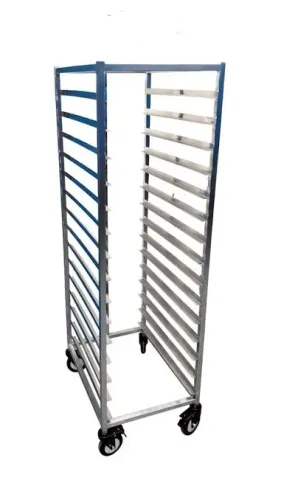
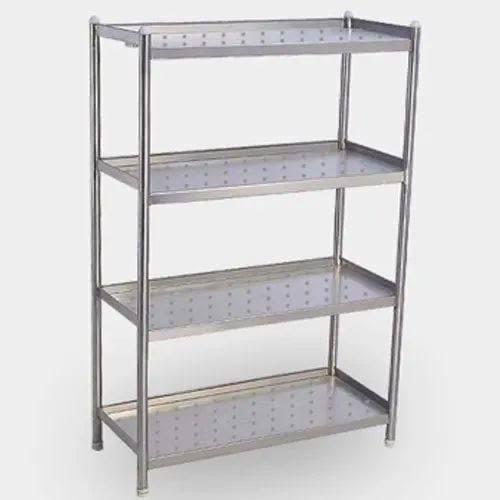 | Worktables, Sinks & Storage Vinaayak Enterprises Cold Room Storage Rack is designed to improve storage organization inside commercial cold rooms and refrigerated storage areas. View product → |
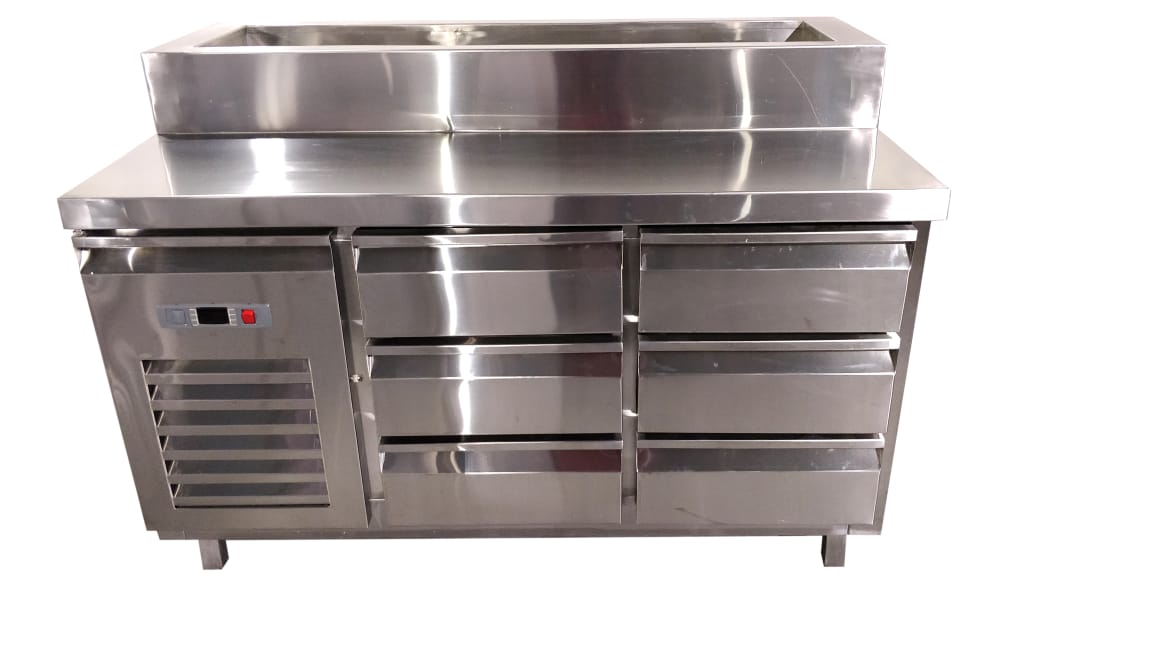 | Commercial Refrigeration & Cold Equipment Mizza Prep Undercounter Refrigerator with Drawers Vinaayak Enterprises Mizza Prep Undercounter Refrigerator with Drawers is designed for commercial kitchens that need refrigerated ingredient storage... View product → |
Frequently asked questions
What temperature should chilled food reach in a commercial kitchen?
Keep chilled food at 5°C (41°F) or below; a practical target range is 0–5°C. Frozen food belongs at −18°C or below.
Does a refrigerator display prove that food is safely chilled?
No. The display shows cabinet air temperature, not the temperature inside food. Check food with a calibrated probe thermometer.
How does refrigeration support safe food handling?
Refrigeration slows bacterial growth, but it does not replace hand hygiene, separation of raw and ready-to-eat foods, rapid cooling, or date-based stock rotation.
What makes a commercial refrigerator unreliable?
Overloading, blocked air vents, frequent door opening, dirty condenser coils, failed door seals, poor maintenance, and power outages can raise food temperatures.
How should a kitchen choose refrigeration capacity?
Match cabinet volume, shelf layout, cooling recovery, door type, and temperature zones to peak deliveries, production volume, available space, and cleaning access.
Related products
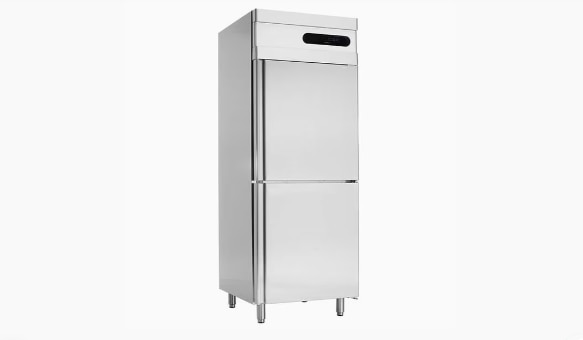 | Commercial Refrigeration & Cold Equipment 2-Door Commercial Vertical Refrigerator Vinaayak Enterprises 2-Door Commercial Vertical Refrigerator is designed for professional kitchens that require reliable, organized and easily... View product → |
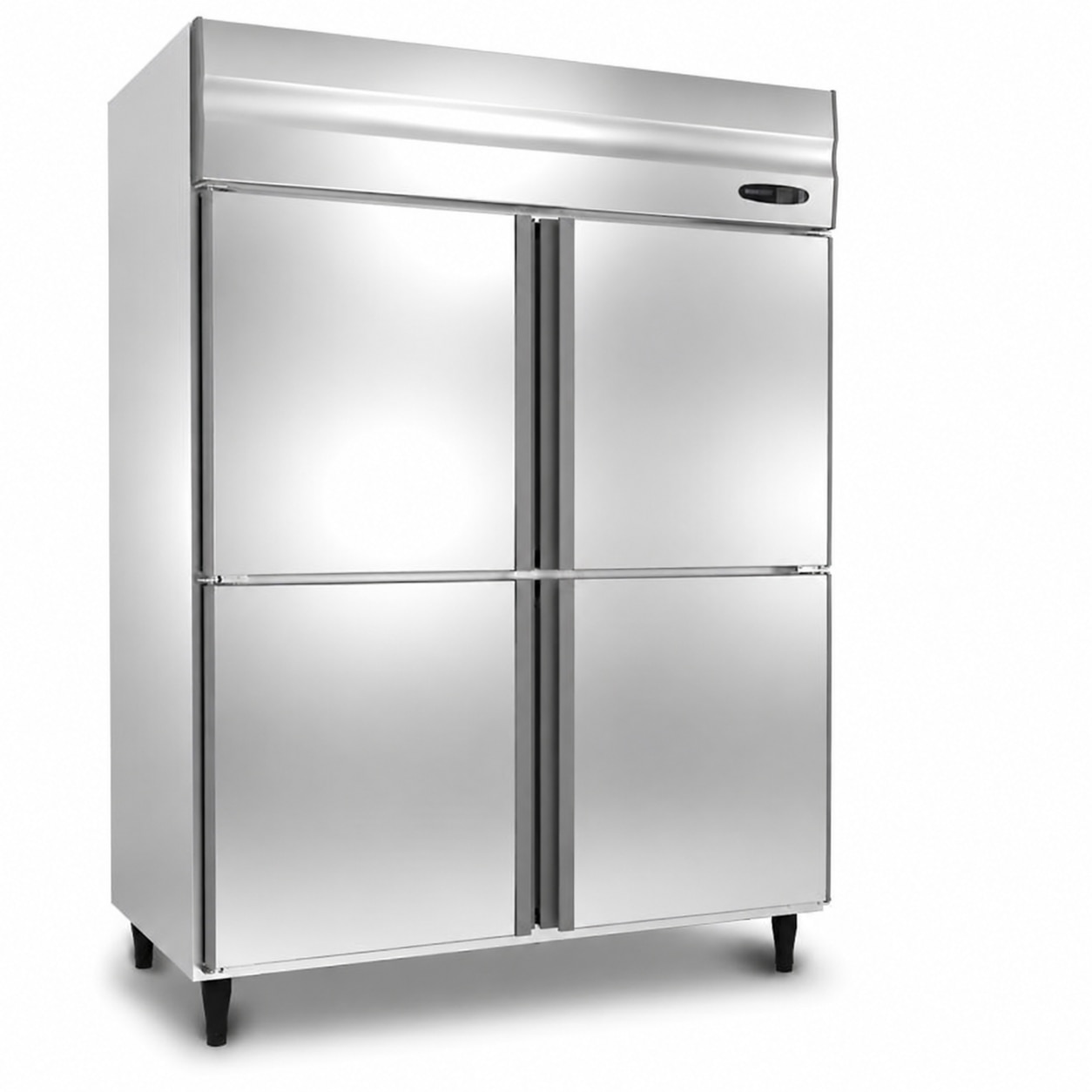 | Commercial Refrigeration & Cold Equipment 4-Door Commercial Refrigerator Vinaayak Enterprises 4-Door Commercial Reach-In Refrigerator is designed for restaurants, hotels, catering kitchens, cloud kitchens, institutional... View product → |
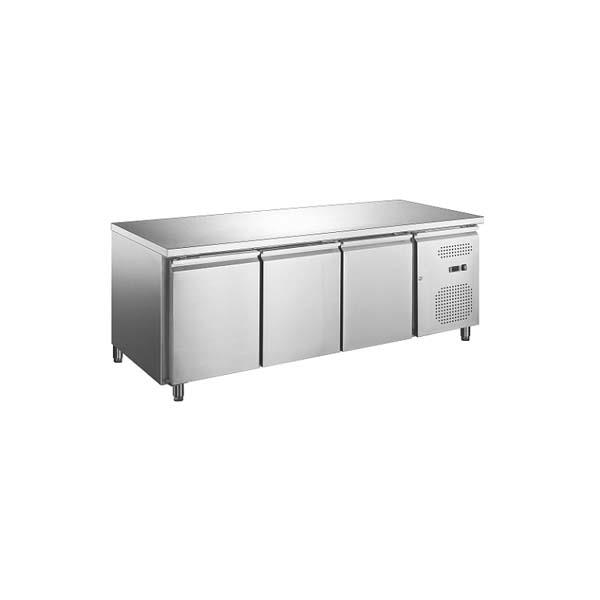 | Commercial Refrigeration & Cold Equipment 3-Door Undercounter Refrigerator Vinaayak Enterprises 3-Door Undercounter Refrigerator is designed for commercial kitchens that need refrigerated storage within easy reach of food... View product → |
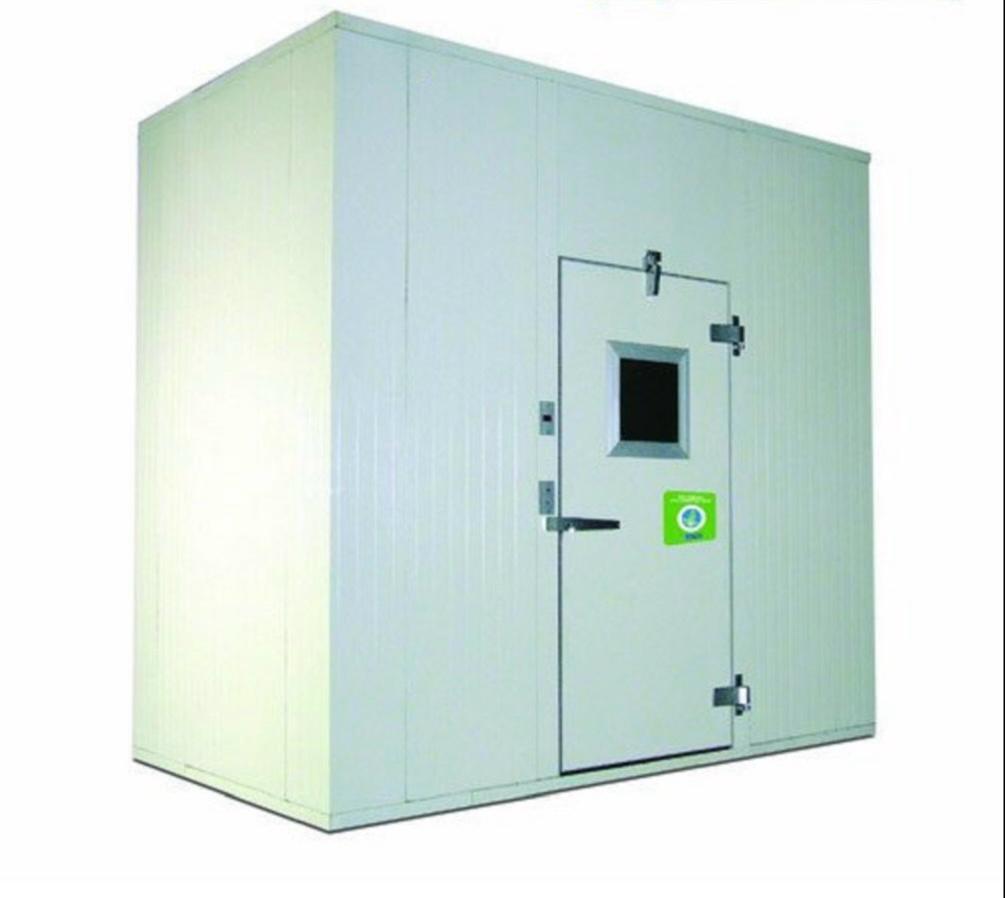 | Commercial Refrigeration & Cold Equipment Vinaayak Enterprises Commercial Cold Room is designed for businesses that require dedicated temperature-controlled storage for food ingredients,... View product → |