

A successful bar depends heavily on speed, organization, storage, and easy access to frequently used ingredients. During busy service periods, even small inefficiencies can delay orders. Well-planned bar equipment helps bartenders work within a compact area while maintaining an organized service environment.
Restaurants, hotels, pubs, clubs, and hospitality businesses in Delhi increasingly treat bar planning as a specialized part of commercial kitchen design rather than an afterthought.
Bar Design Begins With Staff Movement
Bartenders repeatedly perform a relatively predictable sequence of tasks. They collect bottles, ice, garnishes, glassware, mixers, and tools before preparing and serving beverages.
If these items are placed inefficiently, employees may repeatedly cross the counter or reach across inconvenient areas.
A practical bar setup keeps frequently used items within a comfortable working radius.
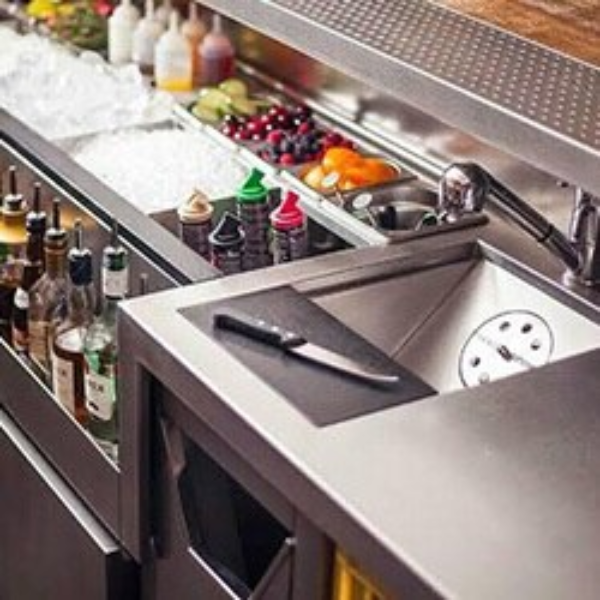
Depending on the business concept, equipment may include:
- Under-counter refrigeration
- Bottle coolers
- Ice bins
- Cocktail stations
- Bar sinks
- Glass storage
- Work counters
- Speed rails
- Drainage arrangements
- Stainless steel storage units
The exact configuration should depend on beverage volume and service style.
Refrigeration Deserves Careful Attention
Beverage operations rely heavily on reliable cooling.
Different products may require different storage arrangements, and frequently used beverages should remain accessible without disrupting service.
Under-counter refrigeration can be particularly useful where floor space is limited because it keeps chilled products close to the bartender while preserving the working surface above.
However, refrigeration should not be positioned without considering ventilation, maintenance access, drainage, and electrical connections.
Counter Dimensions Influence Productivity
A bar counter that looks attractive from the guest area may still be uncomfortable behind the scenes.
Working height, counter depth, sink positioning, storage accessibility, and equipment spacing influence how efficiently bartenders can operate.
For businesses planning customized installations, Vinaayak Enterprises can manufacture commercial kitchen and bar equipment according to operational requirements and available dimensions.
Customization is especially relevant for bars installed in compact restaurants, rooftop venues, hotels, and spaces with unusual architectural layouts.
Hygiene Should Be Designed Into the Workspace
Bars handle glassware, fruits, garnishes, liquids, ice, and waste throughout service.
Surfaces should therefore be practical to wipe and maintain. Sink placement, drainage, waste disposal, and glass-handling areas should be considered during planning rather than added later.
Equipment should also provide sufficient access around components that require routine cleaning.
Build the Bar Around Actual Service Volume
A small café serving a limited beverage menu does not need the same setup as a high-volume pub.
Before finalizing equipment, operators should estimate peak hourly orders, beverage categories, glassware requirements, ice consumption, chilled storage demand, and the number of employees expected behind the counter.
For hospitality businesses across Delhi, efficient bar planning can improve service speed without simply increasing the number of appliances. A thoughtfully designed workstation allows staff, storage, refrigeration, utilities, and preparation surfaces to work together within a limited footprint.